Anycubic Photon Mono 4 vs Elegoo Mars 5 Ultra
Technical comparison · Resin 3D printing
Two monochrome LCD resin printers from 2024 with nearly the same XY resolution (17 and 18 µm, as declared by the manufacturer). What decides it is what you need besides quality: a deeper build area and €34 less, or Wi-Fi and a tilt system.
| Parameter | ||
|---|---|---|
| Identity | ||
| Launch year | 2024 | 2024 |
| Use tier | F2 — Intermediate | F2 — Intermediate |
| Price | ||
| Price (€) | ~180–250 € | 249 € |
| Universal specs | ||
| Dimensions (W×D×H) (cm) | — | 26 × 26.8 × 45.15 cm |
| Weight (kg) | — | 8.8 kg |
| Work area (mm) | 153.4 × 87 mm | 153.36 × 77.76 mm |
| Z-axis height (mm) | 165 mm | 165 mm |
| Power (W) | — | 72 W |
| Voltage (V) | — | 100 V |
| Maximum speed | 1.17 mm/min | 2.5 mm/min |
| Declared precision | 17 μm | 18 μm |
| Category specs | ||
| Build area XY (short side) (mm) | 87 mm | 77.76 mm |
| XY resolution (µm) | 17 µm | 18 µm |
| Light source | Mono LCD | Mono LCD |
| Print speed (mm/h) | 70.2 mm/h | 150 mm/h |
| Tilt / peel system | Standard FEP | Tilt |
| Ecosystem | ||
| Cloud dependency | No | No |
| Software notes | The device is fully compatible with the main third-party slicing software options on the market, including widely popular solutions such as Chitubox and Lychee Slicer, alongside the proprietary Anycubic Photon Workshop application. This flexibility allows users to manage advanced exposure parameters, supports, and tolerance compensation without proprietary constraints. File preparation occurs primarily via offline transfer using a USB port, ensuring a stable workflow independent of active network connections. Managing print profiles for various commercial resins is highly intuitive, facilitating the optimization of layer-by-layer curing times for both standard materials and advanced formulations. | Machine control and management rely on a flexible and modern software ecosystem. The device natively supports leading industry slicing programs, including ChituBox and Voxeldance Tango, ensuring extensive customization of printing parameters. Integrated Wi-Fi connectivity allows for remote monitoring and file transmission via cloud functionalities or cluster management, streamlining the workflow in multi-unit laboratory environments. The proprietary firmware handles real-time error notifications, such as resin shortage or residues in the vat, interfacing directly with the touchscreen display to guide the user through operational troubleshooting independently and safely. |
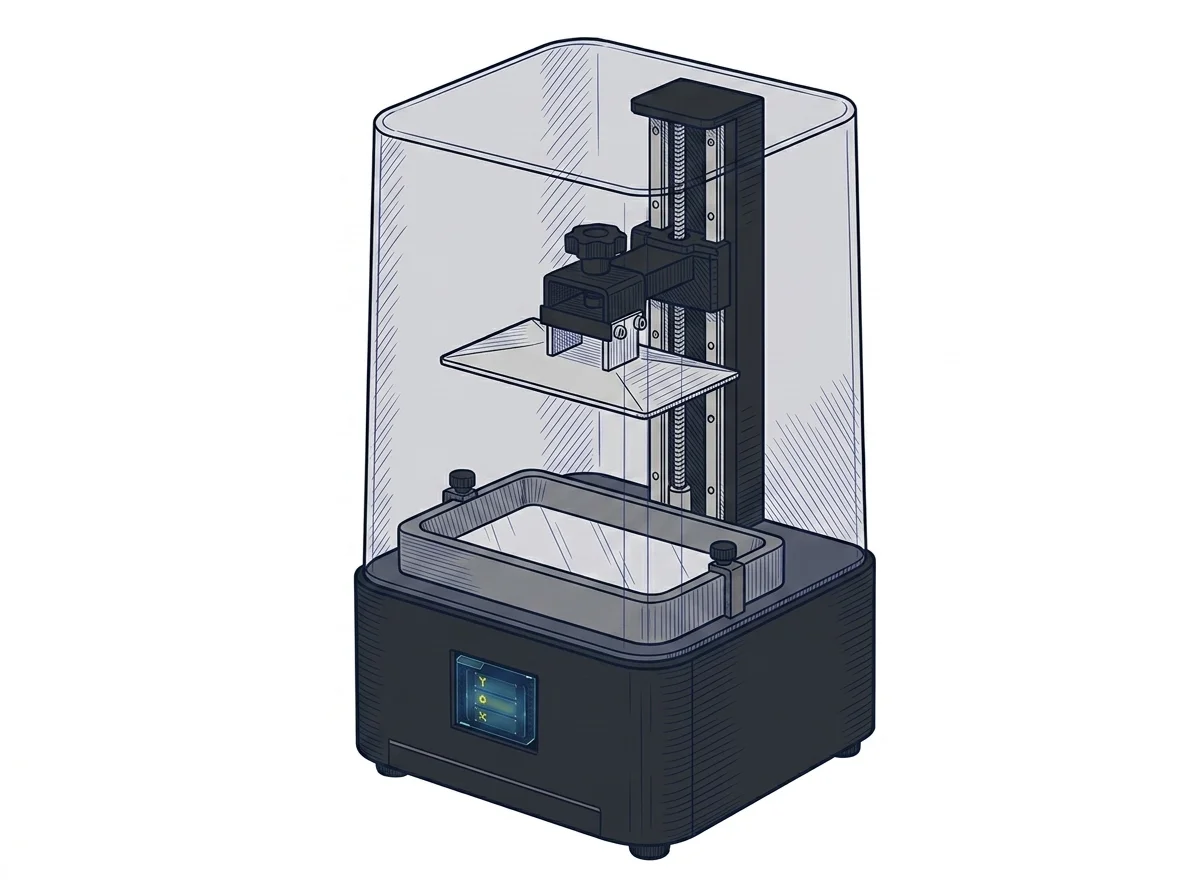

The differences that matter
- Build area 153.4×87 mm versus 153.36×77.76 mm → the Mono 4 has almost 10 mm more on the short side to lay out parts.
- Declared speed 70.2 mm/h versus 150 mm/h → for the same part height, the Mars 5 Ultra finishes a plate in less than half the time.
- Wi-Fi on the Mars 5 Ultra → remote monitoring and file transfer; on the Mono 4 you work from USB.
Which one to choose
Choose Photon Mono 4 if…
You print miniatures on a single machine and send files over USB, with Photon Workshop, Chitubox or Lychee Slicer, without relying on a network. The Mono 4 costs €215, €34 less, and its build area is 87 mm deep against 77.76 mm: almost 10 mm more on the short side to lay out parts. You do without the Mars 5 Ultra's tilt system and Wi-Fi.
Choose Mars 5 Ultra if…
You run several machines in a small workshop and want to follow jobs remotely: the Mars 5 Ultra has Wi-Fi for monitoring and file transfer, and a tilt system instead of standard FEP. It declares 150 mm/h against the Mono 4's 70.2 mm/h, and on tall parts the hours saved per plate add up. You pay €34 more and get a shallower build area.
Where to buy
Paid link: the price for you does not change. Methodology
As an Amazon Associate I earn from qualifying purchases.
MakerSpecs is an independent atlas. We don't sell products: the purchase links are the same as on the two product sheets and don't influence the verdict. The sheets have the complete data.