Anycubic Photon Mono M7 vs Elegoo Mars 4 Ultra
Technical comparison · Resin 3D printing
Two resin printers with monochrome LCD screens and an ACF film in the vat, €170 apart. What decides it: the Photon Mono M7's plate is 223 × 126 mm, the Mars 4 Ultra's 153 × 78 mm.
| Parameter | ||
|---|---|---|
| Identity | ||
| Launch year | 2024 | 2023 |
| Use tier | F2 — Intermediate | F2 — Intermediate |
| Price | ||
| Price (€) | 499 € | 329 € |
| Universal specs | ||
| Dimensions (W×D×H) (cm) | 31.2 × 31.5 × 52 cm | 22.7 × 22.7 × 44.35 cm |
| Weight (kg) | 11.5 kg | 7.1 kg |
| Work area (mm) | 223 × 126 mm | 153.36 × 77.76 mm |
| Z-axis height (mm) | 230 mm | 165 mm |
| Power (W) | 120 W | 72 W |
| Voltage (V) | 100 V | — |
| Maximum speed | 130 mm/s | — |
| Declared precision | 16.8 μm | — |
| Category specs | ||
| Build area XY (short side) (mm) | 126 mm | 77.76 mm |
| XY resolution (µm) | 16.8 µm | 18 µm |
| Light source | Mono LCD | Mono LCD |
| Print speed (mm/h) | 130 mm/h | 150 mm/h |
| Tilt / peel system | Film ACF | Film ACF |
| Ecosystem | ||
| Cloud dependency | No | No |
| Software notes | File management and print preparation rely primarily on Anycubic Photon Workshop, which integrates optimized profiles to take advantage of the machine's reduced exposure times. The ecosystem supports network connectivity via Wi-Fi and allows remote monitoring and control through the Anycubic Cloud mobile application. While offering advanced cloud features for print queue management and firmware updates, the printer maintains full local offline operational capability. Compatibility with major third-party slicers such as ChiTuBox and Lychee Slicer is guaranteed upon manual configuration of the parameters. | The system utilizes an open software ecosystem, ensuring compatibility with the main slicing programs on the market, including ChituBox and Voxeldance Tango. The machine integrates built-in Wi-Fi connectivity for the remote transfer of print files via the official application or compatible software, eliminating the need to use physical USB drives for every operation. The internal firmware is based on an optimized version of Linux, which improves the responsiveness of the user interface on the built-in touch screen display and optimizes the handling of complex data originating from 9K files. Exposure parameters and resin profiles can be managed directly from the chosen software, offering precise control over curing times and axis movement speeds. |

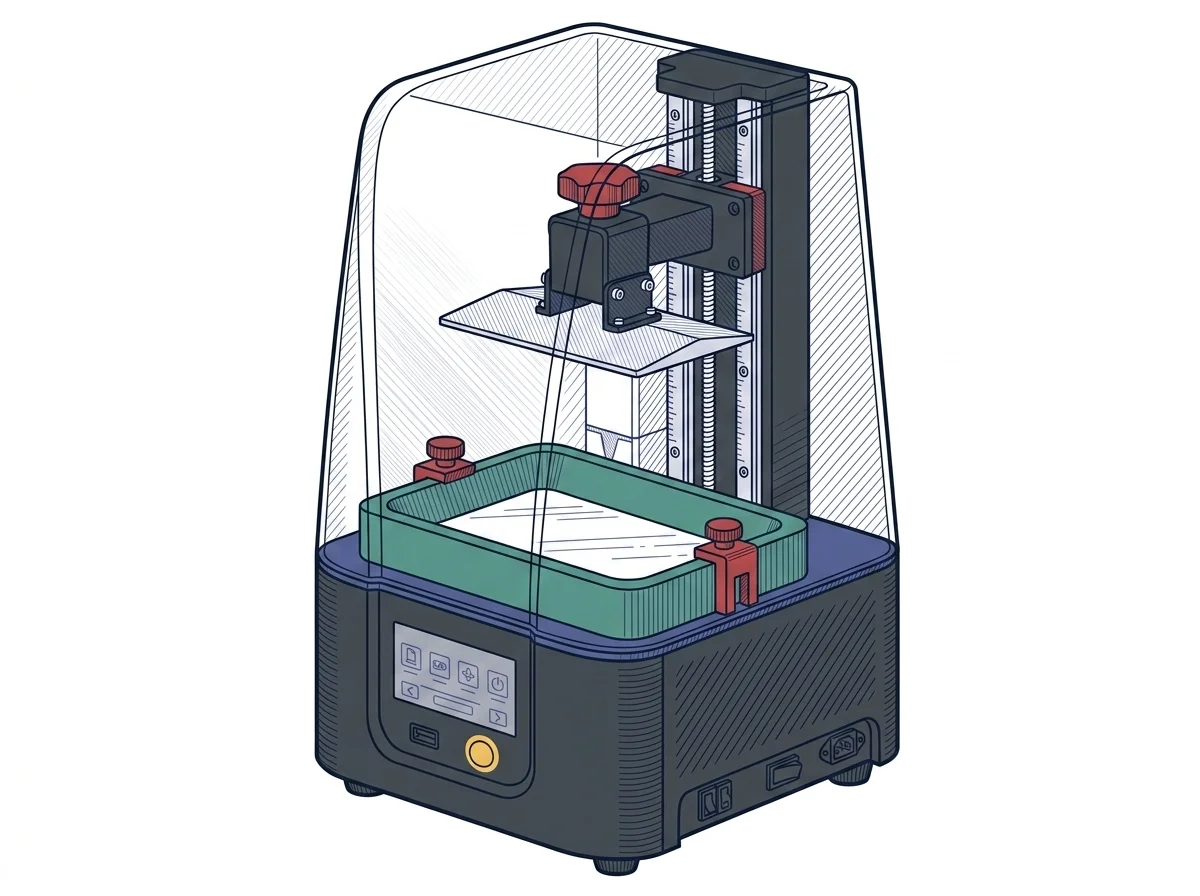
The differences that matter
- Build plate → 223 × 126 mm against 153 × 78 mm: one full print against two or more for the same batch.
- Slicer → the M7 is set up around Photon Workshop, with ChiTuBox and Lychee Slicer needing parameters entered by hand; the Mars 4 Ultra works with the main open slicers.
- Price → €499 against €329: the M7 costs €170 more.
Which one to choose
Choose Photon Mono M7 if…
you print several parts in one run, or parts up to 230 mm tall. The trade-off is money, €170 more, and space: 11.5 kg and 31 × 31 cm of bench.
Choose Mars 4 Ultra if…
you print small parts and want to spend €170 less, on a machine of 7.1 kg and a 23 × 23 cm footprint, with built-in Wi-Fi to send files. The limit is volume: a smaller plate and a Z axis of 165 mm.
Where to buy
Paid link: the price for you does not change. Methodology
As an Amazon Associate I earn from qualifying purchases.
MakerSpecs is an independent atlas. We don't sell products: the purchase links are the same as on the two product sheets and don't influence the verdict. The sheets have the complete data.