Anycubic Photon Mono M7 Pro vs Phrozen Sonic Mini 8K S
Technical comparison · Resin 3D printing
Choose the Anycubic Photon Mono M7 Pro if you require a larger working area of 223×126 mm, a higher printing speed of up to 170 mm/h, and integrated Wi-Fi connectivity. Choose the Phrozen Sonic Mini 8K S if you prefer a more budget-friendly, compact solution designed exclusively for offline data transfer via USB.
| Parameter | ||
|---|---|---|
| Identity | ||
| Launch year | 2024 | 2023 |
| Use tier | F2 — Intermediate | F2 — Intermediate |
| Price | ||
| Price (€) | 499 € | ~299–350 € |
| Universal specs | ||
| Dimensions (W×D×H) (cm) | 31.5 × 31.5 × 52 cm | 29 × 29 × 43 cm |
| Weight (kg) | 12.8 kg | 10 kg |
| Work area (mm) | 223 × 126 mm | 165 × 72 mm |
| Z-axis height (mm) | 230 mm | 170 mm |
| Power (W) | 150 W | — |
| Voltage (V) | 110 V | — |
| Maximum speed | 170 mm/min | — |
| Declared precision | 16.8 μm | 22 μm |
| Category specs | ||
| Build area XY (short side) (mm) | 126 mm | 72 mm |
| XY resolution (µm) | 16.8 µm | 22 µm |
| Light source | Mono LCD | Mono LCD |
| UV power (mW/cm²) | 8.5 mW/cm² | — |
| Print speed (mm/h) | 170 mm/h | 80 mm/h |
| Tilt / peel system | Film ACF | Standard FEP |
| Ecosystem | ||
| Cloud dependency | No | No |
| Software notes | The software ecosystem is based on the proprietary Anycubic Photon Workshop application, alongside full compatibility with major third-party slicers such as ChituBox and Lychee Slicer. Connectivity is comprehensive due to the integrated Wi-Fi module, which enables remote management via the Anycubic App mobile application for real-time monitoring, file transfer, and progress tracking. The firmware supports advanced algorithms for exposure compensation and dynamic lift speed control. Although cloud features expand the user experience, the machine remains fully operational offline via file transfer through the USB port. | The machine offers broad compatibility with leading third-party slicing software options, notably popular solutions like Chitubox, Lychee Slicer, and Voxeldance Tango. This software flexibility prevents users from being locked into a restrictive, closed proprietary ecosystem, allowing them to utilize advanced support generation and model orientation algorithms. File transfer is handled entirely offline via a standard USB port, a design choice that prioritizes connection stability during data transmission but lacks native Wi-Fi connectivity or cloud-based management features. Material profiles are easily accessible and customizable, significantly streamlining the fine-tuning of exposure times for a wide variety of commercial 405nm photopolymer resins available on the market. |
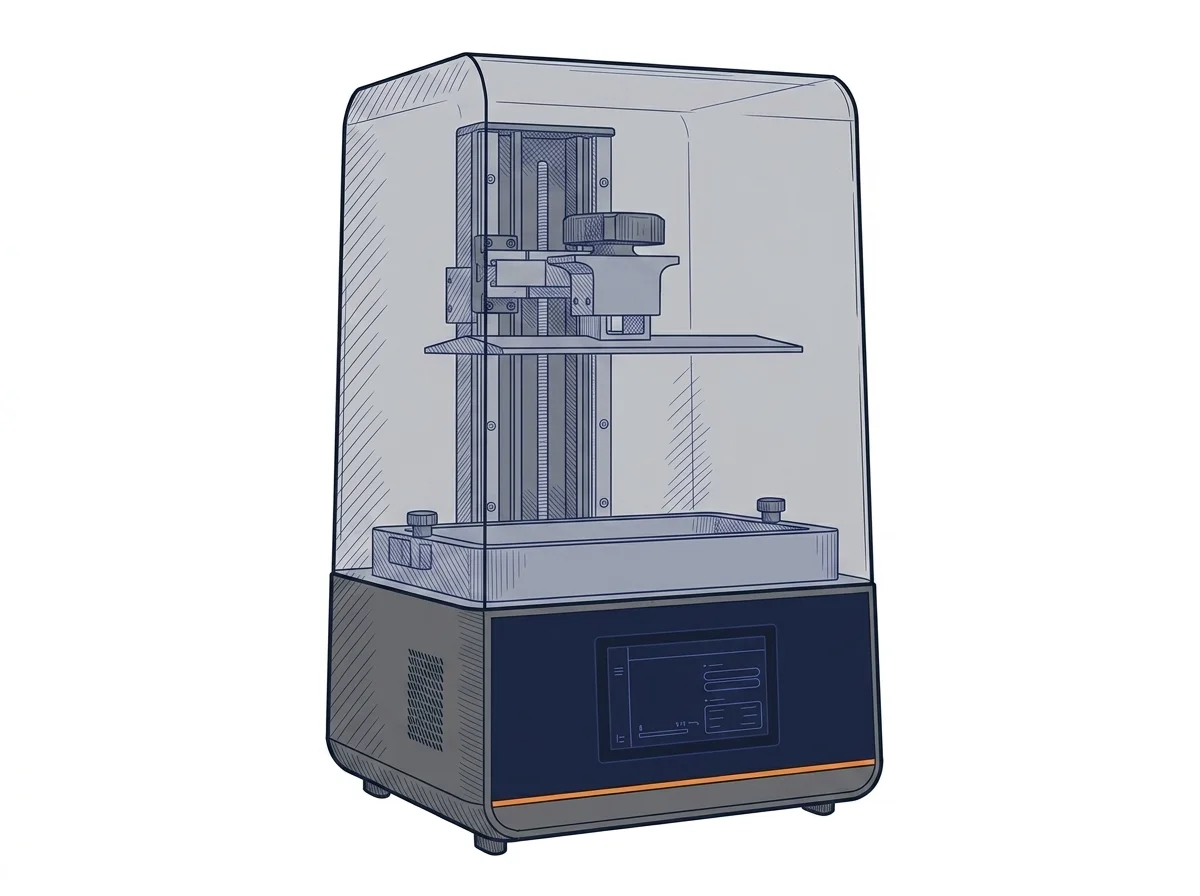
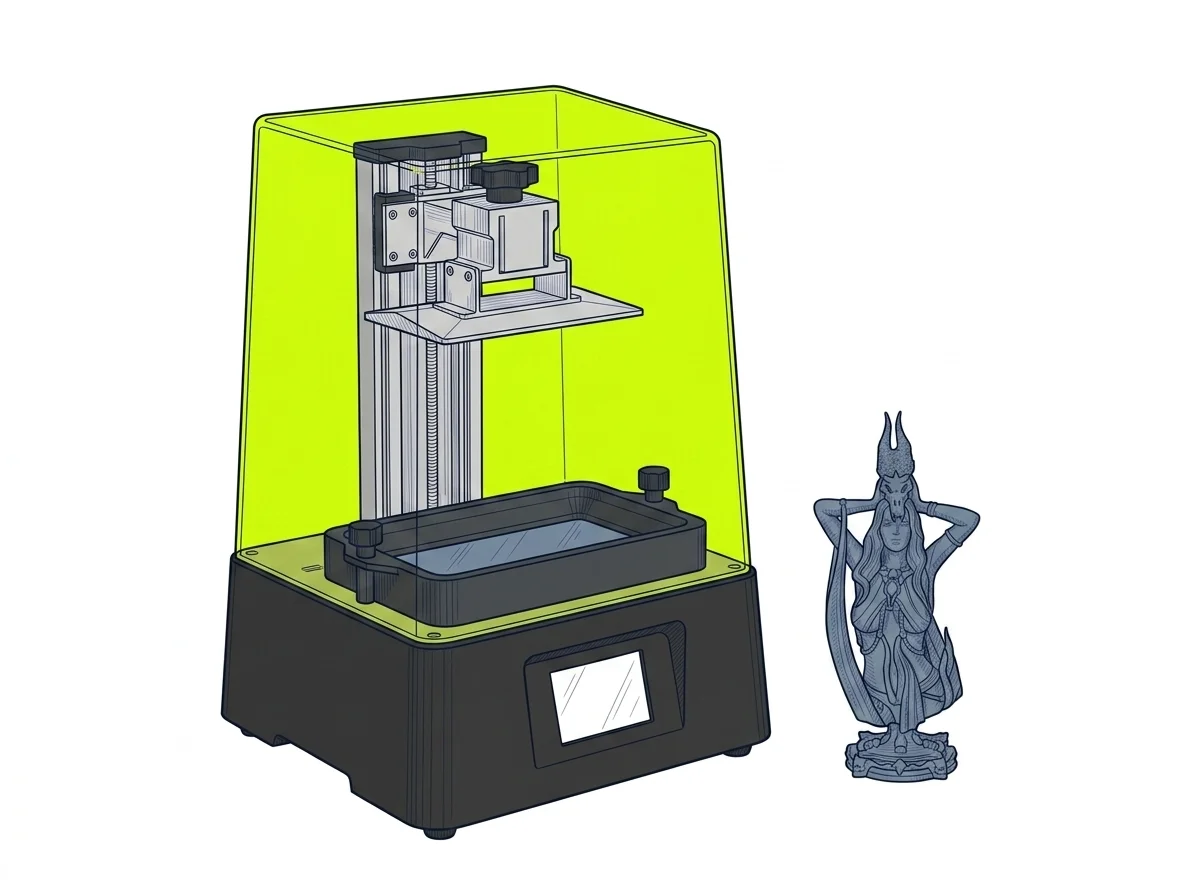
The differences that matter
- Build Volume and Footprint: Anycubic offers a significantly larger print area (223×126 mm with a 230 mm Z-height) compared to Phrozen (165×72 mm with a 170 mm Z-height), which also implies larger physical machine dimensions.
- Print Speed and Peel System: The Anycubic model reaches a speed of 170 mm/h by utilizing an ACF film, whereas the Phrozen device prints at 80 mm/h using a standard FEP film.
- XY Resolution: Anycubic provides a stated accuracy of 16.8 μm, compared to the 22 μm of the Phrozen model.
- Connectivity and Ecosystem: Anycubic features a Wi-Fi module and remote management via a dedicated app alongside offline capabilities, while Phrozen excludes network connectivity, limiting file transfers solely to the USB port.
- Price Positioning: Phrozen is positioned in a more accessible price range (~€299–350) compared to the €499 required for the Anycubic model.
Which one to choose
Choose Photon Mono M7 Pro if…
The Anycubic Photon Mono M7 Pro (2024) is suitable for intermediate users who need an extended build volume, particularly along the Z-axis (230 mm), and high-speed performance (170 mm/h) enabled by the ACF film system. It represents the ideal choice for those wishing to utilize remote monitoring via Wi-Fi through a mobile application, at a retail price of €499.
Choose Sonic Mini 8K S if…
The Phrozen Sonic Mini 8K S (2023) is the optimal choice for those with a lower budget (~€299–350) who require a lighter device (10 kg) with a smaller physical footprint. It is well-suited for users who prefer a strictly local and offline workflow via a USB port, without network management, while accepting a smaller working area of 165×72 mm with a 170 mm Z-axis travel.
Where to buy
Paid link: the price for you does not change. Methodology
As an Amazon Associate I earn from qualifying purchases.
MakerSpecs is an independent atlas. We don't sell products: the purchase links are the same as on the two product sheets and don't influence the verdict. The sheets have the complete data.