Which xTool laser to buy: S1, P2S, M2 Color Craft or F2
xTool sells diode, CO2 and fiber lasers under one badge. This guide matches the S1, P2S, M2 Color Craft and F2/F2 Ultra to the material and job each one is actually built for.
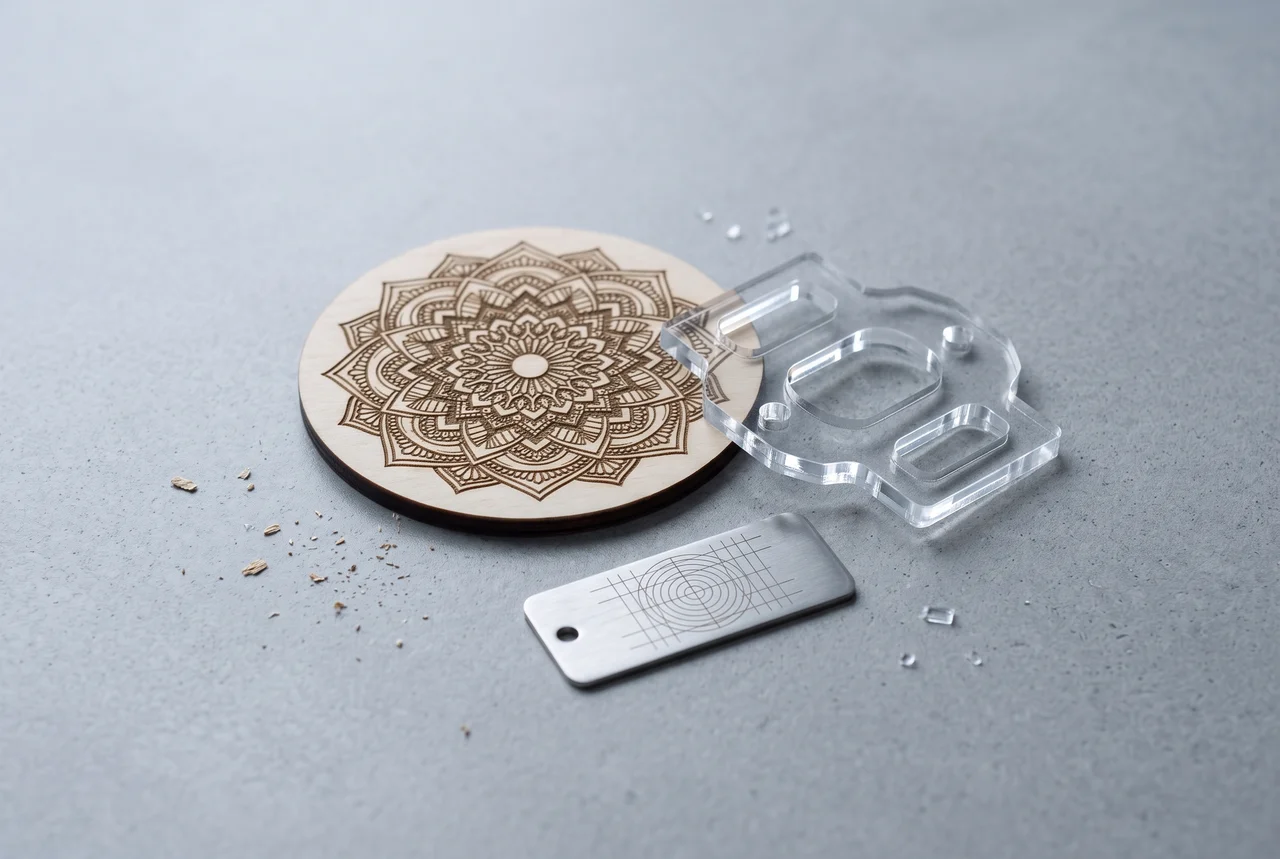
xTool doesn't sell one kind of laser. Under the same badge you'll find a diode cutter for wood and acrylic, a CO2 machine built for sheet goods, and fiber lasers meant to mark metal. Picking by brand name alone is how people end up with a xTool S1 when what they actually needed was a fiber engraver for stainless steel, or the reverse. Here's how the current active range breaks down by what it actually cuts or marks.
Diode: everyday engraving and thin-material cutting
The xTool S1 is the enclosed diode laser cutter in the lineup: a 498 x 330 mm working area, a fully closed case (the safer choice if the machine lives somewhere other than a garage or workshop), and two power options. The 20W head is the general-purpose choice for wood, leather, acrylic and cardboard; the 40W version cuts thicker plywood and acrylic in fewer passes, at a higher price bracket (roughly 2,000-2,500 EUR against 1,300-1,600 EUR for the 20W). Neither touches bare metal beyond surface marking on treated or coated stock — that's not what a diode laser does.
For smaller projects and a lower entry price, the xTool M2 Color Craft is the compact desktop option: a 426 x 320 mm bed, 12.3 kg, and a 10W or 20W diode module. It's priced well under the S1 (from around 654 EUR for the 10W, 1,058 EUR for the 20W), and it's the one built around full-color image engraving on suitable materials rather than raw cutting speed. If the job is greeting cards, coasters, phone cases and craft-fair stock, the M2 is sized and priced for that; if it's cutting structural wood or acrylic parts regularly, the S1's bigger bed and cutting-oriented design make more sense.
CO2: cutting sheet goods at a larger scale
The xTool P2S 55W is the CO2 machine in the range, and it's a different class of tool from the diode models above. The bed is 600 x 305 mm, the unit weighs 45 kg, and it draws up to 700W — this is a machine meant to sit in a fixed spot and cut wood, acrylic, leather and fabric all day, not to be moved around a desk. At roughly 3,024 EUR it costs about twice an S1 40W, and that premium buys a larger cutting area, a sealed CO2 tube built for sustained use, and the kind of throughput that matters if you're producing signage or batches of parts rather than one-off projects. Like the diode machines, it doesn't cut or mark bare metal.
Fiber: marking and engraving metal
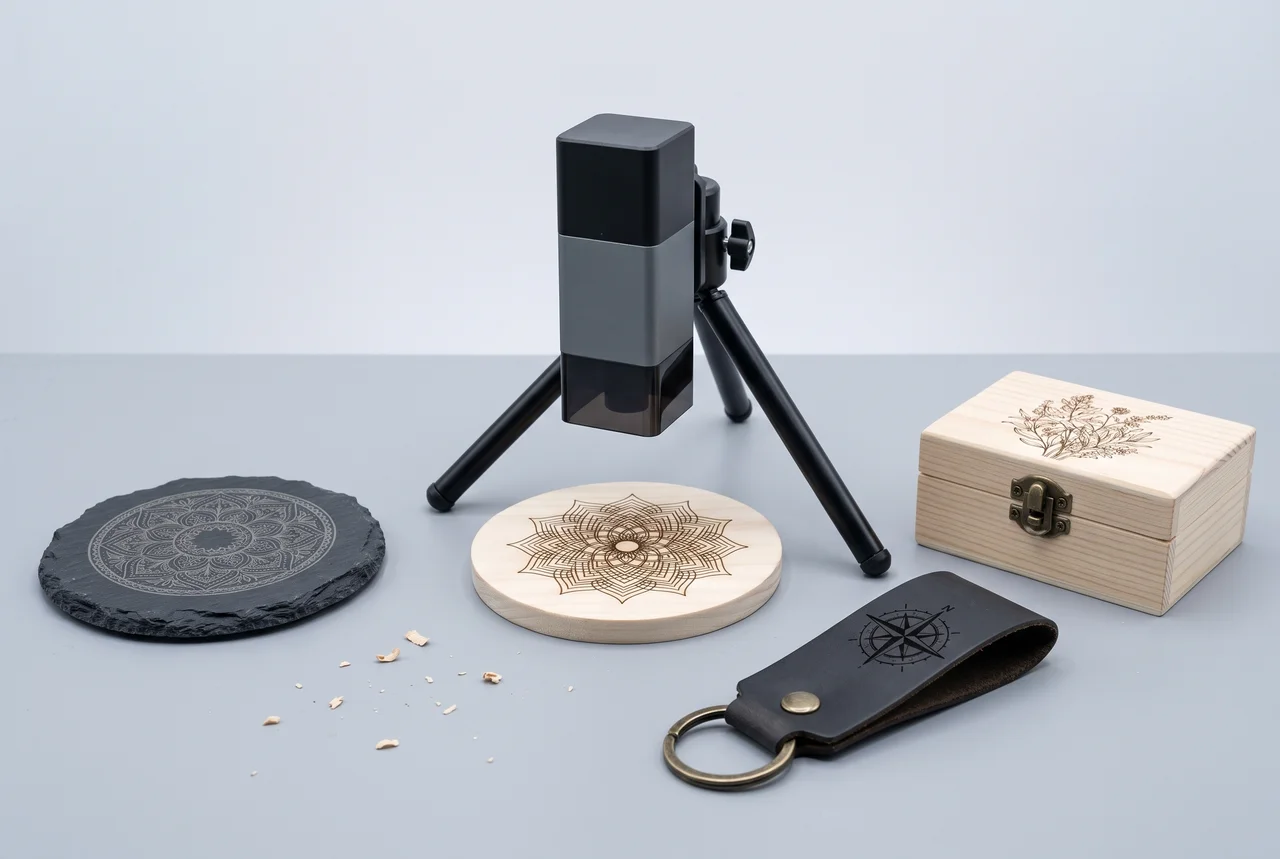
None of the machines above will put a permanent, high-contrast mark on stainless steel, titanium or anodized aluminum — that needs a fiber laser, and it's where the xTool F2 and F2 Ultra come in. The F2 pairs a 5W infrared fiber module with a 15W diode module in one portable head, so it can mark metal and also engrave or cut wood and acrylic without swapping machines; it sits at roughly 1,500-2,000 EUR. The F2 Ultra goes further: a 60W MOPA fiber laser (MOPA lets you control pulse width, which is what makes color marking on titanium and stainless possible) plus a 40W diode module, in a heavier 21.6 kg benchtop unit at 4,629-7,279 EUR. That jump in price buys color and deep-engraving capability on metal that the base F2's 5W fiber module isn't built to deliver, plus enough diode power for faster wood and acrylic work alongside it.
Matching the machine to the job
If you work mostly in wood, leather, acrylic and cardboard and want one enclosed, capable cutter, the S1 (20W for general use, 40W if you're routinely cutting thicker stock) is the diode machine to look at. If the budget is tighter and the projects are smaller and more decorative, the M2 Color Craft costs less and is built around that use case rather than raw cutting power. If you're cutting sheet goods regularly and need more bed and more sustained power than a diode machine offers, the P2S's CO2 tube and larger working area are the reason to spend roughly double an S1. And if metal marking is part of the job at all — tools, jewelry, industrial parts, branded metal goods — nothing above the fiber line will do it: the F2 covers occasional metal marking alongside general engraving, while the F2 Ultra is the machine to buy if metal marking, not wood or acrylic, is the main job and color or deep engraving on titanium and stainless matters.
One practical note: these are three unrelated laser technologies sharing a brand, not tiers of the same machine. A diode S1 doesn't become a fiber engraver with a firmware update, and a fiber F2 isn't a faster way to cut acrylic than a diode S1 is. Buy for the material you'll actually be pointing the laser at, not for the biggest number on the spec sheet.