PLA vs PETG: which filament to choose (and when)
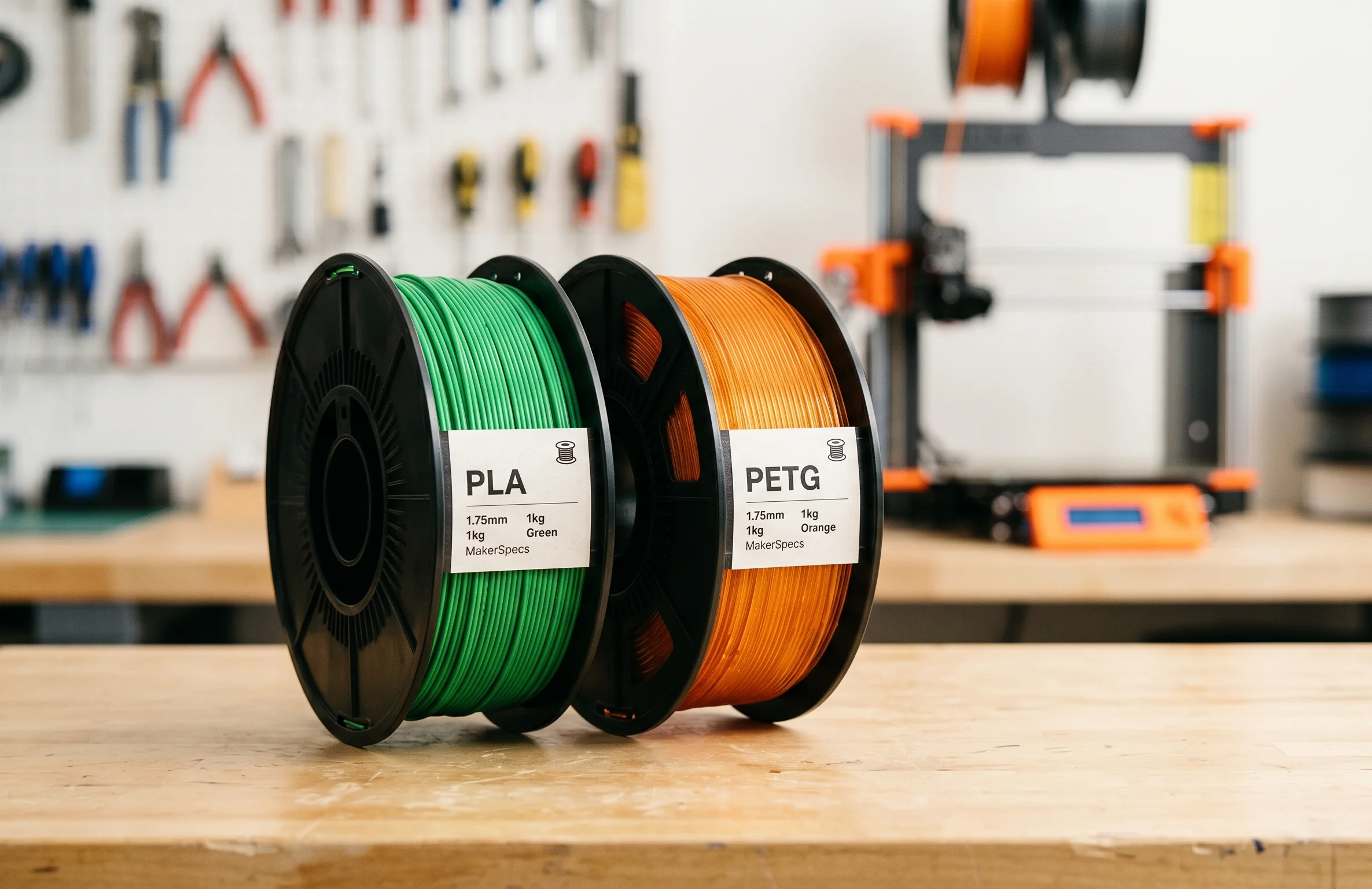
PLA is easier and more precise; PETG is tougher and better resists heat and moisture. Concrete differences — temperatures, strength, typical uses — and how to choose based on the part you need to print.
In summary
- PLA is the easiest filament to print and the most precise in details, but it softens around 55–60 °C and is quite brittle.
- PETG is tougher, resists heat, moisture, and impacts better: it's the choice for functional and outdoor parts.
- For a first project or an aesthetic model → PLA. For a bracket, a hook, or something that sits in the sun or in contact with water → PETG.
PLA or PETG: what is the difference?
There is only one practical difference: PETG withstands conditions that destroy PLA (heat, moisture, repeated stress), but in return it's slightly harder to print well. PLA wins in ease and finish; PETG wins in durability.
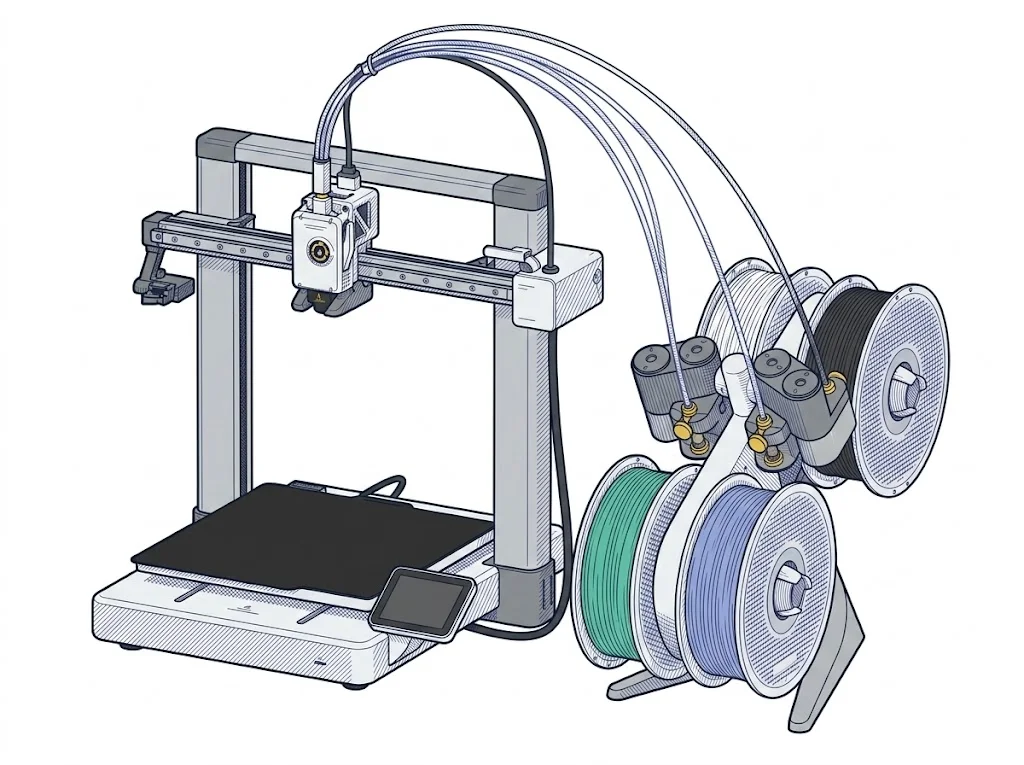
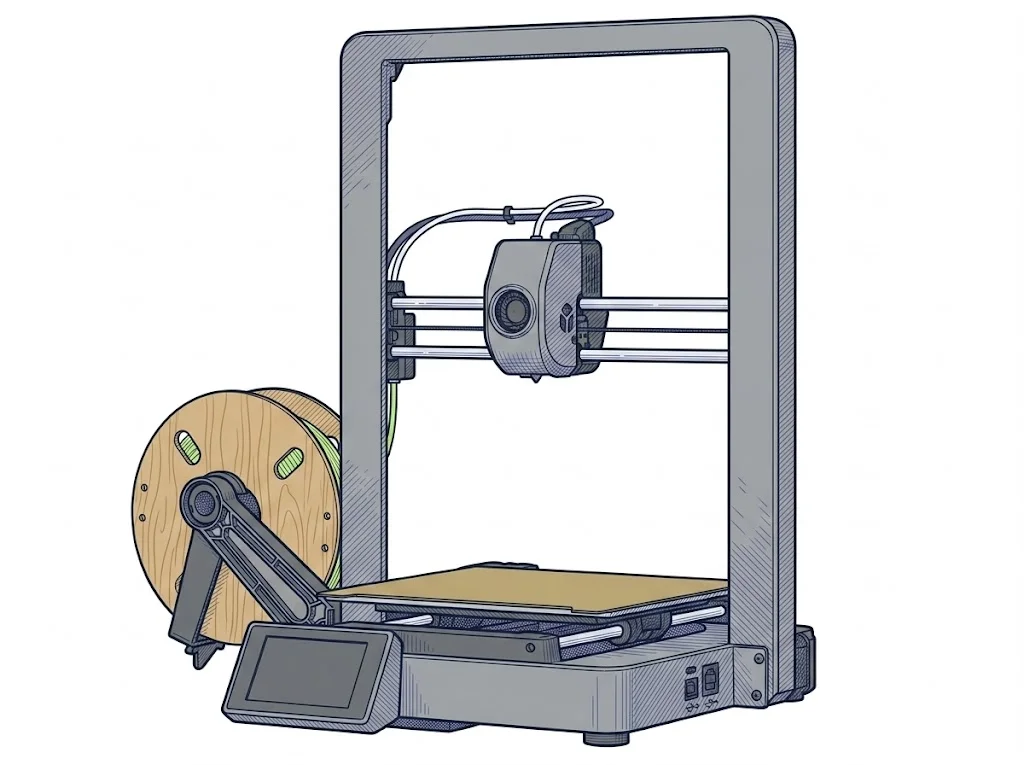
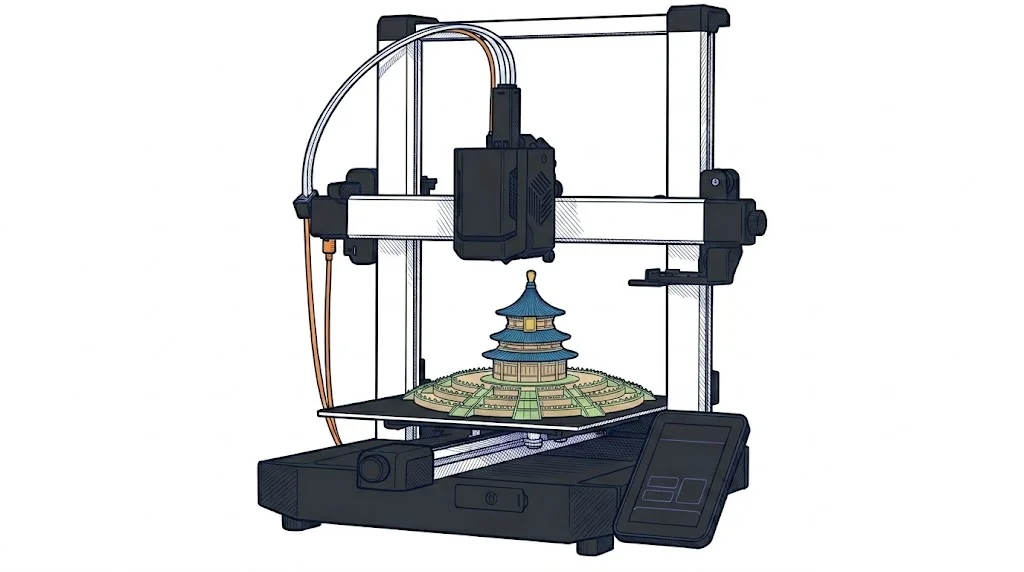
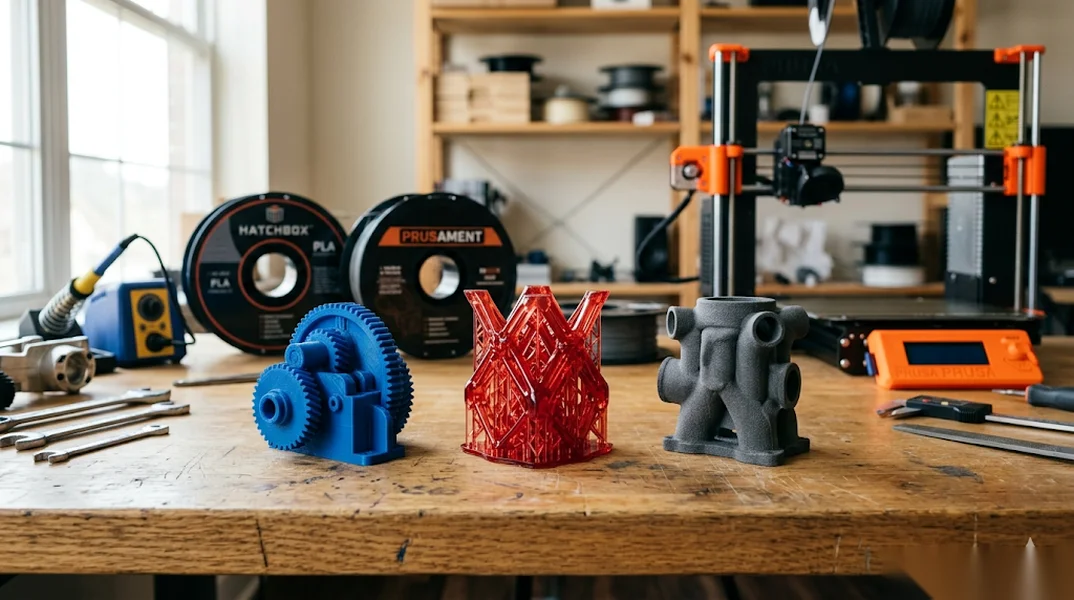
Both print on any modern FDM printer — like Bambu Lab A1, Creality Ender-3 V3, or Anycubic Kobra 3 — without a heated chamber.
Comparison table
| Parameter | PLA | PETG |
|---|---|---|
| Nozzle temperature | 190–220 °C | 230–250 °C |
| Bed temperature | 50–60 °C | 70–85 °C |
| Enclosed chamber | not required | not required |
| Print ease | very high | medium (tends to string) |
| Heat resistance | ~55–60 °C | ~80 °C |
| Mechanical behavior | rigid, brittle | tough, slightly flexible |
| UV/outdoor resistance | poor | good |
| Moisture absorption | low | yes, must be kept dry |
When to choose PLA
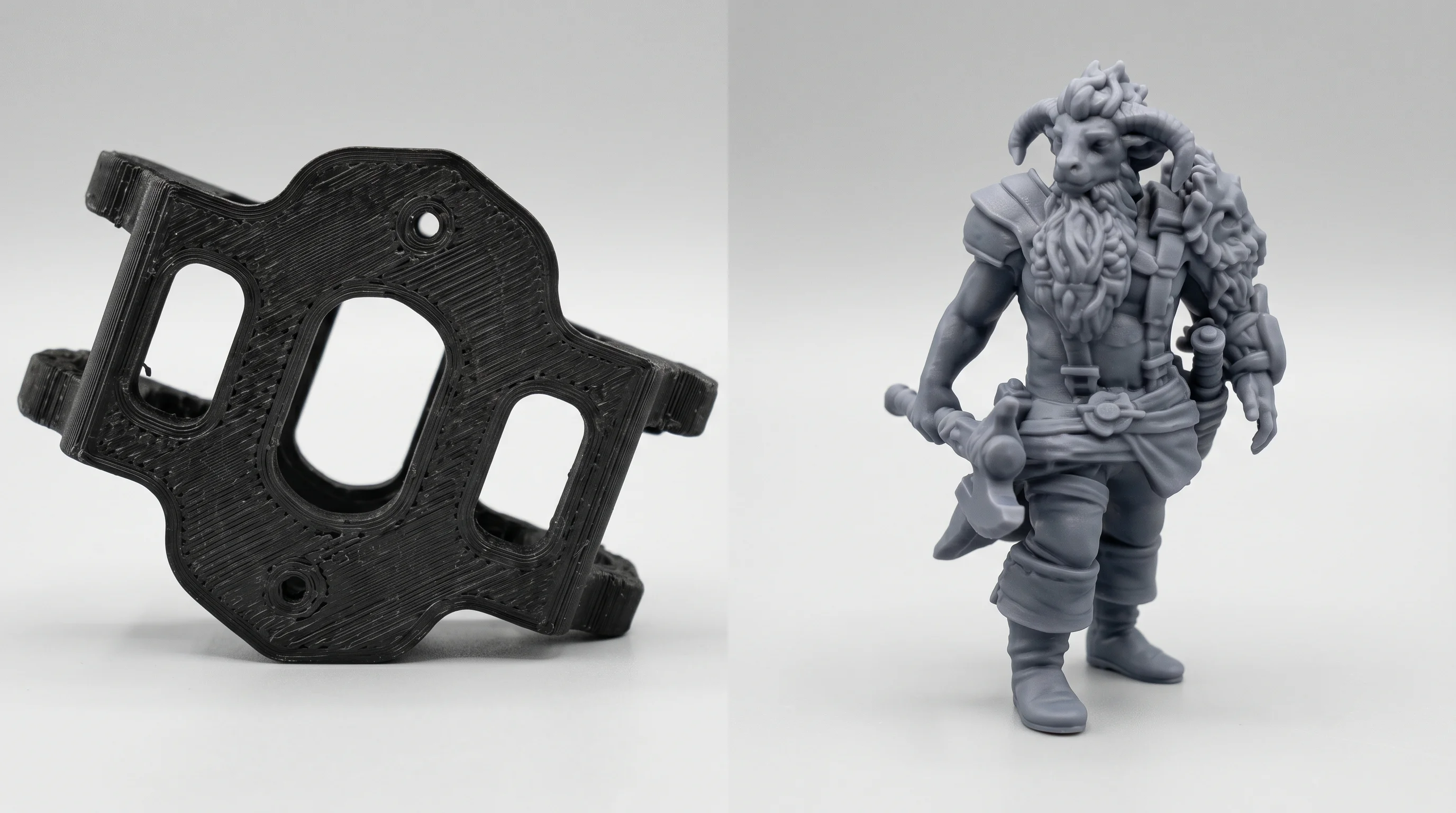
Choose PLA when aesthetic yield and ease matter: models, rapid prototypes, figurines, decorative pieces. It adheres well, warps little, and forgives calibration errors. Don't use it for parts that get hot (a mount near a motor, something left in a car in summer): at 60 °C it starts to give way.
When to choose PETG
Choose PETG when the part needs to function, not just look good: brackets, hooks, cases, containers, parts in contact with water or exposed to the sun. It's tougher than PLA and absorbs impacts instead of breaking. In return, it requires a hotter nozzle and slightly lower speed to avoid stringing (fine threads between walls).
What about ABS?
ABS resists heat even more than PETG (~100 °C), but it warps easily and needs an enclosed chamber and good ventilation. For most makers, PETG offers 90% of the strength of ABS without its headaches: it's the right compromise for everyday functional parts.
Macchine consigliate