FDM or resin: which 3D printing is right for you
FDM for functional parts, prototypes, and large objects; resin for the fine detail of miniatures and jewelry. Practical differences in quality, cost, safety, and post-processing, and how to choose.
In short
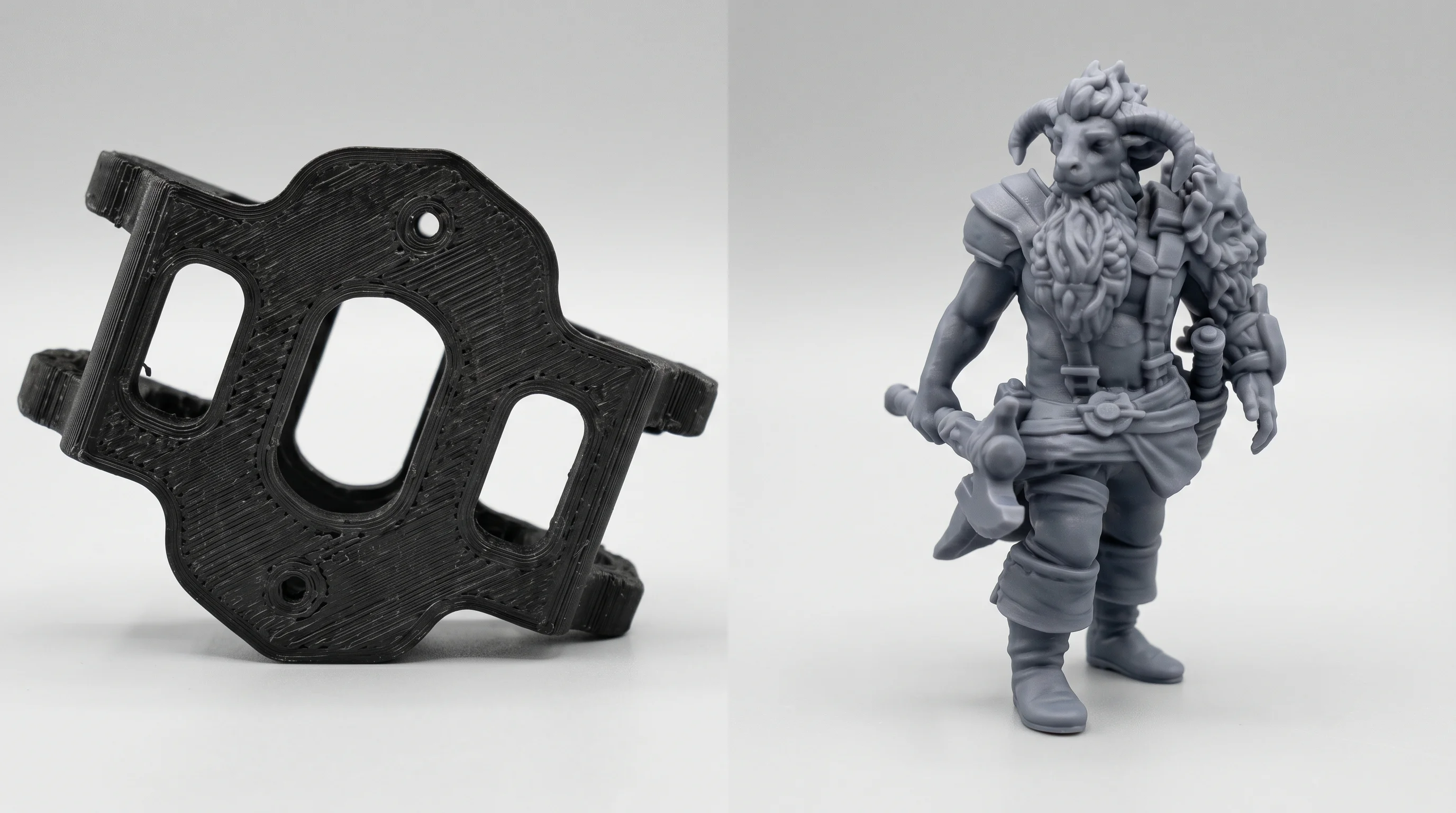
- FDM (filament) is the choice for functional parts, prototypes, and large objects, at a low cost and with little post-processing.
- Resin (SLA/MSLA) wins on fine detail: miniatures, jewelry, dental models. In return, it requires washing, UV curing, and attention to safety.
- If you need a part that does something → FDM. If you need a part to be looked at closely → resin.
FDM or resin: which 3D printing to choose?
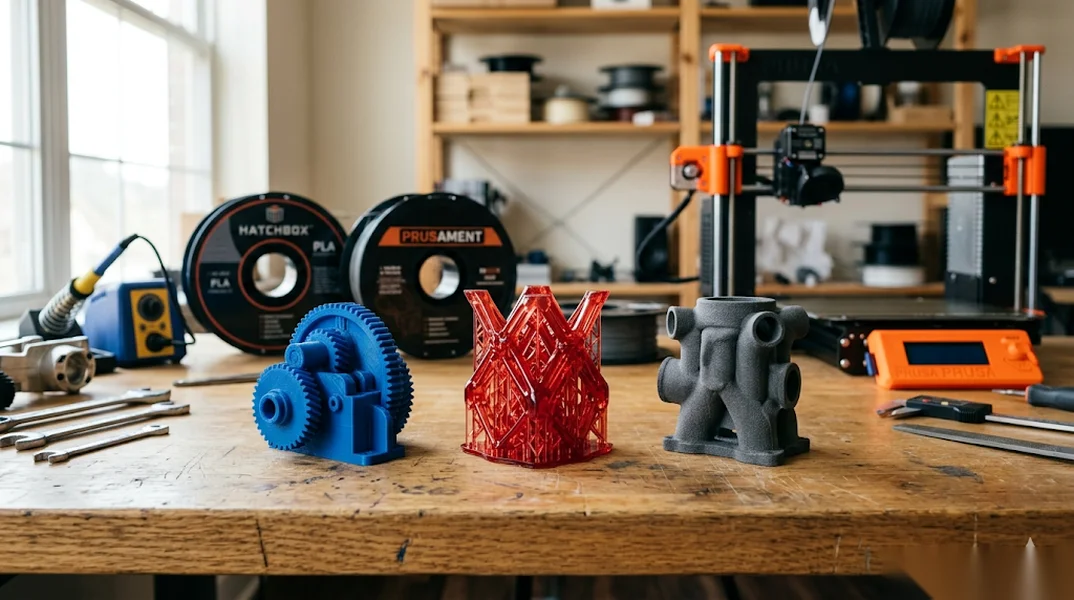
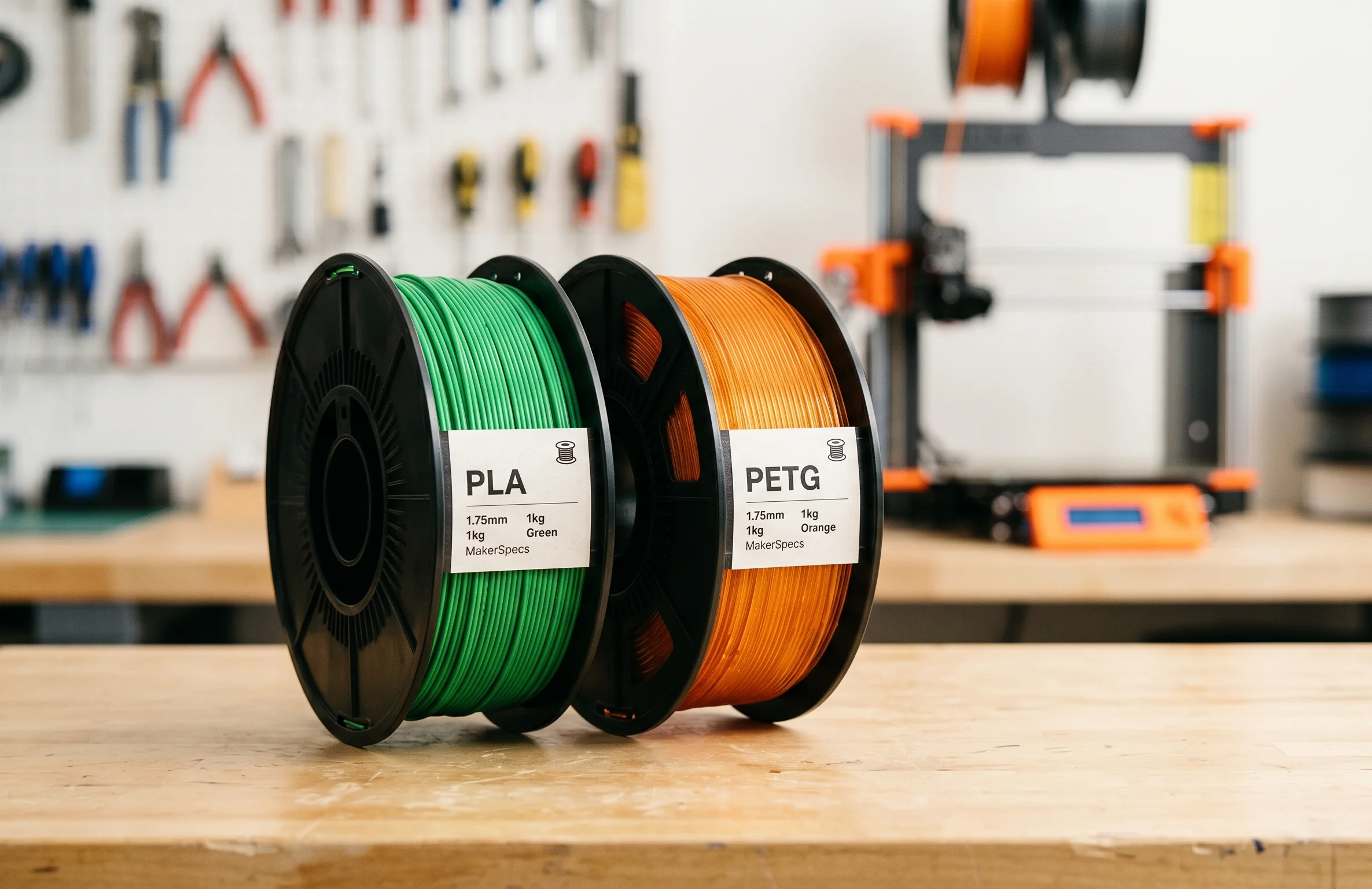
It depends on the part, not the budget. FDM printing melts a filament layer by layer: cheap, sturdy, excellent for functional objects, but with visible layer lines. Resin printing solidifies a photosensitive liquid with UV light: almost perfect detail, smooth surfaces, but more fragile parts and a messier process.
Comparison table
| Parameter | FDM (filament) | Resin (SLA/MSLA) |
|---|---|---|
| Principle | filament extrusion | UV photopolymerization |
| Detail | medium (visible lines) | very high (fine detail) |
| Print volume | large | small/medium |
| Mechanical strength | good, functional parts | fragile (except tough resins) |
| Post-processing | minimal (remove supports) | alcohol wash + UV cure |
| Safety | ventilated room | gloves, ventilation: liquid resin is toxic |
| Material cost | low (per kg) | higher (per liter) |
| Typical uses | brackets, prototypes, large parts | miniatures, jewelry, dental |
When to choose FDM
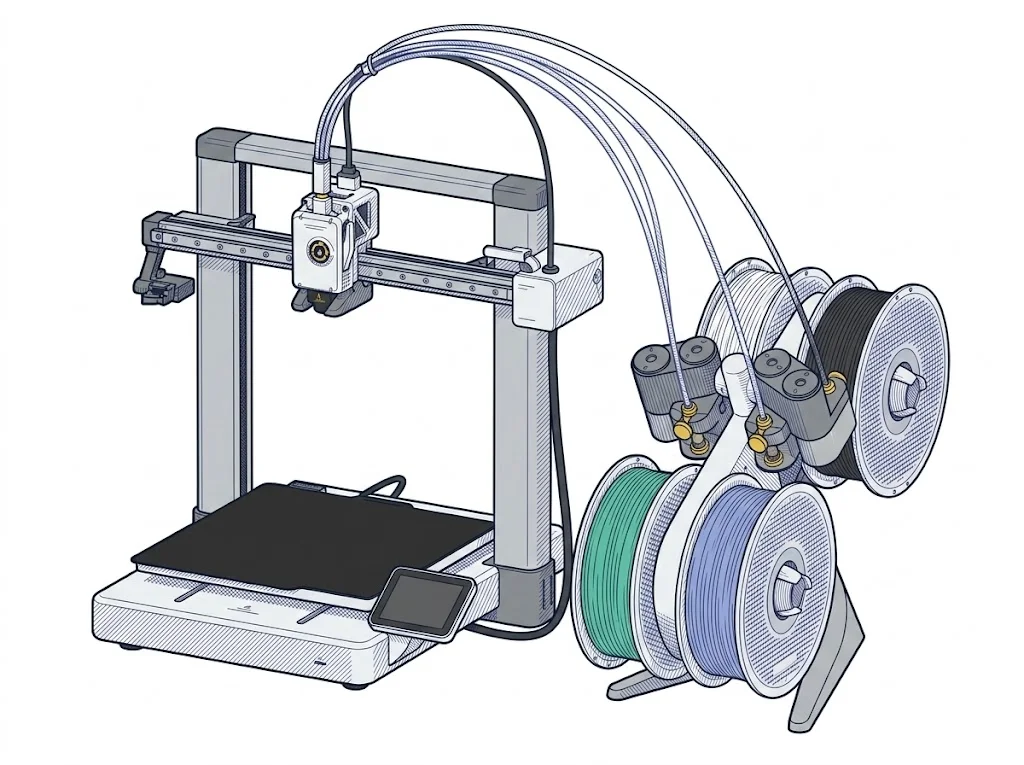
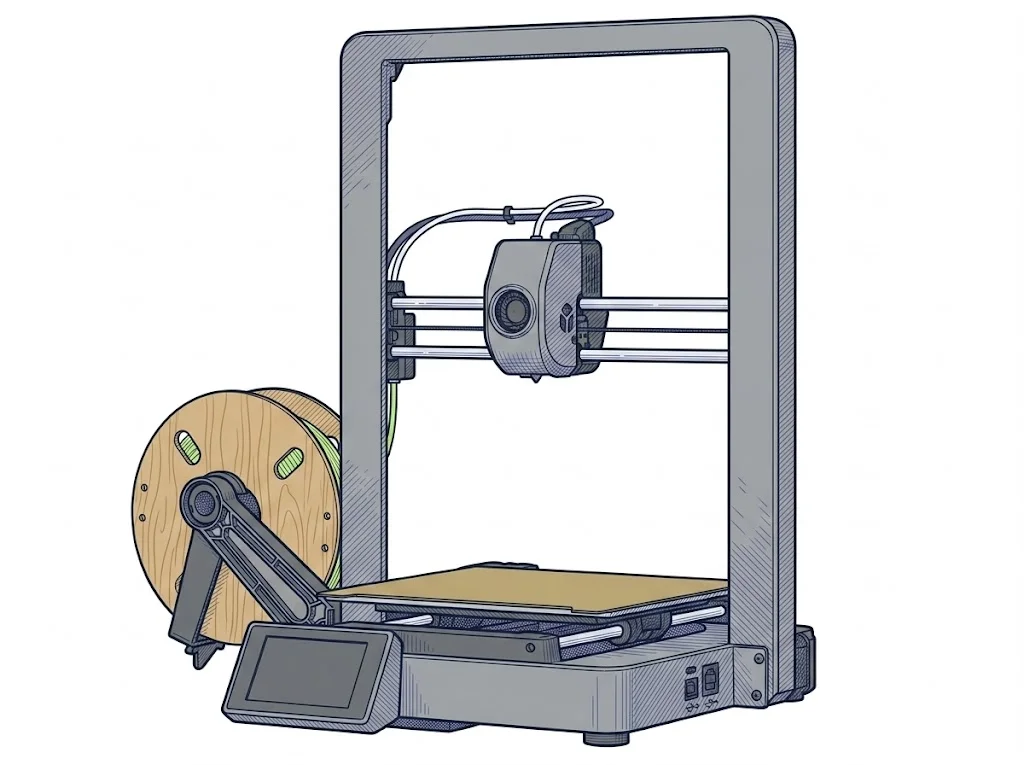
Choose FDM if you print objects that must function or be large: supports, enclosures, spare parts, mechanical prototypes. It is the easiest technology to manage — a ventilated room and a printer like Bambu Lab A1 or Creality Ender-3 V3 are enough — and the material is cheap. It is also the right entry point for beginners.
When to choose resin
Choose resin when detail is everything: gaming miniatures, jewelry, aesthetic prototypes, dental models. The resolution is unmatched, but factor in gloves, isopropyl alcohol for washing, a UV lamp for final curing, and good ventilation: liquid resin is irritating and must be handled with care.
It is not a final choice
Many makers keep both: an FDM for everyday functional parts and a small resin printer for details. They do not exclude each other — they solve different problems.