Prusa Research MINI+ Enclosure Bundle vs Qidi Tech X-Max 3
Technical comparison · Fused filament fabrication (FFF/FDM)
Two machines on different scales: the MINI+ is compact and prints in a 180 mm cube, the X-Max 3 reaches 325 mm and weighs 30 kg. The X-Max 3 costs about €390 more (€509 against roughly €899).
| Parameter | ||
|---|---|---|
| Identity | ||
| Launch year | 2020 | 2023 |
| Use tier | F2 — Intermediate | F2 — Intermediate |
| Price | ||
| Price (€) | 509 € | ~799–999 € |
| Universal specs | ||
| Dimensions (W×D×H) (cm) | 38 × 33 × 38 cm | 55.3 × 55.3 × 60.1 cm |
| Weight (kg) | 4.5 kg | 30.2 kg |
| Work area (mm) | 180 × 180 mm | 325 × 325 mm |
| Z-axis height (mm) | 180 mm | 315 mm |
| Power (W) | 150 W | — |
| Voltage (V) | 230 V | — |
| Maximum speed | 200 mm/s | 600 mm/s |
| Declared precision | 0.05 mm | — |
| Category specs | ||
| Footprint X×Y (short side) (mm) | 180 mm | 325 mm |
| Build height Z (mm) | 180 mm | 315 mm |
| Kinematics | Cartesian | CoreXY |
| Max nozzle temperature (°C) | 280 °C | 350 °C |
| Max bed temperature (°C) | 100 °C | 120 °C |
| Max print speed (mm/s) | 180 mm/s | 600 mm/s |
| Enclosed chamber | No | Yes |
| Filament sensor | No | Yes |
| Auto bed leveling | Mesh | Mesh |
| Standard nozzle diameter (mm) | 0.4 mm | 0.4 mm |
| Multi-extruder | No | No |
| Native Klipper | No | Yes |
| Input shaper | Yes | Yes |
| Multicolor printing | No | No |
| Multicolor requires accessory | Yes | — |
| Max colors | — | 1 |
| Ecosystem | ||
| Cloud dependency | No | No |
| Software notes | PrusaSlicer, with pre-verified profiles for Input Shaper and Pressure Advance, is the reference software, but the machine accepts standard G-code from any compatible slicer, such as Cura or Simplify3D. Remote management runs through Prusa Connect, via Ethernet or the optional ESP Wi-Fi module. The firmware is open-source and runs on the 32-bit Buddy board, not GRBL, and is OTA-updatable: the Prusa ecosystem provides optimized profiles and regular updates, but doesn't restrict the use of alternative software. | The system relies on an architecture based on native Klipper firmware, a configuration that guarantees advanced kinematics management and precise control of accelerations through input shaping algorithms. The local and remote user interface is managed fluidly, allowing full monitoring of print parameters without the need to depend on mandatory external cloud services. For file preparation, the machine supports the main slicing software available on the market, including Qidi Print, OrcaSlicer, and PrusaSlicer, offering optimized profiles to enhance production times and the surface quality of components. Connectivity options include wired network and Wi-Fi, facilitating the integration of the device into local networks of laboratories or digital workshops. |
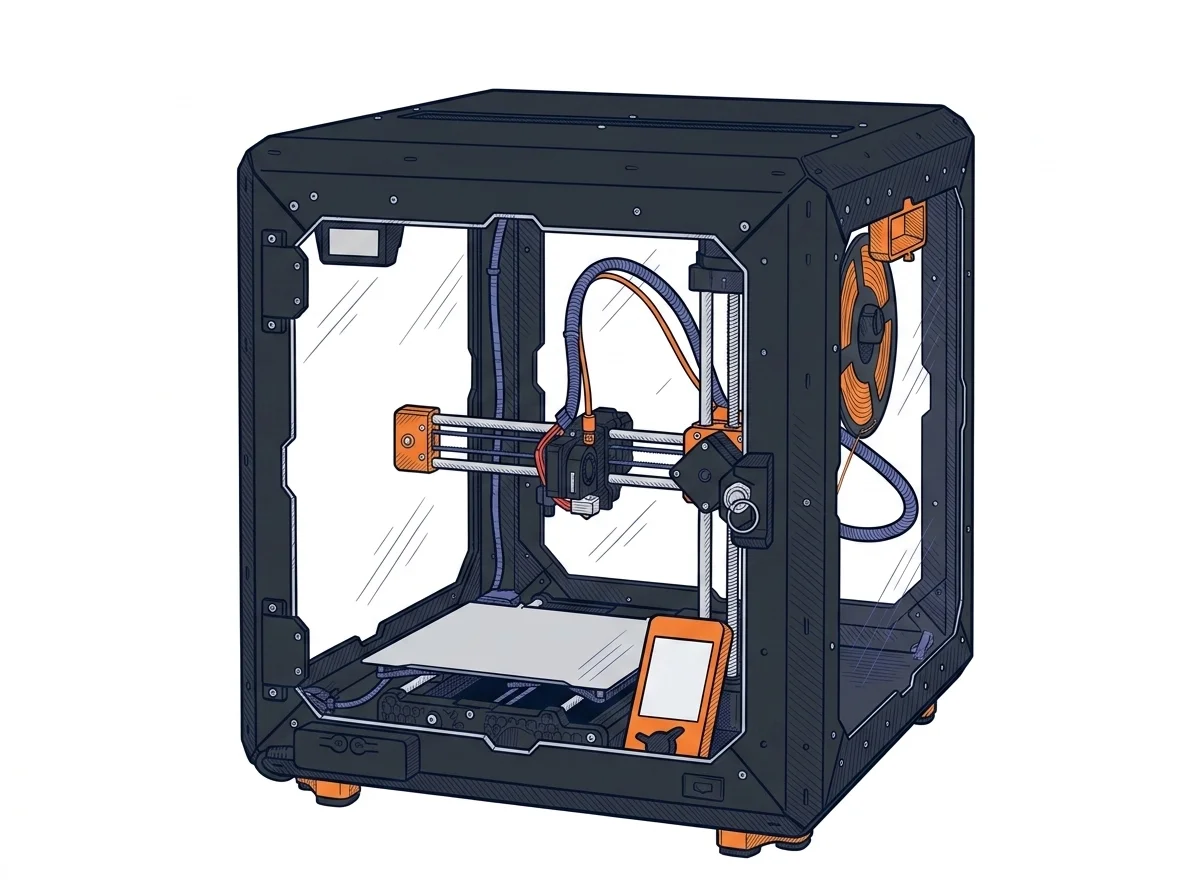
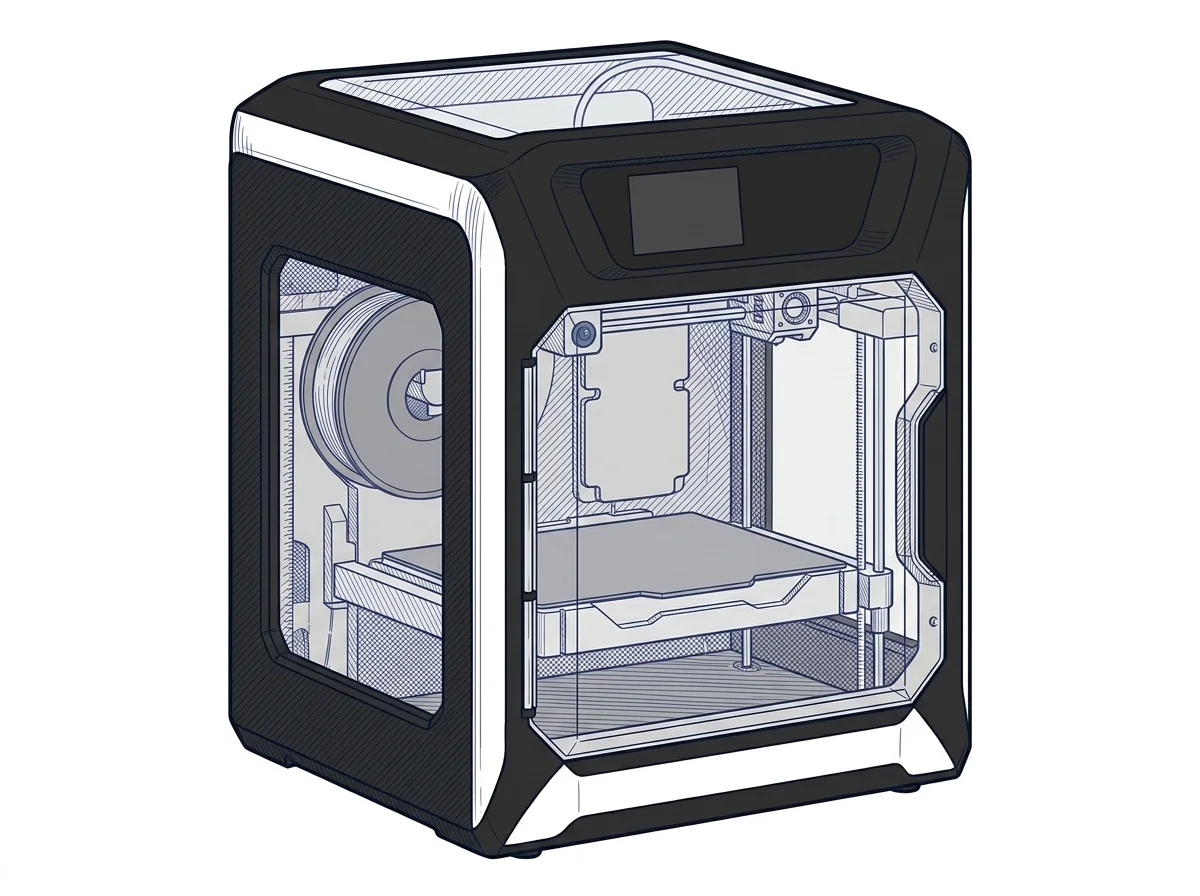
The differences that matter
- Build volume 180 × 180 × 180 mm against 325 × 325 × 315 mm → on the MINI+ large parts have to be split.
- Nozzle at 350 °C and bed at 120 °C against 280 °C and 100 °C (declared) → materials that need more heat are out of reach on the MINI+.
- Native Klipper on the X-Max 3 only → it works with Qidi Print, OrcaSlicer or PrusaSlicer; the MINI+ runs Prusa firmware with PrusaSlicer as the reference.
Which one to choose
Choose MINI+ Enclosure Bundle if…
you print small objects, have little bench space and want to spend about €390 less, working with PrusaSlicer and profiles already verified for input shaper and pressure advance. The trade-off: a small volume, lower temperatures and no filament sensor.
Choose X-Max 3 if…
you print large parts or materials that need more heat, and want native Klipper with slicers such as Orca or Qidi Print. The trade-off: about €390 more and a footprint 55 cm on a side, with 30 kg to find room for.
Where to buy
Paid link: the price for you does not change. Methodology
As an Amazon Associate I earn from qualifying purchases.
Filaments for these printers
The most chosen spools among the materials both printers can print according to their specifications.
- ELEGOO PLA PLA1.75 mm1 kg Check the price on Amazon →
- Bambu Lab PLA PLA1.75 mm1 kg Check the price on Amazon →
- SUNLU PETG (Polyethylene Terephthalate Glycol) PETG (Polyethylene Terephthalate Glycol)1.75 mm1 kg Check the price on Amazon →
- SUNLU PLA PLA1.75 mm1 kg Check the price on Amazon →
- OVERTURE PETG (Polyethylene Terephthalate Glycol) PETG (Polyethylene Terephthalate Glycol)High speed1.75 mm1 kg Check the price on Amazon →
Paid link: the price for you does not change. Methodology
As an Amazon Associate I earn from qualifying purchases.
MakerSpecs is an independent atlas. We don't sell products: the purchase links are the same as on the two product sheets and don't influence the verdict. The sheets have the complete data.