Flashforge Adventurer 4 vs Elegoo Centauri 2 Combo
Technical comparison · Fused filament fabrication (FFF/FDM)
The Adventurer 4 is a 2021 enclosed, single-colour machine; the Centauri 2 Combo is a CoreXY with four colours included. What decides it is whether you need multicolour.
| Parameter | ||
|---|---|---|
| Identity | ||
| Launch year | 2021 | — |
| Use tier | F2 — Intermediate | F2 — Intermediate |
| Price | ||
| Price (€) | ~450–700 € | — |
| Universal specs | ||
| Dimensions (W×D×H) (cm) | 50 × 47 × 54 cm | — |
| Weight (kg) | 20.1 kg | — |
| Work area (mm) | 220 × 200 mm | 256 × 256 mm |
| Z-axis height (mm) | 250 mm | 256 mm |
| Power (W) | 320 W | — |
| Voltage (V) | 230 V | — |
| Maximum speed | 150 mm/s | 500 mm/s |
| Declared precision | 0.1 ±mm | — |
| Category specs | ||
| Footprint X×Y (short side) (mm) | 200 mm | 256 mm |
| Build height Z (mm) | 250 mm | 256 mm |
| Kinematics | Cartesian | CoreXY |
| Max nozzle temperature (°C) | 265 °C | — |
| Max bed temperature (°C) | 110 °C | — |
| Max print speed (mm/s) | 150 mm/s | 500 mm/s |
| Enclosed chamber | Yes | — |
| Filament sensor | Yes | Yes |
| Standard nozzle diameter (mm) | 0.4 mm | — |
| Multi-extruder | No | — |
| Native Klipper | No | — |
| Input shaper | No | — |
| Multicolor printing | No | Yes |
| Multicolor requires accessory | No | No |
| Max colors | 1 | 4 |
| Ecosystem | ||
| Cloud dependency | No | No |
| Software notes | File preparation runs through FlashPrint, Flashforge's own slicer for Windows, macOS and Linux, which also manages several machines from the same interface; Cura can be used instead with a dedicated profile and an export in the compatible format. The machine reads 3MF, STL, OBJ and FPP and outputs GX/G files. Transfer happens over USB stick, Wi-Fi or Ethernet, so operation does not depend on an Internet connection: FlashCloud and PolarCloud are optional and serve remote monitoring through the built-in camera. The firmware is closed and Klipper is not supported; reviews from its release period flagged a slicing interface less polished than the hardware. After a nozzle change, temperature parameters must be updated by hand. | Four-color printing runs through the CANVAS system included in the Combo version. |
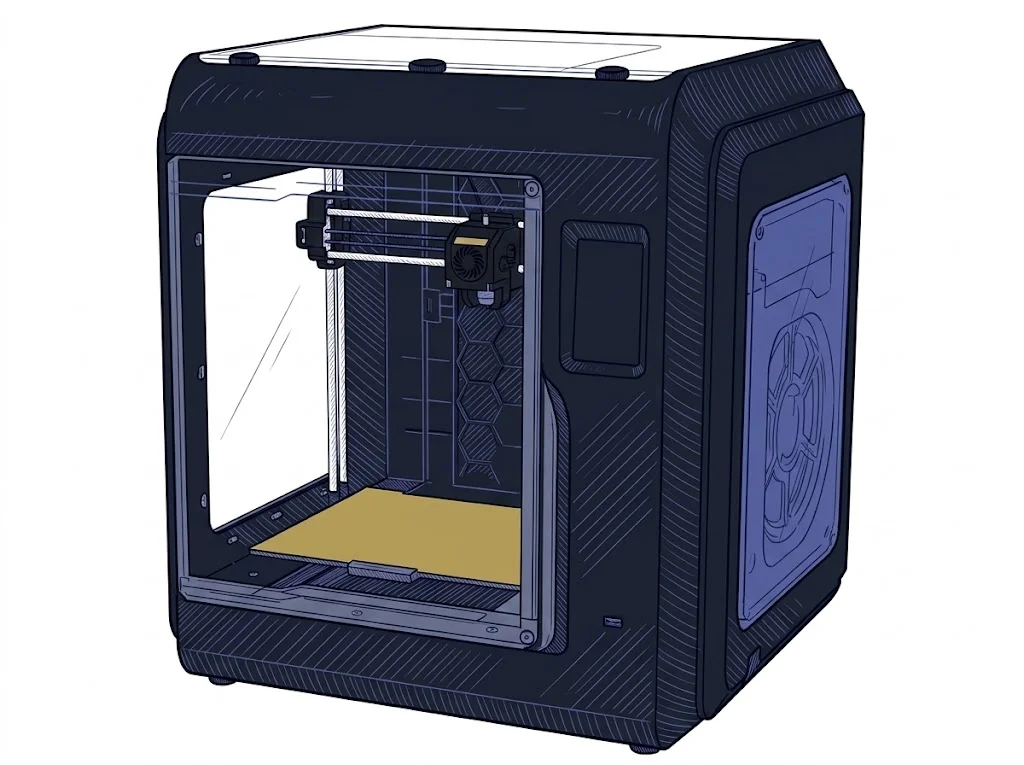
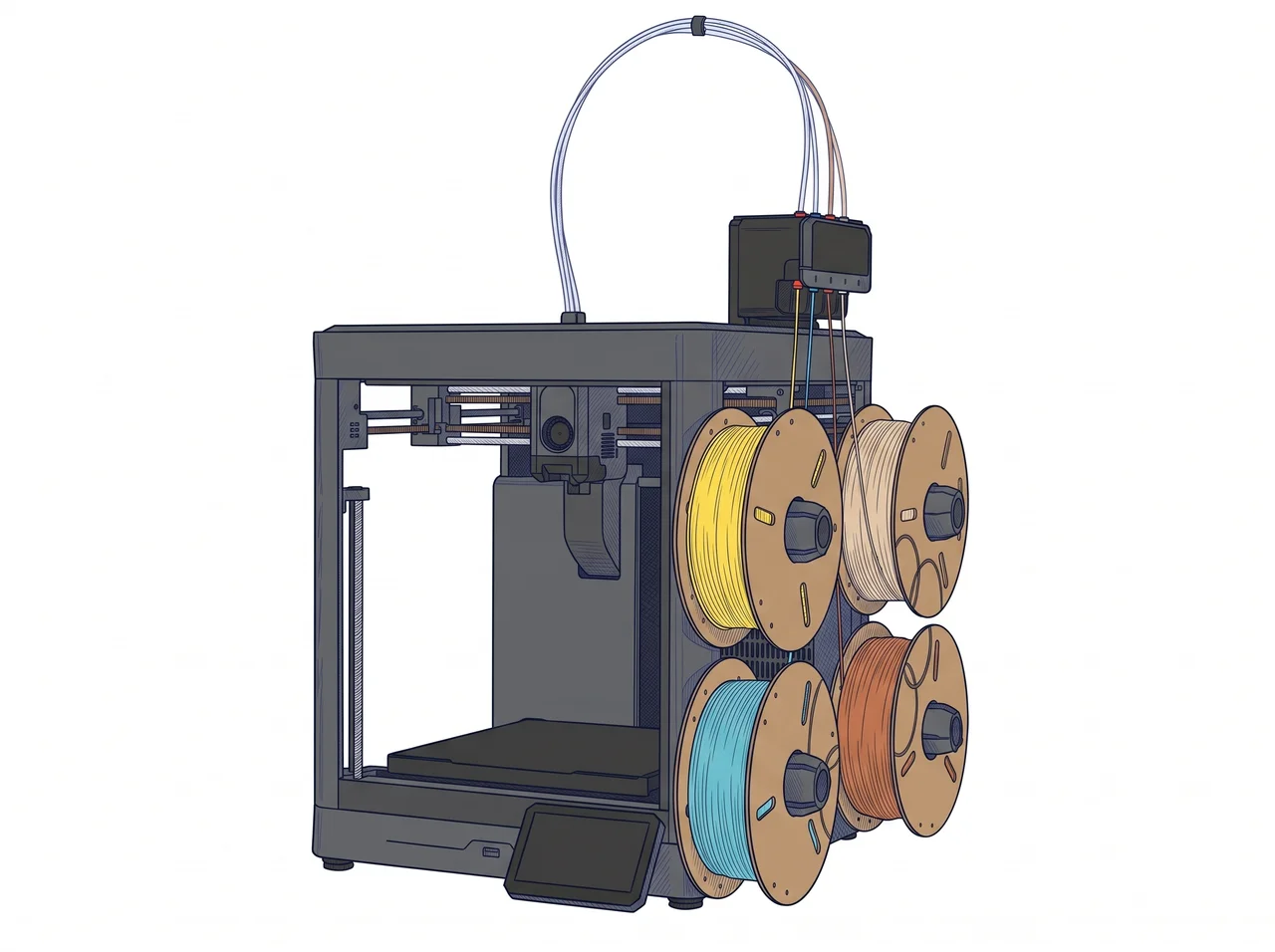
The differences that matter
- Colours: one against four → the Adventurer 4 prints single-colour parts, the Centauri makes multicolour models in one job.
- Speed: 150 mm/s against 500 mm/s (manufacturer's declared figures, Cartesian against CoreXY) → on a large part that can be the difference between an overnight print and a daytime one.
- Bed: 220×200 mm against 256×256 mm → a 240 mm long part has to be split on the Adventurer.
Which one to choose
Choose Adventurer 4 if…
You need an enclosed machine for the office or home, monitored remotely with the built-in camera, connected over Wi-Fi or Ethernet and independent of the cloud. It costs around €450–700. You accept a single colour, closed firmware without Klipper and updating temperatures by hand after a nozzle change.
Choose Centauri 2 Combo if…
You want colour prints without buying anything else, with wider parts and shorter print times on large models. Colours are handled by the CANVAS system included in the Combo. You accept that multicolour depends on that unit.
Where to buy
Paid link: the price for you does not change. Methodology
As an Amazon Associate I earn from qualifying purchases.
MakerSpecs is an independent atlas. We don't sell products: the purchase links are the same as on the two product sheets and don't influence the verdict. The sheets have the complete data.