Prusa Research XL vs Snapmaker U1
Technical comparison · Fused filament fabrication (FFF/FDM)
On paper they sit in the same class, but the XL costs about twice as much as the U1. The question is whether a larger build volume justifies almost a thousand euros more.
| Parameter | ||
|---|---|---|
| Identity | ||
| Launch year | 2025 | 2026 |
| Use tier | F2 — Intermediate | F2 — Intermediate |
| Price | ||
| Price (€) | ~1700–1900 € | 849 € |
| Universal specs | ||
| Dimensions (W×D×H) (cm) | — | 58.4 × 49.9 × 73 cm |
| Weight (kg) | — | 18.2 kg |
| Work area (mm) | 300 × 300 mm | 270 × 270 mm |
| Z-axis height (mm) | 330 mm | 270 mm |
| Power (W) | — | 1150 W |
| Voltage (V) | 230 V | — |
| Maximum speed | — | 500 mm/s |
| Declared precision | — | 0.04 mm |
| Category specs | ||
| Footprint X×Y (short side) (mm) | — | 270 mm |
| Build height Z (mm) | — | 270 mm |
| Kinematics | — | CoreXY |
| Max nozzle temperature (°C) | — | 300 °C |
| Max bed temperature (°C) | — | 100 °C |
| Max print speed (mm/s) | — | 500 mm/s |
| Enclosed chamber | — | No |
| Filament sensor | — | Yes |
| Auto bed leveling | — | Mesh |
| Standard nozzle diameter (mm) | — | 0.4 mm |
| Multi-extruder | — | Yes |
| Native Klipper | — | Yes |
| Input shaper | — | Yes |
| Multicolor printing | — | Yes |
| Multicolor requires accessory | — | No |
| Max colors | — | 4 |
| Ecosystem | ||
| Cloud dependency | No | No |
| Software notes | Compatible with PrusaSlicer (open source, with material profiles verified and maintained by Prusa Research), OrcaSlicer, and SuperSlicer, as well as any slicer that exports standard G-code. The firmware is based on Prusa Research's open-source Marlin fork, with input shaping support. Unlike Bambu Lab models, which use a partially proprietary protocol and work best with Bambu Studio, the CORE One L accepts generic G-code via USB, SD card, and PrusaConnect. The user is not locked into a single software ecosystem and can freely modify or update the firmware. | The primary software is Snapmaker Orca, an optimized version of the popular OrcaSlicer, which provides native management of the four toolheads and factory-calibrated material profiles. The printer can also be seamlessly managed via the Snapmaker mobile app for remote monitoring, taking advantage of the built-in 1080p camera. The internal firmware is built on Klipper, Moonraker, and Fluidd, which Snapmaker has made open-source, allowing experienced users to customize the machine and integrate it into complex workflows. |
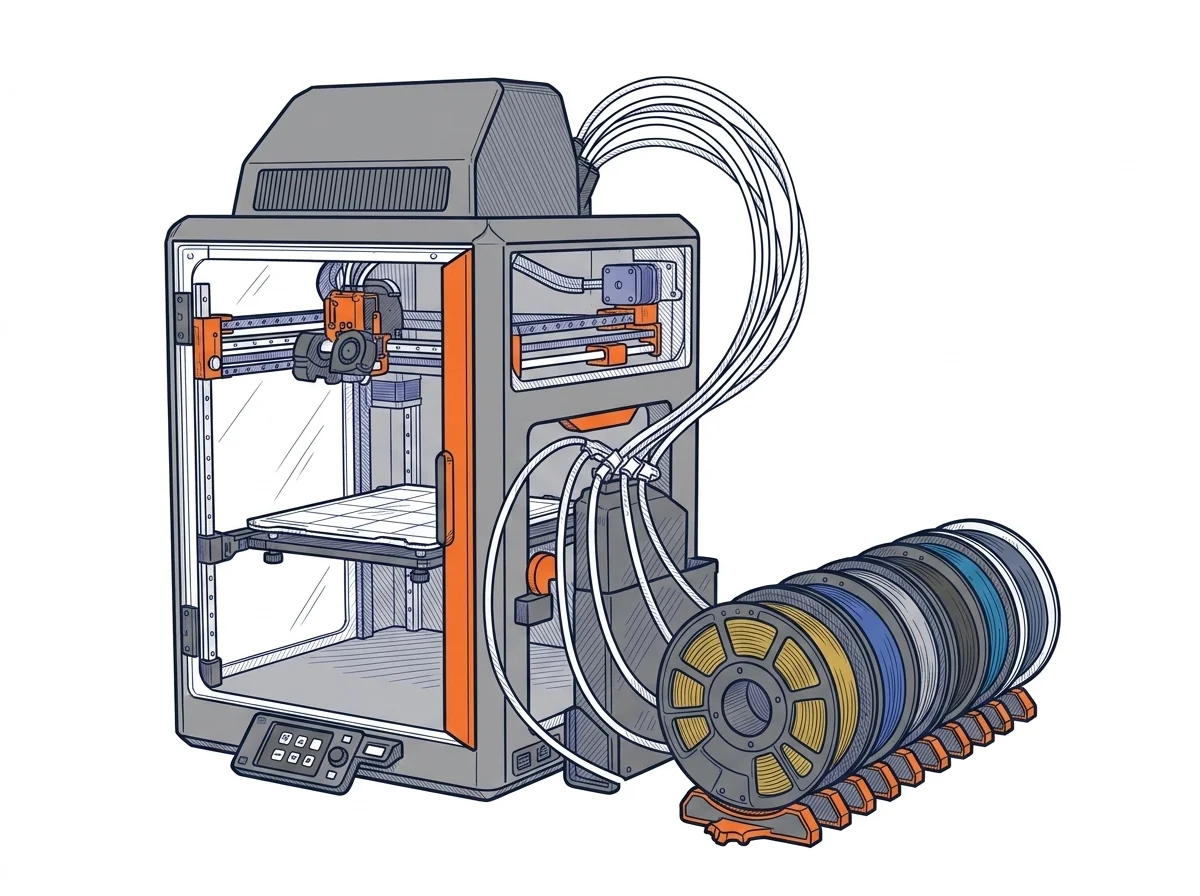
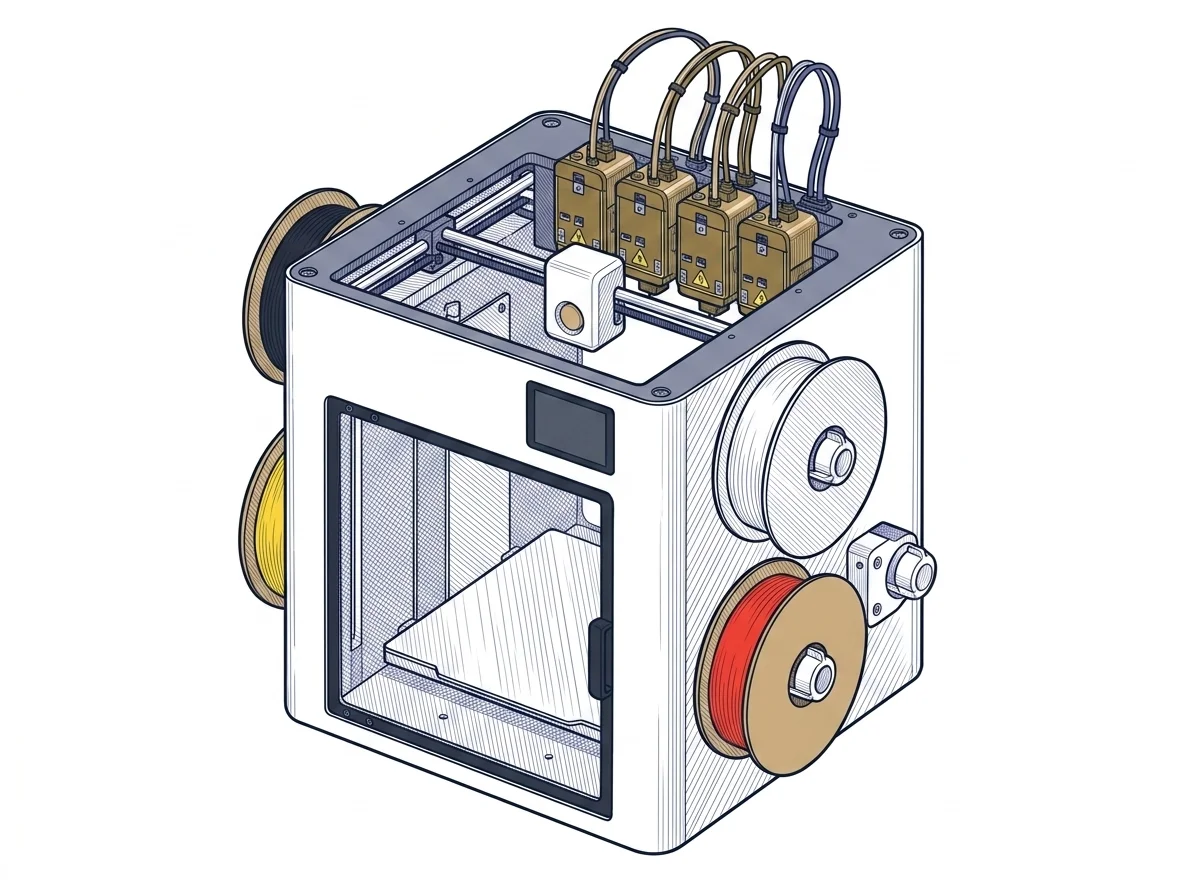
The differences that matter
- Price about €1,800 vs €849 → the gap alone is more than the price of a U1.
- Volume 300 × 300 × 330 mm vs 270 × 270 × 270 mm → the XL takes parts 30 mm wider and 60 mm taller.
- Four toolheads on the U1 → up to four colours with no add-on.
- Slicers: the XL takes PrusaSlicer, OrcaSlicer and any program that exports G-code; the U1 works with Snapmaker Orca.
Which one to choose
Choose XL if…
Large parts printed whole, without splitting them into pieces to glue. Prusa's open-source firmware takes generic G-code from USB, SD or PrusaConnect, so you are not tied to a single slicer. The trade-off is the outlay, which is more than double.
Choose U1 if…
Multicolour objects with the four toolheads already built in, watched from the app through the 1080p camera; the Klipper firmware is open and can be modified. You give up the extra room of the XL's bed.
Where to buy
Paid link: the price for you does not change. Methodology
MakerSpecs is an independent atlas. We don't sell products: the purchase links are the same as on the two product sheets and don't influence the verdict. The sheets have the complete data.