Creality Ender-3 V3 KE vs Prusa Research MINI+ Enclosure Bundle
Technical comparison · Fused filament fabrication (FFF/FDM)
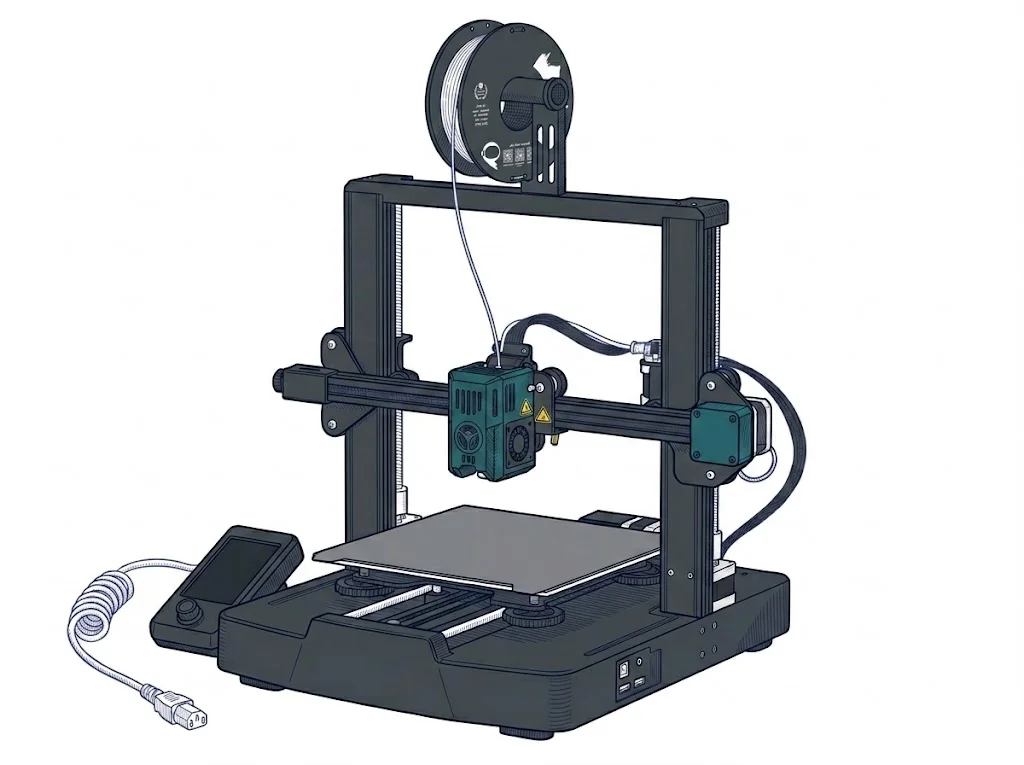
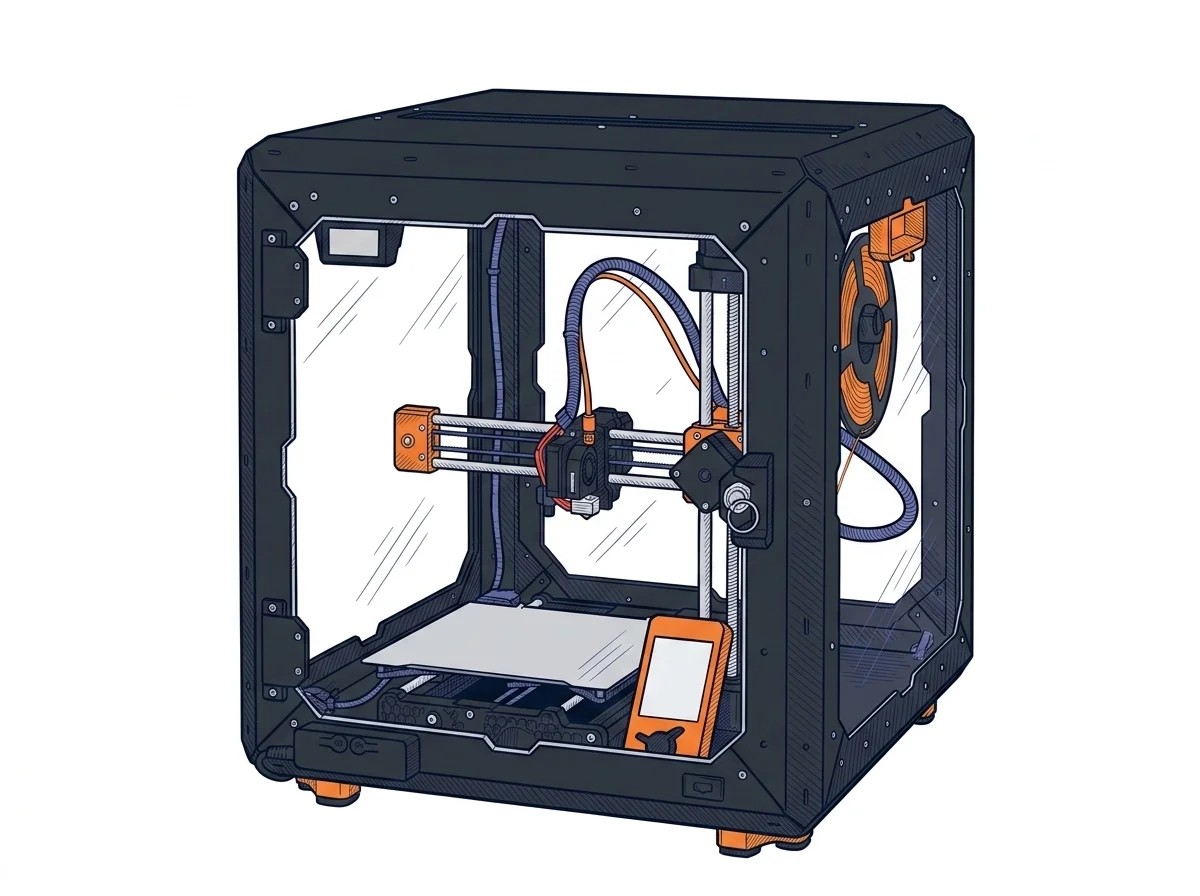
An Ender-3 V3 KE against a MINI+ released three years earlier: the Creality costs €210 less and has more bed and more height. The MINI+ answers with the Prusa ecosystem and a small footprint.
| Parameter | ||
|---|---|---|
| Identity | ||
| Launch year | 2023 | 2020 |
| Use tier | F2 — Intermediate | F2 — Intermediate |
| Price | ||
| Price (€) | 299 € | 509 € |
| Price updated on | 06/2026 | — |
| Universal specs | ||
| Dimensions (W×D×H) (cm) | 43.3 × 36.6 × 49 cm | 38 × 33 × 38 cm |
| Weight (kg) | 7.8 kg | 4.5 kg |
| Work area (mm) | 220 × 220 mm | 180 × 180 mm |
| Z-axis height (mm) | 240 mm | 180 mm |
| Power (W) | 350 W | 150 W |
| Voltage (V) | — | 230 V |
| Maximum speed | 500 mm/s | 200 mm/s |
| Declared precision | 0.1 ±mm | 0.05 mm |
| Category specs | ||
| Footprint X×Y (short side) (mm) | 220 mm | 180 mm |
| Build height Z (mm) | 240 mm | 180 mm |
| Kinematics | Cartesian | Cartesian |
| Max nozzle temperature (°C) | 300 °C | 280 °C |
| Max bed temperature (°C) | 100 °C | 100 °C |
| Max print speed (mm/s) | 500 mm/s | 180 mm/s |
| Enclosed chamber | No | No |
| Filament sensor | Yes | No |
| Auto bed leveling | Mesh | Mesh |
| Standard nozzle diameter (mm) | 0.4 mm | 0.4 mm |
| Multi-extruder | No | No |
| Native Klipper | Yes | No |
| Input shaper | Yes | Yes |
| Multicolor printing | No | No |
| Multicolor requires accessory | No | Yes |
| Max colors | 1 | — |
| Ecosystem | ||
| Cloud dependency | No | No |
| Software notes | Powered by Creality OS (based on Klipper), it supports LAN and cloud control via the Creality Print app. It remains compatible with major third-party slicers like Cura and PrusaSlicer. | PrusaSlicer, with pre-verified profiles for Input Shaper and Pressure Advance, is the reference software, but the machine accepts standard G-code from any compatible slicer, such as Cura or Simplify3D. Remote management runs through Prusa Connect, via Ethernet or the optional ESP Wi-Fi module. The firmware is open-source and runs on the 32-bit Buddy board, not GRBL, and is OTA-updatable: the Prusa ecosystem provides optimized profiles and regular updates, but doesn't restrict the use of alternative software. |
The differences that matter
- €299 vs €509 → €210 left over for filament and spares.
- Bed 220×220 mm and Z 240 mm vs 180×180 mm and Z 180 mm → a part 200 mm wide does not fit on the MINI+.
- Declared top speed 500 mm/s vs 180 mm/s → large parts take more hours on the MINI+.
- Filament sensor present vs absent → on the MINI+ a spool that runs out mid-part is not flagged.
Which one to choose
Choose Ender-3 V3 KE if…
You print parts up to 220×220×240 mm with Klipper and a filament sensor, and spend €299. Declared top speed is 500 mm/s and the machine is controlled from the local network with the Creality Print app, or with Cura and PrusaSlicer. The trade-off: declared precision is 0.1 mm against the MINI+'s 0.05 mm.
Choose MINI+ Enclosure Bundle if…
You want a small machine, 38×33×38 cm and 4.5 kg, with PrusaSlicer and profiles already verified for Input Shaper and Pressure Advance, Prusa Connect over Ethernet or the optional Wi-Fi module, and open-source firmware updatable over the air. You accept a 180×180×180 mm volume, a declared top speed of 180 mm/s and no filament sensor, for €210 more.
Where to buy
Paid link: the price for you does not change. Methodology
Filaments for these printers
The most chosen spools among the materials both printers can print according to their specifications.
- ELEGOO PLA PLA1.75 mm1 kg Check the price on Amazon →
- Bambu Lab PLA PLA1.75 mm1 kg Check the price on Amazon →
- SUNLU PETG (Polyethylene Terephthalate Glycol) PETG (Polyethylene Terephthalate Glycol)1.75 mm1 kg Check the price on Amazon →
- SUNLU PLA PLA1.75 mm1 kg Check the price on Amazon →
- OVERTURE PETG (Polyethylene Terephthalate Glycol) PETG (Polyethylene Terephthalate Glycol)High speed1.75 mm1 kg Check the price on Amazon →
Paid link: the price for you does not change. Methodology
As an Amazon Associate I earn from qualifying purchases.
MakerSpecs is an independent atlas. We don't sell products: the purchase links are the same as on the two product sheets and don't influence the verdict. The sheets have the complete data.