Artillery M1 Pro S1 vs Qidi Tech Q2 Combo
Technical comparison · Fused filament fabrication (FFF/FDM)
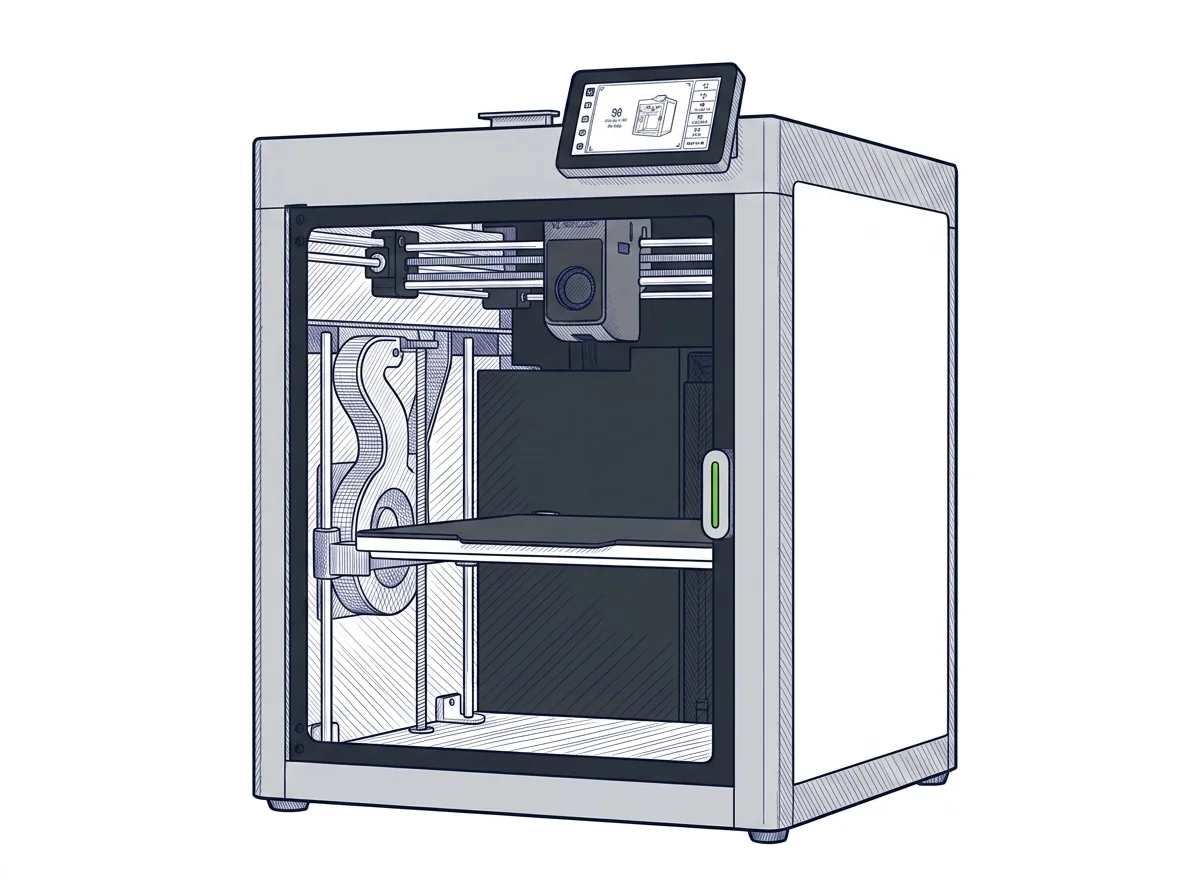
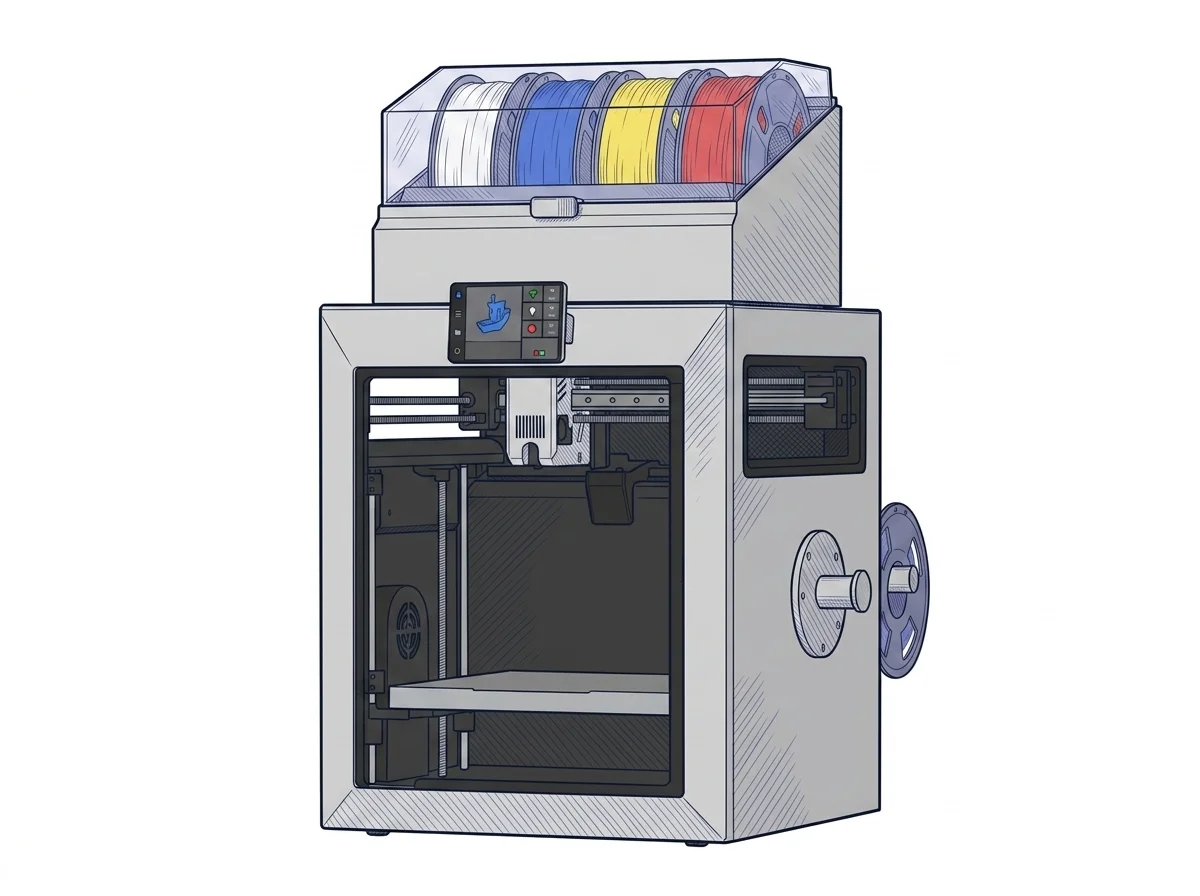
Two enclosed CoreXY printers with a 260–270 mm bed, split by price: the Artillery costs about €330 less (indicative list prices) and needs an accessory for multicolor, while the Q2 Combo does not.
| Parameter | ||
|---|---|---|
| Identity | ||
| Launch year | 2026 | 2025 |
| Use tier | F2 — Intermediate | F2 — Intermediate |
| Price | ||
| Price (€) | ~295–350 € | ~600–700 € |
| Universal specs | ||
| Dimensions (W×D×H) (cm) | 43.7 × 38.9 × 49.4 cm | 40.2 × 43.8 × 49.4 cm |
| Weight (kg) | — | 18.1 kg |
| Work area (mm) | 260 × 260 mm | 270 × 270 mm |
| Z-axis height (mm) | 260 mm | 256 mm |
| Power (W) | 150 W | 630 W |
| Maximum speed | 600 mm/s | 600 mm/s |
| Declared precision | 0.1 mm | — |
| Category specs | ||
| Footprint X×Y (short side) (mm) | 260 mm | — |
| Build height Z (mm) | 260 mm | 256 mm |
| Kinematics | CoreXY | CoreXY |
| Max nozzle temperature (°C) | — | 370 °C |
| Max bed temperature (°C) | 120 °C | 120 °C |
| Max print speed (mm/s) | 600 mm/s | 600 mm/s |
| Enclosed chamber | Yes | Yes |
| Filament sensor | — | Yes |
| Auto bed leveling | — | Mesh |
| Standard nozzle diameter (mm) | — | 0.4 mm |
| Multi-extruder | No | No |
| Native Klipper | No | Yes |
| Input shaper | — | Yes |
| Multicolor printing | Yes | Yes |
| Multicolor requires accessory | Yes | No |
| Ecosystem | ||
| Cloud dependency | No | No |
| Software notes | Artillery OS, a Klipper-based system. Compatible with standard slicers like Cura, PrusaSlicer and OrcaSlicer via G-code. Supports Wi-Fi transfer, SD card and touchscreen control. Compared to closed platforms, it allows advanced adjustment of printing parameters, but lacks a native cloud ecosystem and requires manual slicer configuration. | Natively compatible with QIDI Studio, a slicing software based on PrusaSlicer and Orca Slicer, which ensures an efficient workflow for multi-color management. It also supports other third-party slicers, providing users with excellent flexibility. Built-in Wi-Fi and Ethernet connectivity facilitate remote job submission and monitoring. |
The differences that matter
- About €320 vs about €650 → €330 left over for filament and accessories.
- Multicolor with an accessory vs without → on the Artillery every extra color goes through a module you have to buy.
- Artillery OS on a Klipper base vs native Klipper with a standard web interface → on the Q2 Combo you run the machine from the browser.
- Bed 260×260 mm vs 270×270 mm → a 270 mm part fits on the Q2 Combo.
Which one to choose
Choose M1 Pro S1 if…
You want an enclosed CoreXY for roughly half the money: around €320 against €650. The firmware is Artillery OS, built on Klipper, with your choice of Cura, PrusaSlicer or OrcaSlicer, and transfer by Wi-Fi or SD card. The trade-off: printing in several colors needs an accessory, and the slicer has to be set up by hand, with no ready-made workflow.
Choose Q2 Combo if…
You work in several colors and want to start without add-ons: the Q2 Combo lists no accessory as required, works with QIDI Studio, has Wi-Fi and Ethernet, and runs native Klipper with its standard web interface. You pay about €330 more and gain a 270×270 mm bed.
Where to buy
Paid link: the price for you does not change. Methodology
As an Amazon Associate I earn from qualifying purchases.
MakerSpecs is an independent atlas. We don't sell products: the purchase links are the same as on the two product sheets and don't influence the verdict. The sheets have the complete data.