Anycubic Photon Mono 4 vs Formlabs Form 4
Technical comparison · Resin 3D printing
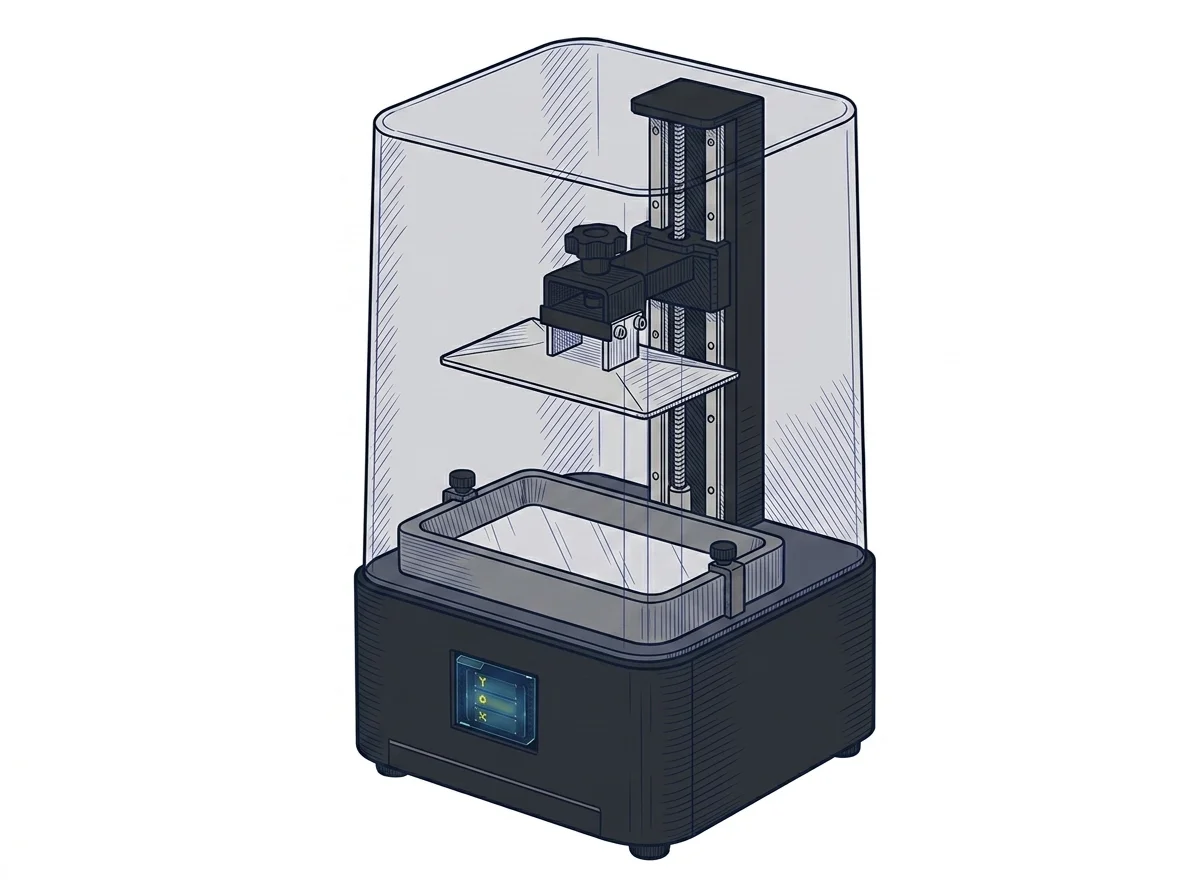
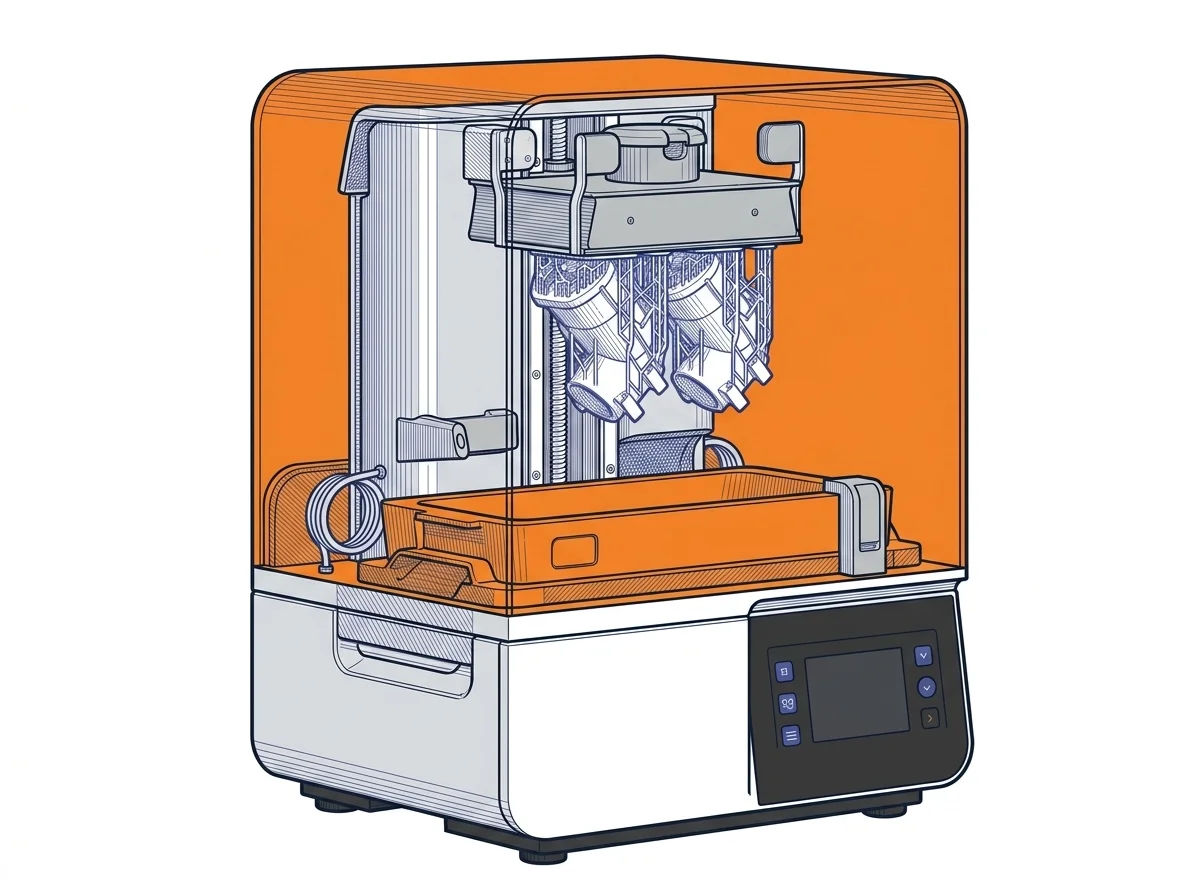
The Photon Mono 4 and the Form 4 don't compete on the same ground: the first costs €215, the second €4349, almost twenty times as much. But the price gap doesn't tell the whole story: the Photon Mono 4 prints at 17 μm XY resolution, finer than the Form 4's 50 μm, while the Form 4 wins on build volume (200×125 mm vs 153.4×87 mm) and on a closed software ecosystem built for professional use.
| Parameter | ||
|---|---|---|
| Identity | ||
| Launch year | 2024 | 2024 |
| Use tier | F2 — Intermediate | F3 — Advanced |
| Price | ||
| Price (€) | ~180–250 € | 4349 € |
| Universal specs | ||
| Dimensions (W×D×H) (cm) | — | 39.8 × 36.7 × 55.4 cm |
| Weight (kg) | — | 18.3 kg |
| Work area (mm) | 153.4 × 87 mm | 200 × 125 mm |
| Z-axis height (mm) | 165 mm | 210 mm |
| Power (W) | — | 480 W |
| Voltage (V) | — | 240 V |
| Maximum speed | 1.17 mm/min | 100 |
| Declared precision | 17 μm | 50 μm |
| Category specs | ||
| Build area XY (short side) (mm) | 87 mm | 125 mm |
| XY resolution (µm) | 17 µm | 50 µm |
| Light source | Mono LCD | Mono LCD |
| UV power (mW/cm²) | — | 16 mW/cm² |
| Print speed (mm/h) | 70.2 mm/h | 100 mm/h |
| Tilt / peel system | Standard FEP | — |
| Ecosystem | ||
| Cloud dependency | No | No |
| Software notes | The device is fully compatible with the main third-party slicing software options on the market, including widely popular solutions such as Chitubox and Lychee Slicer, alongside the proprietary Anycubic Photon Workshop application. This flexibility allows users to manage advanced exposure parameters, supports, and tolerance compensation without proprietary constraints. File preparation occurs primarily via offline transfer using a USB port, ensuring a stable workflow independent of active network connections. Managing print profiles for various commercial resins is highly intuitive, facilitating the optimization of layer-by-layer curing times for both standard materials and advanced formulations. | The printing process is managed by the proprietary PreForm software, a closed application that automatically optimizes model orientation, support generation, and production time calculations. This software environment is designed to ensure a highly streamlined and standardized workflow, ideal for professional contexts where result predictability is crucial. PreForm integrates seamlessly with the manufacturer's ecosystem, receiving continuous updates that introduce new profiles for proprietary resins. The machine also offers optional access to Fleet Control and the cloud-based Dashboard platform, which are advanced tools that allow users to monitor print queues, manage multiple units in parallel, and track material consumption in real time remotely. |
The differences that matter
- Price: Photon Mono 4 €215 vs Form 4 €4349 — Photon Mono 4 wins (+1923%)
- XY resolution: Photon Mono 4 17 μm vs Form 4 50 μm — Photon Mono 4 wins
- Work area: Photon Mono 4 153.4×87 mm vs Form 4 200×125 mm — Form 4 wins (+87%)
Which one to choose
Choose Photon Mono 4 if…
Pick the Photon Mono 4 if budget is the deciding factor and you print miniatures or jewelry where fine detail matters: 17 μm XY resolution at a twentieth of the Form 4's price.
Choose Form 4 if…
Pick the Form 4 if you work professionally and need a closed, predictable pipeline: PreForm handles orientation and supports automatically, and Fleet Control lets you monitor multiple printers remotely — features the Photon Mono 4 doesn't offer.
Where to buy
Paid link: the price for you does not change. Methodology
MakerSpecs is an independent atlas. We don't sell products: the purchase links are the same as on the two product sheets and don't influence the verdict. The sheets have the complete data.