Anycubic Photon Mono 4 vs Elegoo Saturn 4 Ultra 16K
Technical comparison · Resin 3D printing
Choose Anycubic Photon Mono 4 if you are looking for an affordable machine with very high XY resolution (17 µm) for smaller prints. Choose Elegoo Saturn 4 Ultra 16K if you need a larger build volume (218.88 × 122.88 × 220 mm), print speeds of 150 mm/h, and Wi-Fi connectivity.
| Parameter | ||
|---|---|---|
| Identity | ||
| Launch year | 2024 | 2024 |
| Use tier | F2 — Intermediate | F2 — Intermediate |
| Price | ||
| Price (€) | ~180–250 € | 399 € |
| Universal specs | ||
| Dimensions (W×D×H) (cm) | — | 32.74 × 32.92 × 54.8 cm |
| Weight (kg) | — | 14.5 kg |
| Work area (mm) | 153.4 × 87 mm | 218.88 × 122.88 mm |
| Z-axis height (mm) | 165 mm | 220 mm |
| Power (W) | — | 144 W |
| Voltage (V) | — | 110 V |
| Maximum speed | 1.17 mm/min | 150 mm/min |
| Declared precision | 17 μm | 19 μm |
| Category specs | ||
| Build area XY (short side) (mm) | 87 mm | 122.88 mm |
| XY resolution (µm) | 17 µm | 19 µm |
| Light source | Mono LCD | Mono LCD |
| Print speed (mm/h) | 70.2 mm/h | 150 mm/h |
| Tilt / peel system | Standard FEP | Tilt |
| Ecosystem | ||
| Cloud dependency | No | No |
| Software notes | The device is fully compatible with the main third-party slicing software options on the market, including widely popular solutions such as Chitubox and Lychee Slicer, alongside the proprietary Anycubic Photon Workshop application. This flexibility allows users to manage advanced exposure parameters, supports, and tolerance compensation without proprietary constraints. File preparation occurs primarily via offline transfer using a USB port, ensuring a stable workflow independent of active network connections. Managing print profiles for various commercial resins is highly intuitive, facilitating the optimization of layer-by-layer curing times for both standard materials and advanced formulations. | The system natively supports ChituBox proprietary slicing software, widely adopted in the resin printing industry, ensuring smooth management of supports and exposure parameters. The machine integrates Wi-Fi connection modules that enable remote management and workflow monitoring. Compatibility with open formats ensures operational flexibility with leading third-party programs, allowing users to optimize printing profiles based on the specific resins used, whether standard or engineering-grade. |
The differences that matter
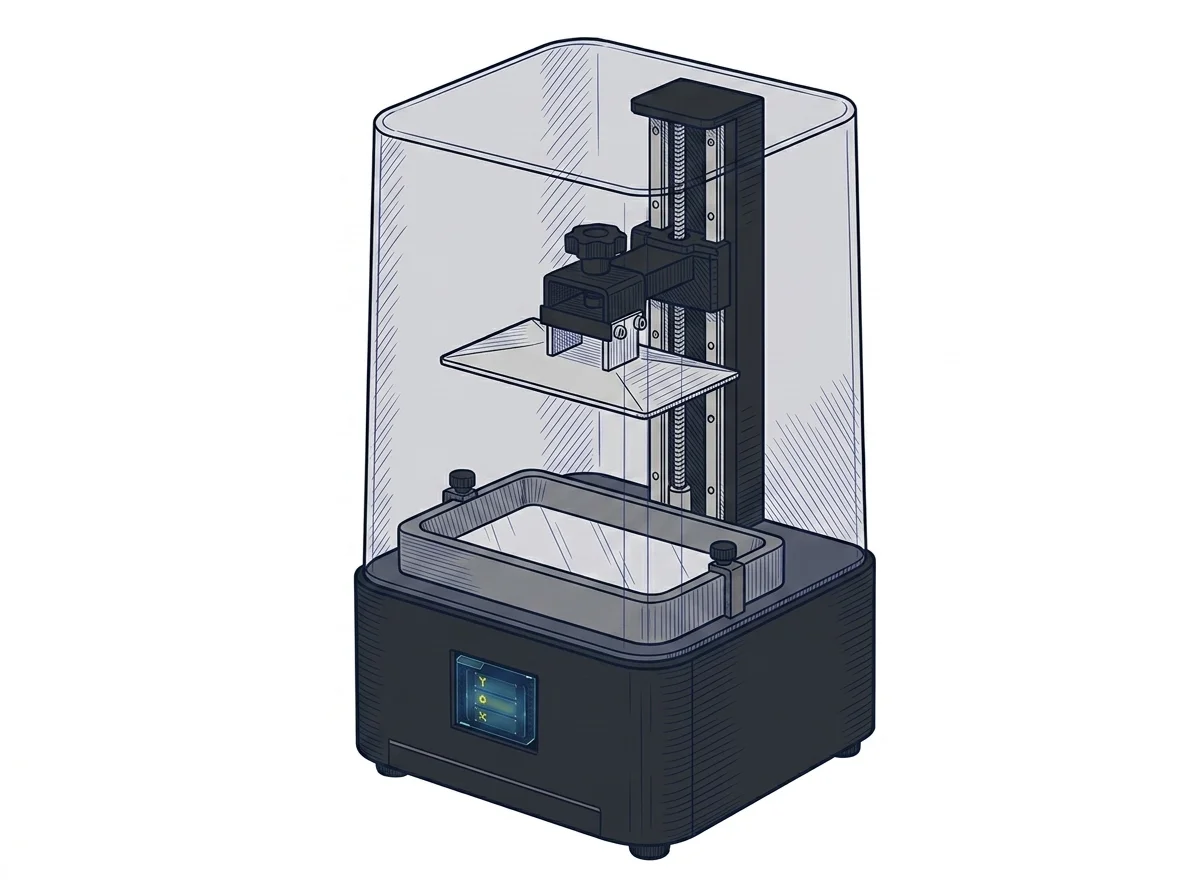
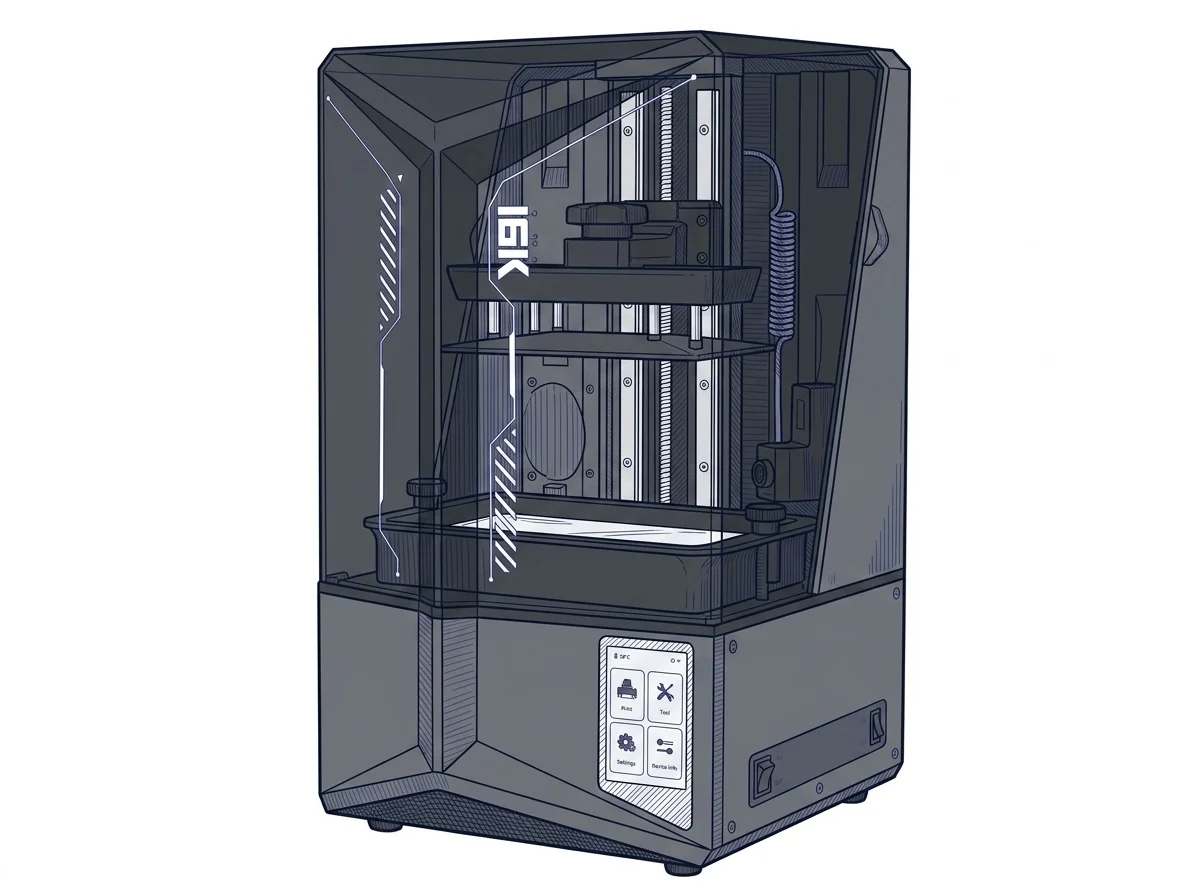
- Build Volume: The Saturn 4 Ultra 16K offers a much larger area (218.88 × 122.88 × 220 mm) compared to the 153.4 × 87 × 165 mm of the Photon Mono 4.
- Speed and Peel System: Elegoo reaches 150 mm/h utilizing a tilt release mechanism, whereas Anycubic operates at 70.2 mm/h with a standard FEP.
- XY Precision: Anycubic claims a slightly better resolution (17 µm) against the 19 µm of the Elegoo model.
- Price and Connectivity: The Photon Mono 4 is more affordable (~180–250 €) and relies entirely on offline USB transfers; the Saturn 4 Ultra (399 €) adds Wi-Fi for remote operation.
Which one to choose
Choose Photon Mono 4 if…
Choose Anycubic Photon Mono 4 if you have a limited budget (~180–250 €) and your models fit within a 153.4 × 87 × 165 mm build area. With a 17 µm XY precision and a standard FEP peel system, it delivers highly detailed parts through an offline USB workflow.
Choose Saturn 4 Ultra 16K if…
Choose Elegoo Saturn 4 Ultra 16K if you require higher productivity driven by a 150 mm/h print speed and a tilt-based peeling system. Priced at 399 €, it provides a large 218.88 × 122.88 × 220 mm build volume and supports remote management via Wi-Fi.
Where to buy
Paid link: the price for you does not change. Methodology
As an Amazon Associate I earn from qualifying purchases.
MakerSpecs is an independent atlas. We don't sell products: the purchase links are the same as on the two product sheets and don't influence the verdict. The sheets have the complete data.