Qidi Tech Max4 3D Printer vs Snapmaker 2.0 F350
Technical comparison · Fused filament fabrication (FFF/FDM)
Max4 3D Printer and 2.0 F350 are not direct competitors: different use classes (F4 vs F2). 2.0 F350 costs less (~€999) and is the entry-level choice; Max4 3D Printer offers more capability at a higher price (~€1049). Judge them by budget, not head-to-head.
| Parameter |
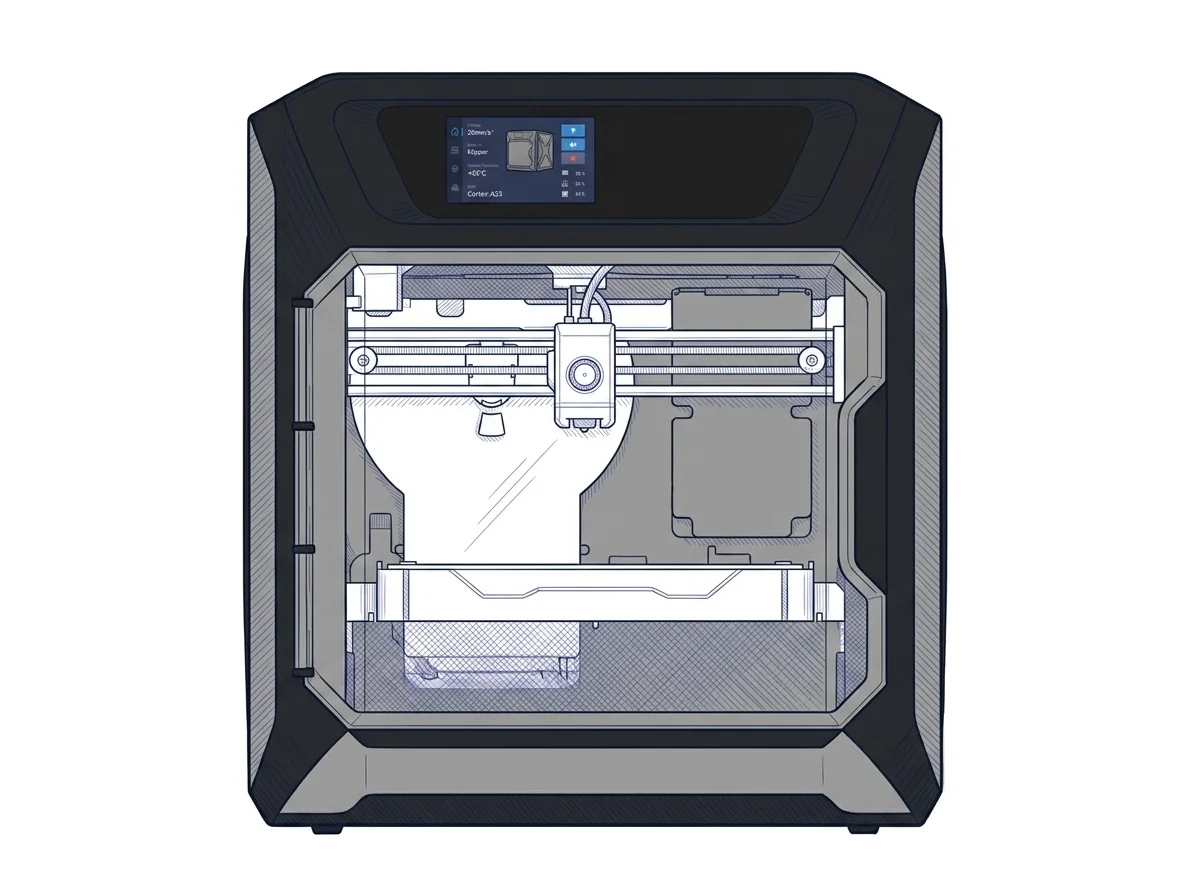 Max4 3D Printer
Qidi Tech
F4 · Semi-professional
Max4 3D Printer
Qidi Tech
F4 · Semi-professional
|
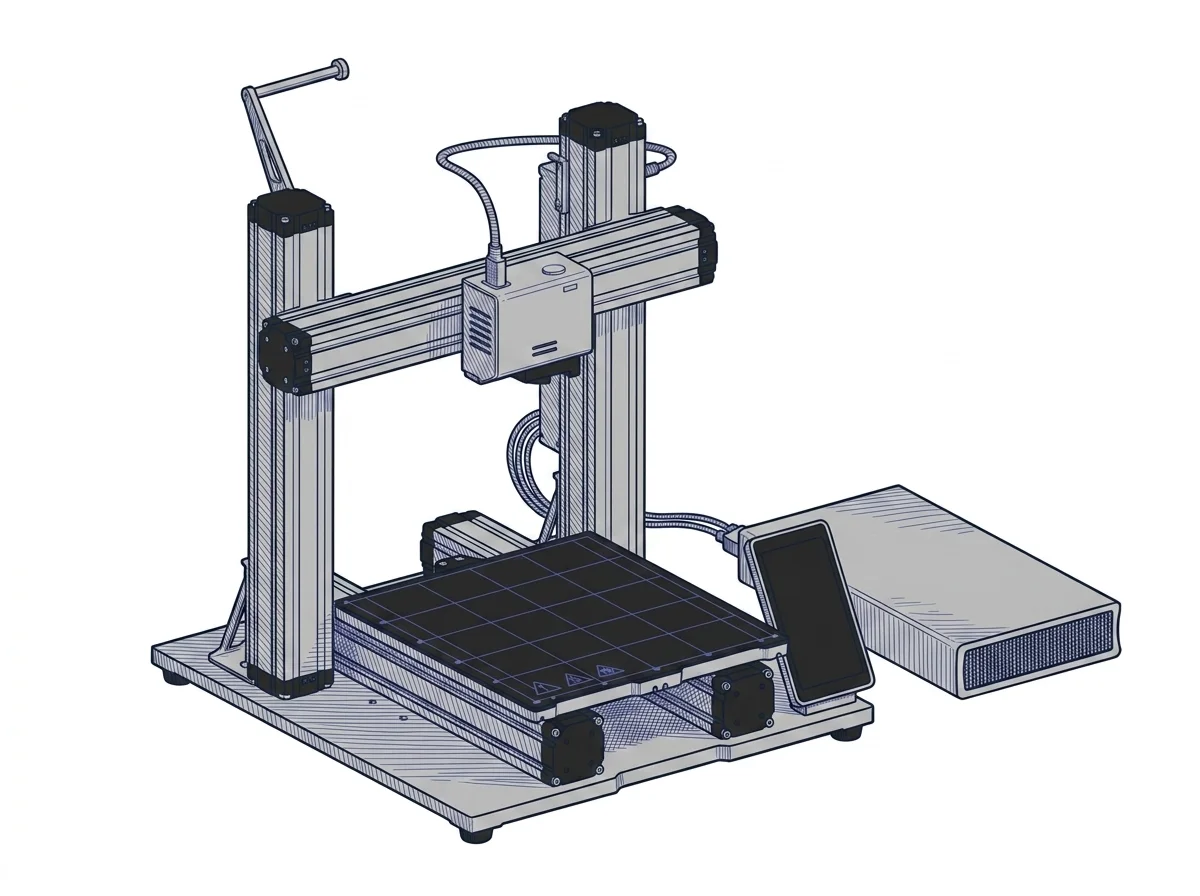 2.0 F350
Snapmaker
F2 · Intermediate
2.0 F350
Snapmaker
F2 · Intermediate
|
|---|---|---|
| Identity | ||
| Launch year | 2026 | 2021 |
| Use tier | F4 — Semi-professional | F2 — Intermediate |
| Price | ||
| Price (€) | 1049 € | 999 € |
| Universal specs | ||
| Dimensions (W×D×H) (cm) | 55.8 × 57.8 × 61.2 cm | 49.5 × 50.6 × 58 cm |
| Weight (kg) | 40 kg | 24.2 kg |
| Work area (mm) | 390 × 390 mm | 320 × 350 mm |
| Z-axis height (mm) | 340 mm | 330 mm |
| Power (W) | — | 320 W |
| Voltage (V) | — | 220 V |
| Maximum speed | 800 mm/s | — |
| Declared precision | — | 0.05 mm |
| Category specs | ||
| Footprint X×Y (short side) (mm) | 390 mm | 320 mm |
| Build height Z (mm) | 340 mm | 330 mm |
| Kinematics | CoreXY | Cartesian |
| Max nozzle temperature (°C) | 370 °C | 275 °C |
| Max bed temperature (°C) | 120 °C | 80 °C |
| Max print speed (mm/s) | 800 mm/s | — |
| Enclosed chamber | True | False |
| Filament sensor | True | True |
| Auto bed leveling | Mesh | Mesh |
| Standard nozzle diameter (mm) | — | 0.4 mm |
| Multi-extruder | False | False |
| Native Klipper | True | False |
| Input shaper | True | False |
| Multicolor printing | True | False |
| Multicolor requires accessory | True | False |
| Max colors | 16 | 1 |
| Ecosystem | ||
| Cloud dependency | No | No |
| Software notes | The machine natively runs on Klipper firmware, offering comprehensive control and high computational speed for advanced features like input shaping. The user interface is managed locally via a large 5-inch touchscreen. Remote monitoring is facilitated by the integrated 1080p AI webcam with error detection for extrusion failures. For slicing, the manufacturer provides QIDI Studio, a software derived from PrusaSlicer/Bambu Studio, specifically optimized for high-temperature material profiles. Users can also access the Fluidd web interface for advanced control over the printer parameters and print offline via a USB drive or through the local network. | The printer is managed by the proprietary Snapmaker Luban software, which is free, intuitive, and offers pre-configured profiles for common materials. However, it is also fully compatible with leading third-party slicers such as Ultimaker Cura, PrusaSlicer, and Simplify3D. The machine is equipped with Wi-Fi connectivity and a USB port for flexible file transfer, along with a built-in 5-inch Android touchscreen for seamless local control, without requiring any cloud connectivity. |
The differences that matter
- Max colors: Max4 3D Printer 16 vs 2.0 F350 1 — Max4 3D Printer wins (+1500%)
- Enclosed chamber: Max4 3D Printer yes, 2.0 F350 no
- Work area: Max4 3D Printer 390×390 mm vs 2.0 F350 320×350 mm — Max4 3D Printer wins (+36%)
- Max nozzle temperature: Max4 3D Printer 370 °C vs 2.0 F350 275 °C — Max4 3D Printer wins (+35%)
- Max bed temperature: Max4 3D Printer 120 °C vs 2.0 F350 80 °C — Max4 3D Printer wins (+50%)
Which one to choose
Choose Max4 3D Printer if…
you value max colors, enclosed chamber and work area.
MakerSpecs is an independent atlas. We don't sell products: this comparison links to both sheets, where you'll find complete data and official links.