Qidi Tech Plus4 vs Qidi Tech Q2
Technical comparison · Fused filament fabrication (FFF/FDM)
Two enclosed CoreXY FDM printers with Klipper and multicolor via an accessory, identical on the technical side: only build size and price set them apart. The Q2 costs €300 less, the Plus4 prints larger parts.
| Parameter | ||
|---|---|---|
| Identity | ||
| Launch year | 2024 | 2025 |
| Use tier | F2 — Intermediate | F2 — Intermediate |
| Price | ||
| Price (€) | 799 € | 499 € |
| Universal specs | ||
| Dimensions (W×D×H) (cm) | 50.5 × 48.7 × 55 cm | 40.2 × 43.8 × 49.4 cm |
| Weight (kg) | 27 kg | 18.1 kg |
| Work area (mm) | 305 × 305 mm | 270 × 270 mm |
| Z-axis height (mm) | 280 mm | 256 mm |
| Power (W) | 850 W | 630 W |
| Voltage (V) | 240 V | — |
| Maximum speed | 600 mm/s | 600 mm/s |
| Category specs | ||
| Footprint X×Y (short side) (mm) | 305 mm | 270 mm |
| Build height Z (mm) | 280 mm | 256 mm |
| Kinematics | CoreXY | CoreXY |
| Max nozzle temperature (°C) | 370 °C | 370 °C |
| Max bed temperature (°C) | 120 °C | 120 °C |
| Max print speed (mm/s) | 600 mm/s | 600 mm/s |
| Enclosed chamber | Yes | Yes |
| Filament sensor | Yes | Yes |
| Auto bed leveling | Mesh | Mesh |
| Standard nozzle diameter (mm) | 0.4 mm | 0.4 mm |
| Multi-extruder | No | No |
| Native Klipper | Yes | Yes |
| Input shaper | Yes | Yes |
| Multicolor printing | Yes | Yes |
| Multicolor requires accessory | Yes | Yes |
| Max colors | 16 | 16 |
| Ecosystem | ||
| Cloud dependency | No | No |
| Software notes | The machine relies on an architecture based on Klipper firmware, which provides advanced computational performance and native features like input shaping to reduce vibrations during high-speed movements. Users can interface via the integrated 5-inch touchscreen or through the standard Klipper web interface. The recommended official slicing software is QIDI Studio, a program derived from PrusaSlicer and Orca Slicer, optimized to leverage the machine's profiles and proprietary print parameters. However, the system maintains an open approach and is fully compatible with third-party slicers such as Orca Slicer, PrusaSlicer, and Cura, ensuring maximum flexibility in the daily workflow. | The system is natively supported by QIDI Studio, a slicing software derived from PrusaSlicer and Orca Slicer, providing a modern interface and advanced features. The open architecture still allows the use of third-party slicing solutions. Network connectivity, via Wi-Fi or Ethernet, facilitates direct remote printing and monitoring, aided by the built-in camera. |
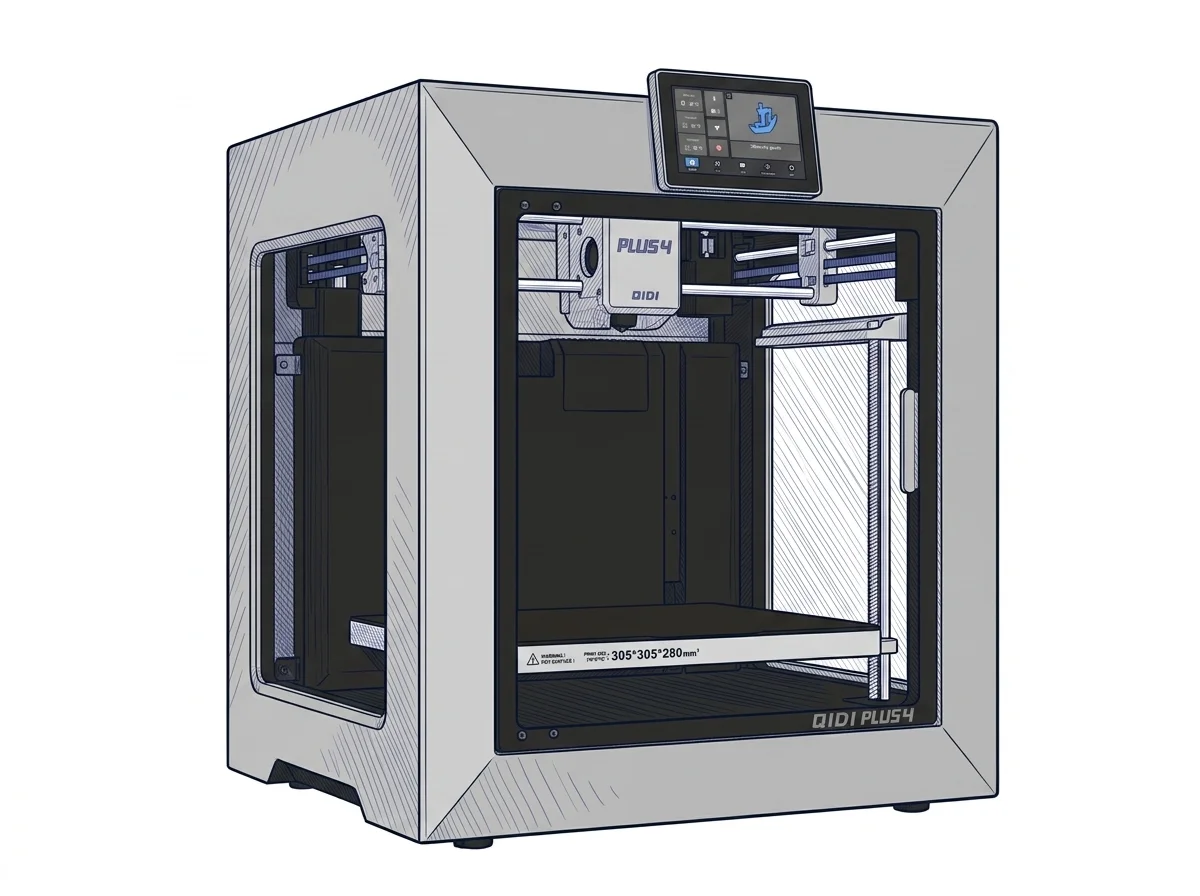
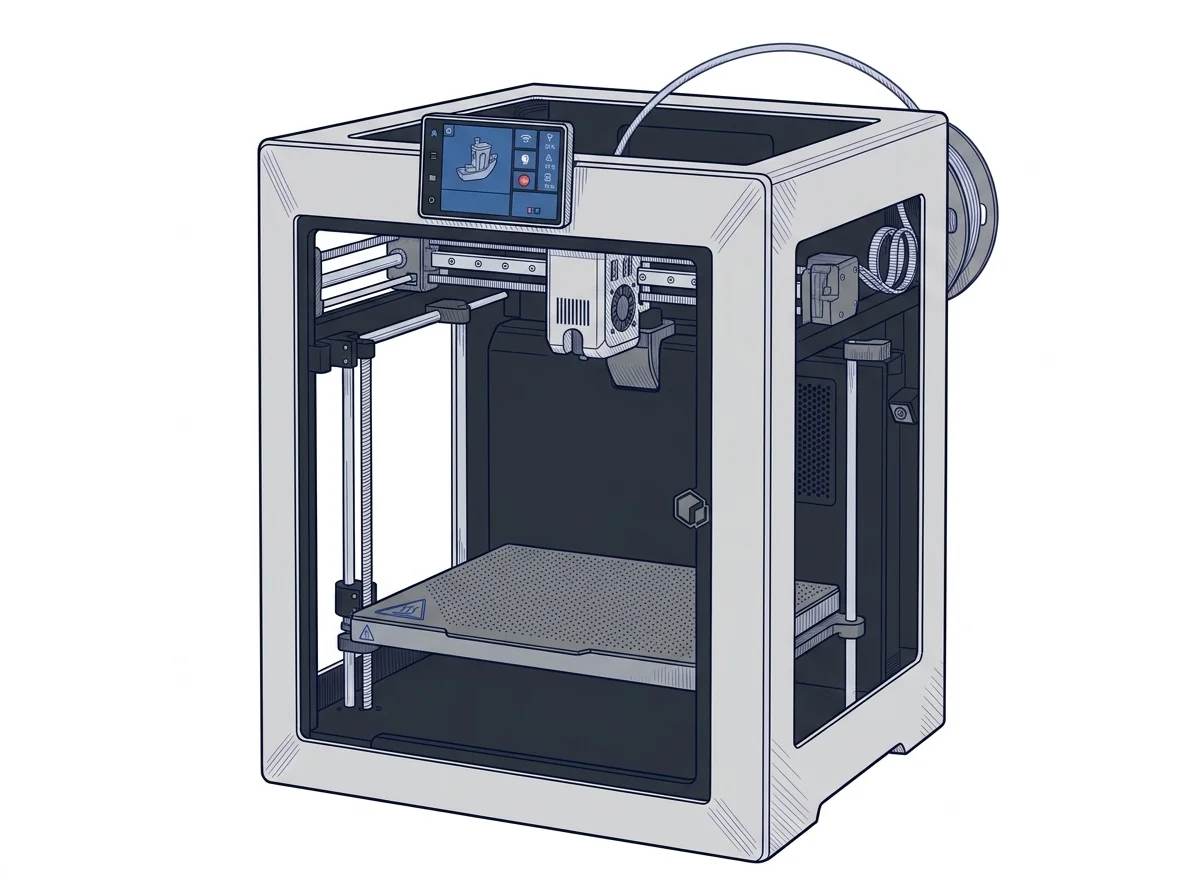
The differences that matter
- Price: €799 against €499 → the Q2 costs €300 less.
- Build plate: 305 × 305 mm against 270 × 270 mm → the Plus4 takes parts 35 mm larger per side.
- Build height: 280 mm against 256 mm → tall parts get 24 mm more room on the Plus4.
Which one to choose
Choose Plus4 if…
you print parts that do not fit the Q2's plate: the Plus4 gives more room in length and in height. Expect a machine that weighs 27 kg and takes up 50.5 × 48.7 cm, and a higher spend.
Choose Q2 if…
you do not need parts beyond its plate and want to spend less. It weighs 18.1 kg and takes up 40.2 × 43.8 cm; it has a built-in camera and Wi-Fi or Ethernet for remote printing.
Where to buy
Paid link: the price for you does not change. Methodology
As an Amazon Associate I earn from qualifying purchases.
Filaments for these printers
The most chosen spools among the materials both printers can print according to their specifications.
- ELEGOO PLA PLA1.75 mm1 kg Check the price on Amazon →
- Bambu Lab PLA PLA1.75 mm1 kg Check the price on Amazon →
- SUNLU PETG (Polyethylene Terephthalate Glycol) PETG (Polyethylene Terephthalate Glycol)1.75 mm1 kg Check the price on Amazon →
- SUNLU PLA PLA1.75 mm1 kg Check the price on Amazon →
- OVERTURE PETG (Polyethylene Terephthalate Glycol) PETG (Polyethylene Terephthalate Glycol)High speed1.75 mm1 kg Check the price on Amazon →
Paid link: the price for you does not change. Methodology
As an Amazon Associate I earn from qualifying purchases.
MakerSpecs is an independent atlas. We don't sell products: the purchase links are the same as on the two product sheets and don't influence the verdict. The sheets have the complete data.