Ortur H20 40W vs xTool S1 20W
Technical comparison · Diode laser (405–460 nm)
The price is practically the same (about €1300–1700 against €1300–1600), so the choice is between power and space: the H20 states twice the wattage, the S1 has the larger bed and a pass-through slot. Power ratings and cutting depths are the manufacturer's declared values.
| Parameter | ||
|---|---|---|
| Identity | ||
| Launch year | 2024 | 2023 |
| Use tier | F2 — Intermediate | F2 — Intermediate |
| Price | ||
| Price (€) | ~1300–1700 € | ~1300–1600 € |
| Universal specs | ||
| Dimensions (W×D×H) (cm) | 62.5 × 46.2 × 27.2 cm | 76.5 × 56.1 × 18.3 cm |
| Weight (kg) | 22.8 kg | 20 kg |
| Work area (mm) | 410 × 275 mm | 498 × 330 mm |
| Z-axis height (mm) | 98 mm | 42 mm |
| Maximum speed | 20000 mm/min | 600 mm/s |
| Declared precision | 0.01 mm | 0.01 mm |
| Category specs | ||
| Work area (short side) (mm) | 275 mm | 330 mm |
| Rated power (W) | 40 W | 20 W |
| Source technology | Diode | Diode |
| Max travel speed (mm/s) | 333.33 mm/s | 600 mm/s |
| Max processing speed (mm/s) | 333.33 mm/s | 600 mm/s |
| Max cut depth per material | 20mm wood, 15mm acrylic (single pass) | 10 mm wood |
| Wavelength (nm) | 450 nm | 455 nm |
| Autofocus | Yes | Yes |
| Rotary included/compatible | No | No |
| Passthrough | No | Yes |
| Supported software | LightBurn, Other | Proprietary, LightBurn |
| Laser class | Class 1 | — |
| Frame | Closed | — |
| Air assist | Included | — |
| Fume extraction | Exhaust port | — |
| Ecosystem | ||
| Cloud dependency | No | No |
| Software notes | Compatible with industry-standard software LightBurn and LaserGRBL, as well as Ortur's proprietary Inspiraesth application. Supports connectivity via USB, Wi-Fi, and local memory card. | The machine is managed through dual software compatibility that expands the user's operational possibilities. The proprietary program, developed directly by the manufacturer, provides an accessible interface and simplified positioning functions via sensors, facilitating workflow management even for less experienced operators. For professional contexts or advanced customization needs, the unit fully supports LightBurn, the industry standard for laser cutting. This integration allows the management of detailed parameters, complex vectorization, and customized material libraries. The machine operates primarily in local mode via USB connection or Wi-Fi network, reducing dependency on external cloud services and ensuring operational continuity even in the absence of a stable internet connection. |
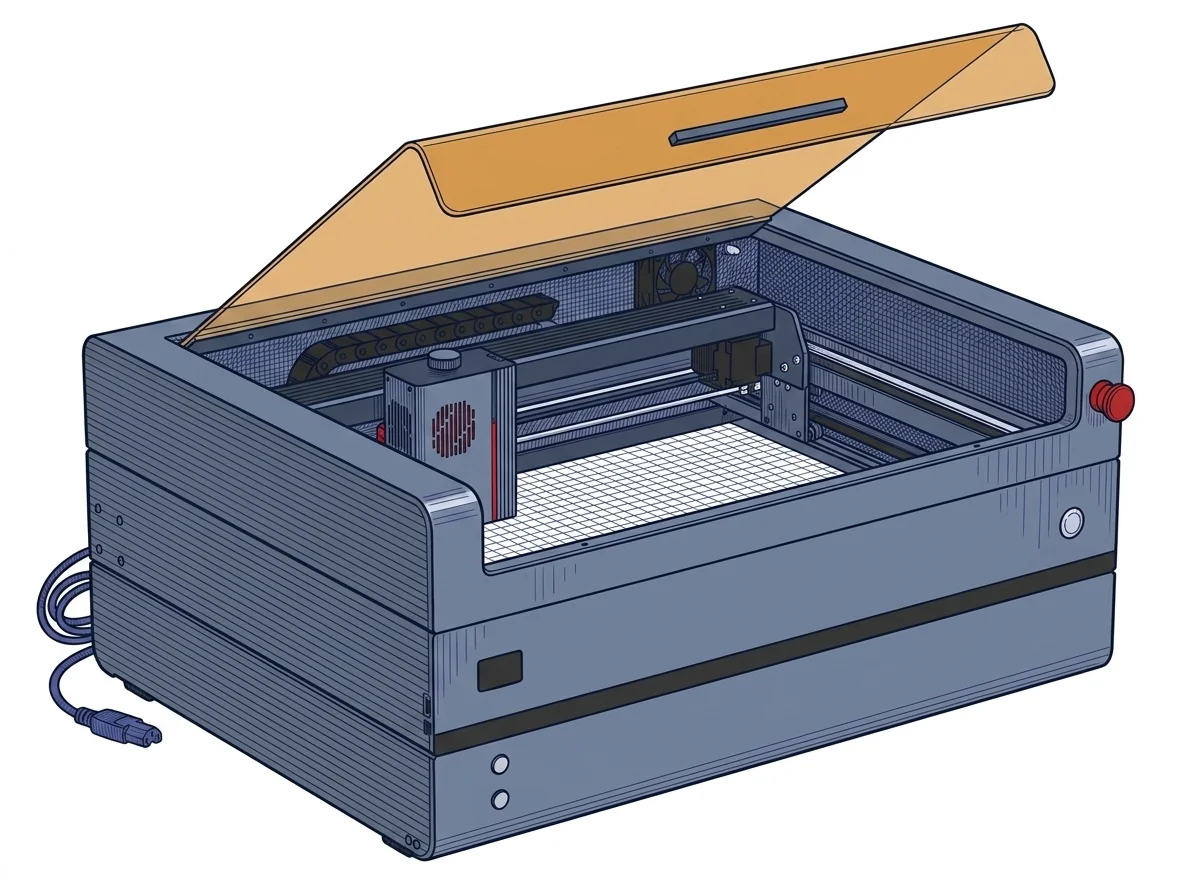
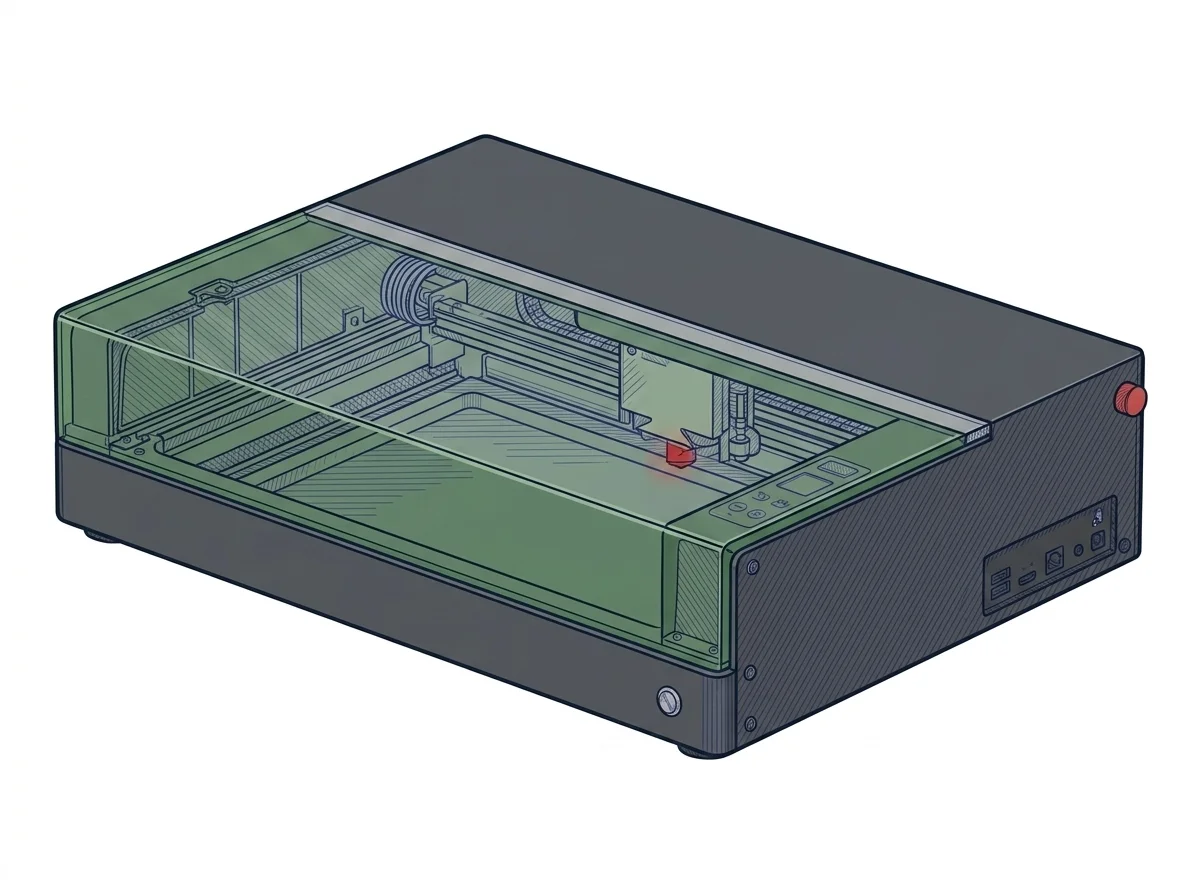
The differences that matter
- 40 W against 20 W → the H20 cuts wood up to 20 mm and acrylic up to 15 mm in a single pass (declared); on the S1, wood goes up to 10 mm.
- Bed 410 × 275 mm against 498 × 330 mm → larger sheets fit on the S1 without repositioning.
- Pass-through on the S1 only → pieces longer than the bed are worked in sections.
- Top speed 20000 mm/min against 36000 mm/min → large engravings finish sooner on the S1.
Which one to choose
Choose H20 40W if…
you cut thick wood and acrylic and want to finish the part in a single pass instead of going over it several times. The trade-off is space: a smaller bed and no pass-through for longer pieces.
Choose S1 20W if…
you work on large sheets or on pieces longer than the bed, fed through the pass-through slot. The trade-off is power: at 20 W the maker states wood cutting up to 10 mm, and thicker stock needs more power.
Where to buy
Paid link: the price for you does not change. Methodology
As an Amazon Associate I earn from qualifying purchases.
MakerSpecs is an independent atlas. We don't sell products: the purchase links are the same as on the two product sheets and don't influence the verdict. The sheets have the complete data.