Creality Falcon A1C vs Elegoo Phecda
Technical comparison · Diode laser (405–460 nm)
Two diode lasers in the same price range, roughly €200–450, but opposite formats: the Falcon A1C works on 150 × 150 mm, the Phecda on 400 × 400 mm.
| Parameter | ||
|---|---|---|
| Identity | ||
| Use tier | F1 — Entry | F1 — Entry |
| Price | ||
| Price (€) | ~200–450 € | ~200–450 € |
| Universal specs | ||
| Work area (mm) | 150 × 150 mm | 400 × 400 mm |
| Z-axis height (mm) | 148 mm | — |
| Maximum speed | 15000 mm/min | 25000 mm/min |
| Category specs | ||
| Work area (short side) (mm) | 150 mm | 400 mm |
| Autofocus | Yes | — |
| Rotary included/compatible | Yes | — |
| Supported software | Proprietary, LightBurn | — |
| Laser class | Class 1 | — |
| Frame | Closed | Open, optional enclosure |
| Air assist | — | Optional |
| Fume extraction | Optional filter | — |
| Ecosystem | ||
| Cloud dependency | No | No |
The differences that matter
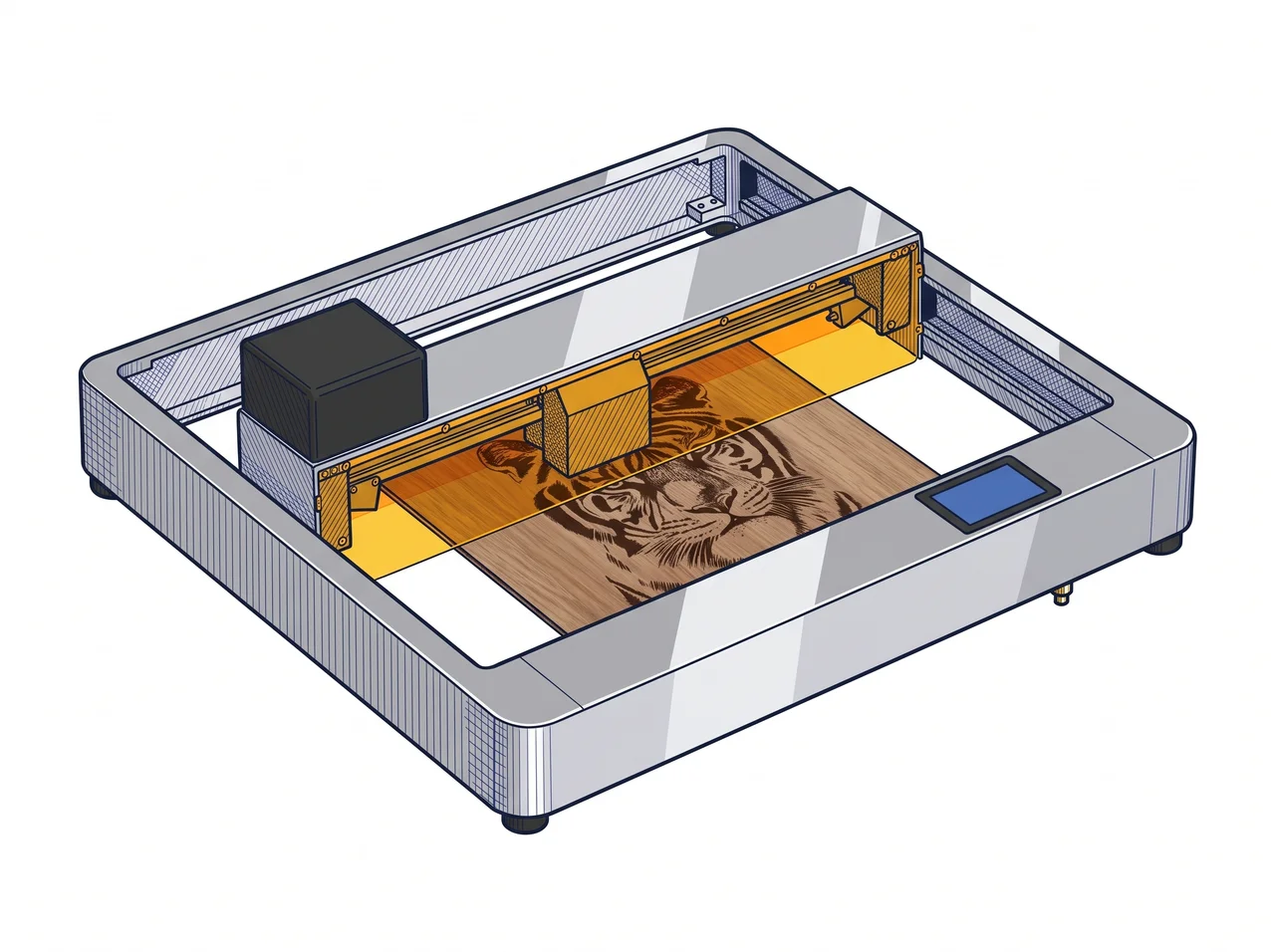
- 400 × 400 mm vs 150 × 150 mm → a 30 cm panel can be worked only on the Phecda.
- 25,000 vs 15,000 mm/min declared → rated maximums, not the speed you usually engrave at.
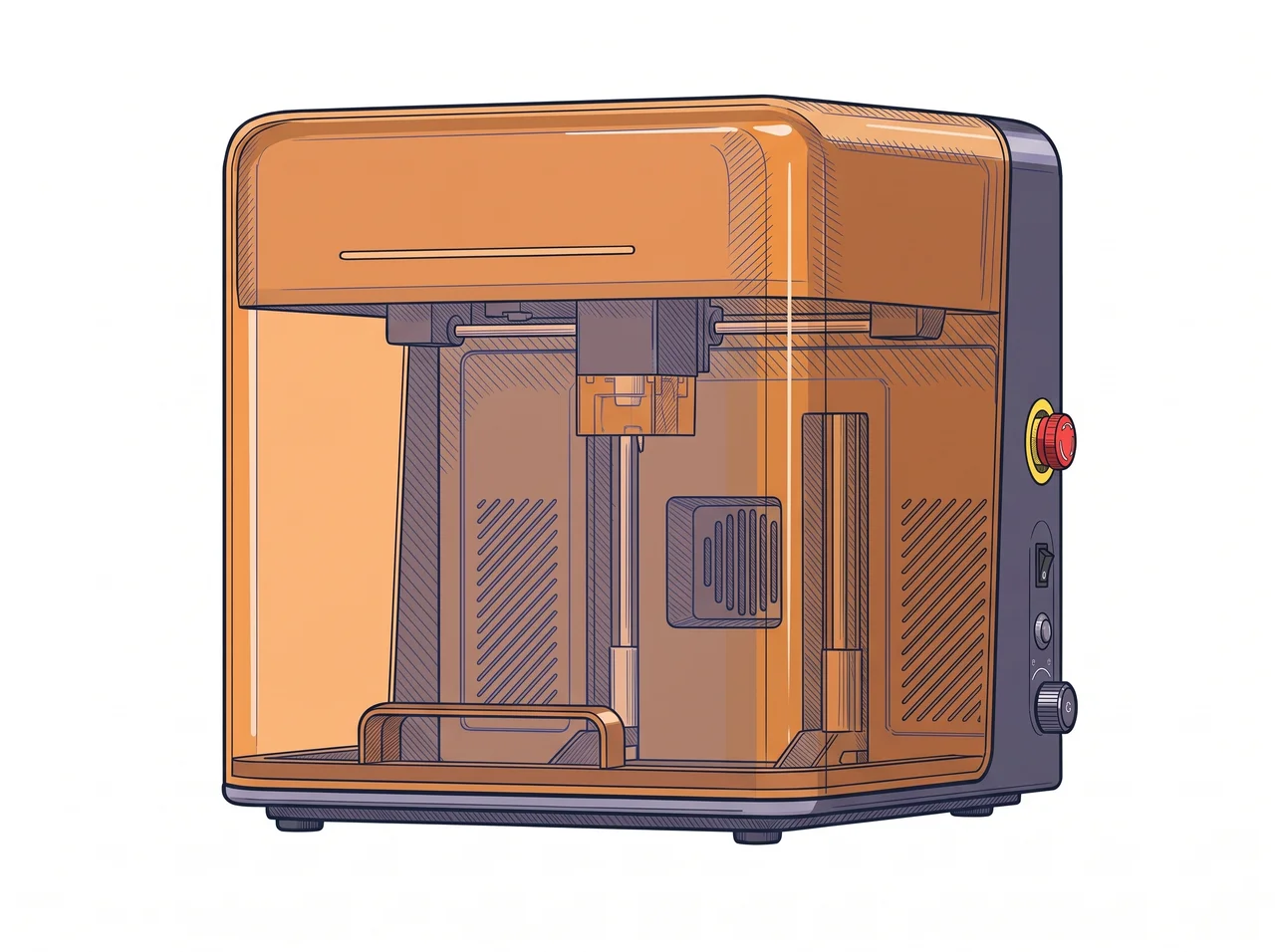
- Closed frame and Class 1 laser on the Falcon → the beam stays contained while it works.
Which one to choose
Choose Falcon A1C if…
you engrave small objects, cylindrical ones too with the rotary module, and want a closed frame with a Class 1 laser and autofocus. It works with LightBurn or the manufacturer's software, and the fume filter is optional. The trade-off: a 150 × 150 mm area and a declared 15,000 mm/min.
Choose Phecda if…
you need to engrave or mark large panels and sheets, up to 400 × 400 mm, with a declared top speed of 25,000 mm/min. A 30 cm piece, which does not fit on the Falcon, is done in a single setup.
Where to buy
MakerSpecs is an independent atlas. We don't sell products: the purchase links are the same as on the two product sheets and don't influence the verdict. The sheets have the complete data.