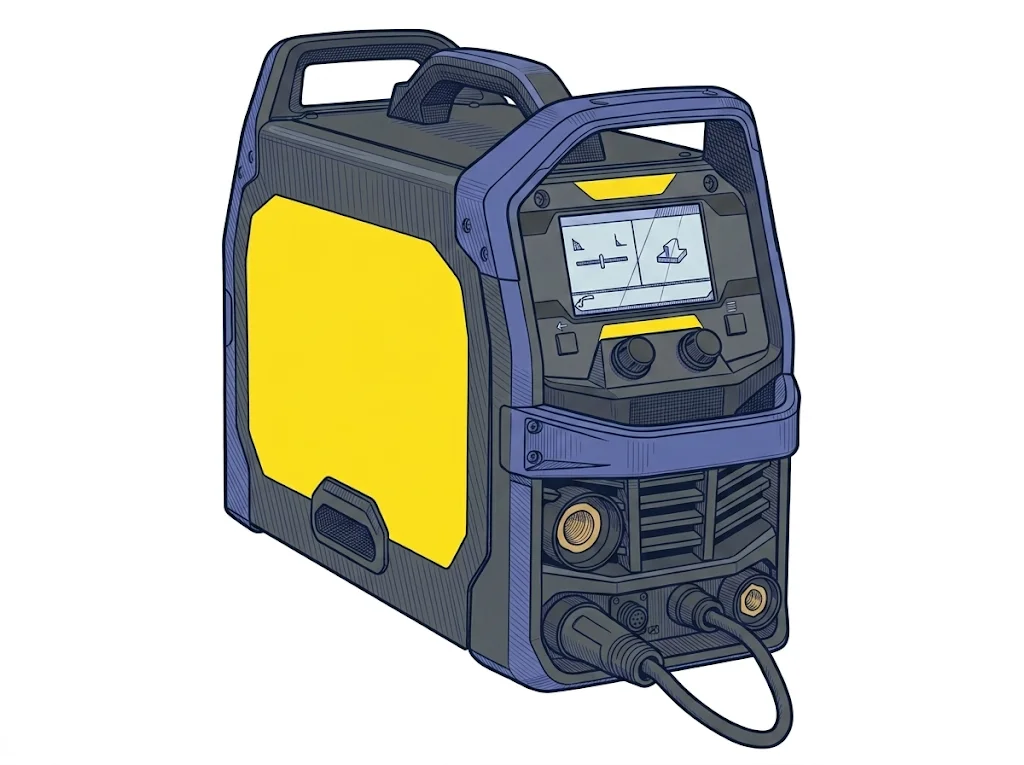
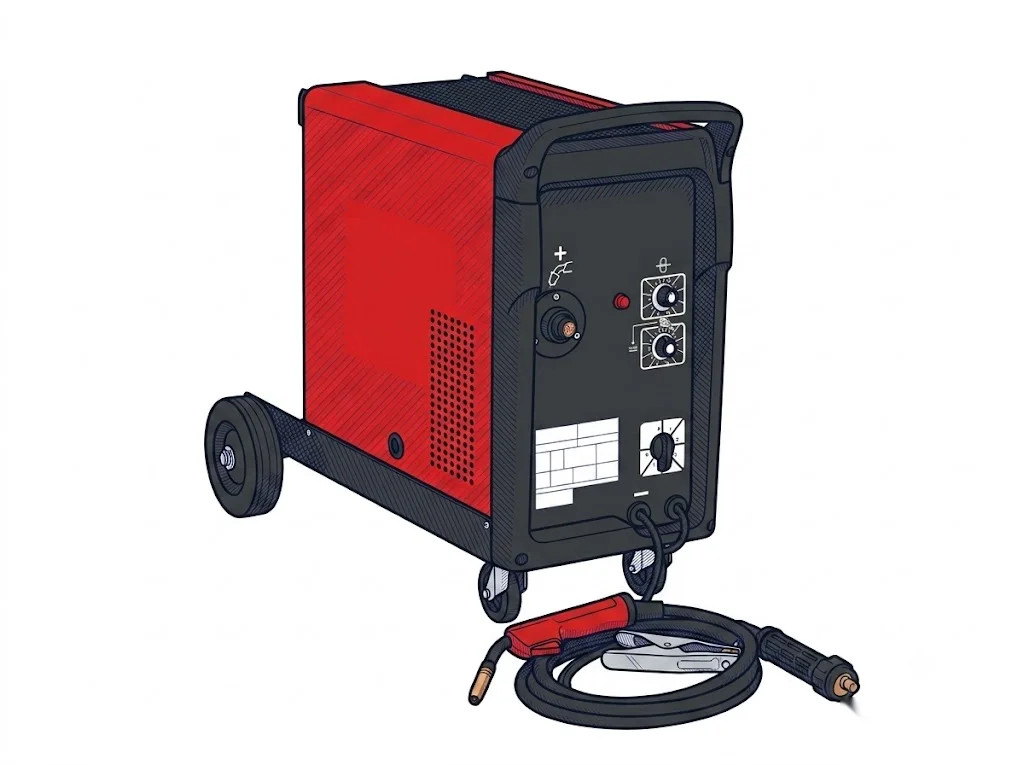
ESAB Rogue EM 190 PRO vs Telwin TELMIG 250/2
Technical comparison · MIG/MAG welding (wire feed)
Two wire welders in the same price range, built in opposite ways: a light inverter with automatic settings and a heavy transformer with stepped controls. The choice depends on where you work and how much current you need.
| Parameter | ||
|---|---|---|
| Identity | ||
| Use tier | F2 — Intermediate | F2 — Intermediate |
| Price | ||
| Price (€) | ~950–1150 € | ~900–1300 € |
| Universal specs | ||
| Dimensions (W×D×H) (cm) | 22 × 59 × 38.5 cm | 45 × 80 × 65.5 cm |
| Weight (kg) | 16.9 kg | 50 kg |
| Power (W) | — | 7000 W |
| Voltage (V) | 230 V | 400 V |
| Maximum speed | — | 20000 mm/min |
| Category specs | ||
| Welding type | MIG/MAG | MIG/MAG |
| Max wire feed speed (m/min) | 16.5 m/min | 20 m/min |
| Max welding current (A) | 190 A | 260 A |
| Max wire diameter (mm) | 0.9 mm | 1 mm |
| Duty cycle (rated current) (%) | — | 20 % |
| Synergic control | Yes | No |
| Gasless capable | Yes | No |
| Power source technology | Inverter | Transformer |
| Aluminium ready | Yes | Yes |
| Pulse capable | No | No |
| Input voltage | 230 V (single-phase) | Dual voltage |
| Supported spool | Ø200 mm (~5 kg) | Ø300 mm (~15 kg) |
| Ecosystem | ||
| Cloud dependency | No | No |
| Software notes | The system is based on a proprietary interface featuring a built-in 5-inch TFT screen. The firmware manages preset synergic programs (up to 27 lines) for various combinations of wire, gas, and thicknesses, facilitating the setup of welding parameters via a single knob control. It includes a memory function to save and recall up to 10 customized jobs. There is no wireless connectivity or external cloud interaction, nor does it support PC or smartphone software. All functionalities remain strictly manageable from the control panel of the welder. | As a traditional electromechanical welding machine based on a transformer, the TELMIG 250/2 does not have any onboard software or operating system. There is no digital interface, nor the ability to connect to the cloud or save custom programs. All adjustments are made physically via the step switches on the front panel, which allow the operator to set the voltage in six different positions and to adjust the wire feed speed using an analog potentiometer. |
The differences that matter
- Weight: 16.9 kg against 50 kg → the ESAB moves by hand, the Telwin stays where you install it.
- Maximum current (manufacturer-stated values): 190 A against 260 A → the Telwin is the choice for thicker parts.
- Setup: synergic on the ESAB, step switch and potentiometer on the Telwin → with the ESAB settings start from wire and thickness, with the Telwin you find them yourself.
- Gasless flux-cored wire: only on the ESAB → away from the shop you can work without a cylinder.
Which one to choose
Choose Rogue EM 190 PRO if…
you carry the welder to site or move it between bench and job on your own: synergic control starts from wire and thickness, and gasless flux-cored wire means no gas cylinder. You give up current and big spools: it takes 5 kg spools and wire up to 0.9 mm.
Choose TELMIG 250/2 if…
the machine stays put in the workshop and welds for long stretches: it takes 15 kg spools, which you rarely change, and has more current for heavy parts. In return everything is manual, with six voltage positions and a potentiometer for the wire, no memories and no gasless flux-cored option.
Where to buy
MakerSpecs is an independent atlas. We don't sell products: the purchase links are the same as on the two product sheets and don't influence the verdict. The sheets have the complete data.