Elegoo Centauri Carbon vs Qidi Tech X-Plus 3
Technical comparison · Fused filament fabrication (FFF/FDM)
Two enclosed CoreXY printers for home or workshop users deciding whether a larger build area and native Klipper firmware are worth paying extra for. What settles it is the price: the Centauri Carbon costs about €420 less and can print in several colors, while the X-Plus 3 is single-color.
| Parameter | ||
|---|---|---|
| Identity | ||
| Launch year | 2025 | 2023 |
| Use tier | F2 — Intermediate | F3 — Advanced |
| Price | ||
| Price (€) | ~300–450 € | 799 € |
| Universal specs | ||
| Dimensions (W×D×H) (cm) | 39.8 × 40.4 × 49 cm | 51.1 × 52.7 × 52.9 cm |
| Weight (kg) | 17.5 kg | 24.3 kg |
| Work area (mm) | 256 × 256 mm | 280 × 280 mm |
| Z-axis height (mm) | 256 mm | 270 mm |
| Power (W) | 1100 W | 800 W |
| Voltage (V) | — | 230 V |
| Maximum speed | 500 mm/s | 600 mm/s |
| Declared precision | 0.1 ±mm | — |
| Category specs | ||
| Footprint X×Y (short side) (mm) | 256 mm | 280 mm |
| Build height Z (mm) | 256 mm | 270 mm |
| Kinematics | CoreXY | CoreXY |
| Max nozzle temperature (°C) | 320 °C | 350 °C |
| Max bed temperature (°C) | 110 °C | 120 °C |
| Max print speed (mm/s) | 500 mm/s | 600 mm/s |
| Enclosed chamber | Yes | Yes |
| Filament sensor | Yes | Yes |
| Auto bed leveling | Mesh | Mesh |
| Standard nozzle diameter (mm) | 0.4 mm | 0.4 mm |
| Multi-extruder | No | No |
| Native Klipper | — | Yes |
| Input shaper | Yes | Yes |
| Multicolor printing | Yes | No |
| Multicolor requires accessory | Yes | — |
| Max colors | 4 | 1 |
| Ecosystem | ||
| Cloud dependency | No | No |
| Software notes | This printer is natively supported by Elegoo Slicer, a slicing software based on Orca Slicer that provides users with pre-configured, carefully optimized profiles designed to maximize both part detail and overall printing speed. Additionally, the machine's operating system is fully compatible with the most popular and community-endorsed third-party slicing software, such as Orca Slicer and Ultimaker Cura. The versatile onboard connectivity options include standard USB ports and a reliable dual-band Wi-Fi module (operating at 2.4 GHz and 5 GHz). This infrastructure enables effortless remote monitoring and comprehensive control of the printing process via its network interface and the built-in chamber camera, greatly streamlining daily workflow management. | The X-Plus 3 is natively supported by QIDI Print, the company's official slicer based on PrusaSlicer, which offers pre-configured and optimized profiles for supported materials, ensuring a ready-to-use experience. The software's user interface is designed to simplify the print preparation process, from support generation to advanced cooling configuration. Because the printer uses Klipper-based firmware, advanced users can interact directly via the integrated web interface (Fluidd or Mainsail), allowing for in-depth monitoring and fine-tuning of print parameters in real time. The system is also fully compatible with third-party software such as Ultimaker Cura, Simplify3D, standard PrusaSlicer, and OrcaSlicer, offering maximum flexibility in workflows. |
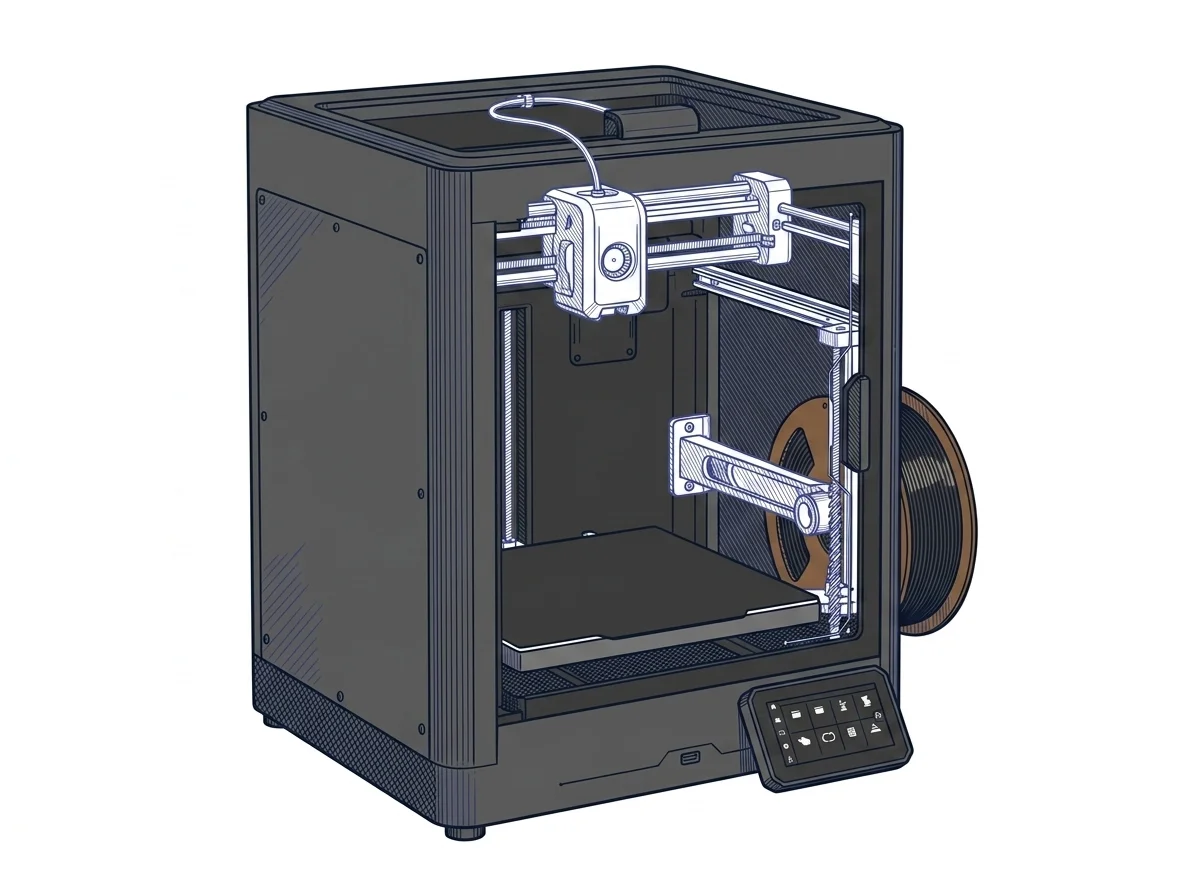
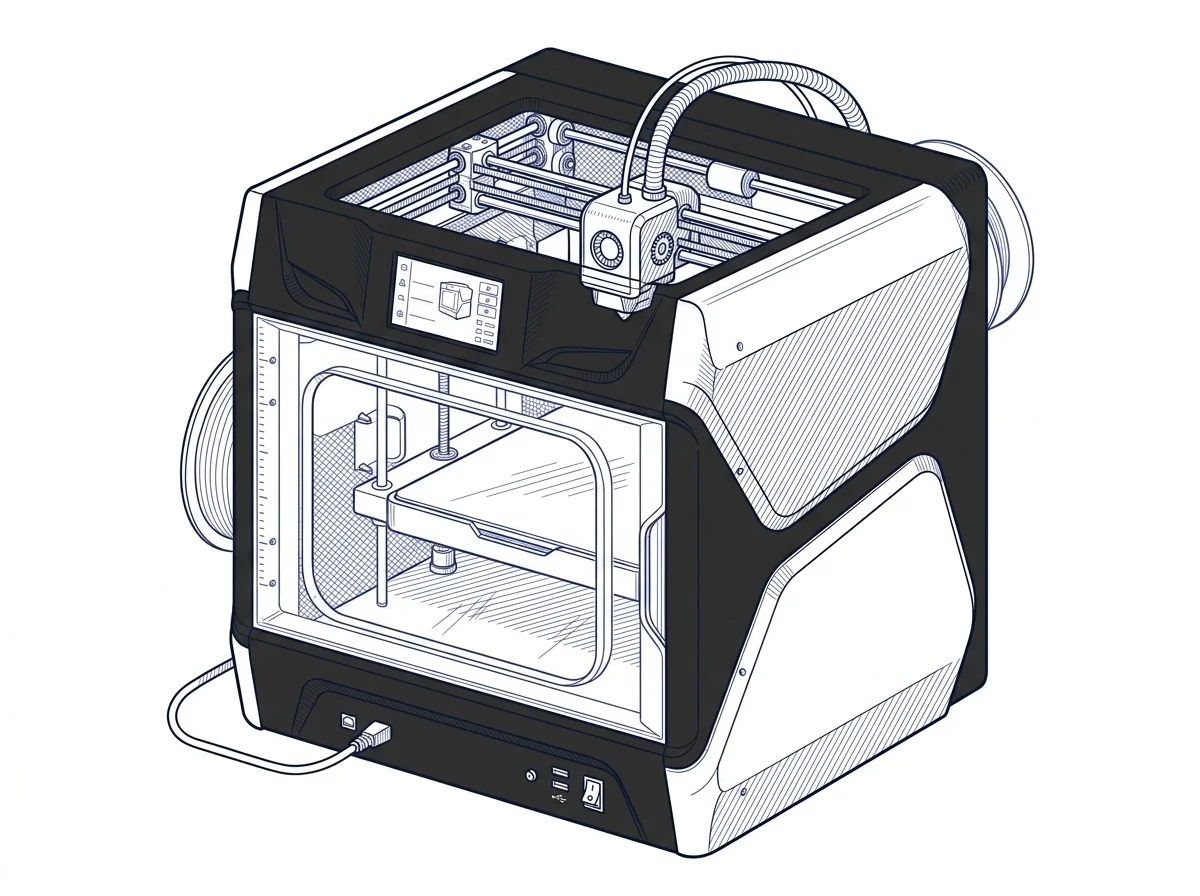
The differences that matter
- Price: €375 vs €799 → the gap pays for a second entry-level printer or a stock of material.
- Colors: up to 4 with accessory vs 1 → multicolor parts on the X-Plus 3 mean manual pauses and filament swaps.
- Build area: 256 × 256 mm vs 280 × 280 mm → the X-Plus 3 takes parts a few centimeters wider per side without splitting them.
- Firmware: native Klipper only on the X-Plus 3 → direct access to Fluidd or Mainsail and live parameter tuning.
Which one to choose
Choose Centauri Carbon if…
You print prototypes, brackets and household parts and sometimes want a multicolor object: the Centauri Carbon reaches four colors with the multicolor accessory, sold separately. The usable space is 256 mm per side, so a wider part has to be split and glued. It is set up through Elegoo Slicer, based on Orca Slicer, and has a chamber camera for watching long jobs remotely.
Choose X-Plus 3 if…
You print larger parts or small batches and want to tweak parameters yourself: the X-Plus 3 gives 280 × 280 mm and 270 mm of height, and its native Klipper firmware is managed through Fluidd or Mainsail. The trade-off is a single color and a €799 price, more than double the other.
Where to buy
Paid link: the price for you does not change. Methodology
As an Amazon Associate I earn from qualifying purchases.
Filaments for these printers
The most chosen spools among the materials both printers can print according to their specifications.
- ELEGOO PLA PLA1.75 mm1 kg Check the price on Amazon →
- Bambu Lab PLA PLA1.75 mm1 kg Check the price on Amazon →
- SUNLU PETG (Polyethylene Terephthalate Glycol) PETG (Polyethylene Terephthalate Glycol)1.75 mm1 kg Check the price on Amazon →
- SUNLU PLA PLA1.75 mm1 kg Check the price on Amazon →
- OVERTURE PETG (Polyethylene Terephthalate Glycol) PETG (Polyethylene Terephthalate Glycol)High speed1.75 mm1 kg Check the price on Amazon →
Paid link: the price for you does not change. Methodology
As an Amazon Associate I earn from qualifying purchases.
MakerSpecs is an independent atlas. We don't sell products: the purchase links are the same as on the two product sheets and don't influence the verdict. The sheets have the complete data.