Creality K2 Combo vs Qidi Tech Max4
Technical comparison · Fused filament fabrication (FFF/FDM)
K2 Combo and Max4 don't compete in the same bracket: the former is a printer for everyday hobby use, the latter a larger machine built for bigger jobs. The choice comes down to budget and part size, not a head-to-head.
| Parameter | ||
|---|---|---|
| Identity | ||
| Launch year | 2024 | 2026 |
| Use tier | F2 — Intermediate | F4 — Semi-professional |
| Price | ||
| Price (€) | ~550–700 € | 1049 € |
| Price updated on | 06/2026 | — |
| Universal specs | ||
| Dimensions (W×D×H) (cm) | 40.4 × 43.6 × 54.5 cm | 55.8 × 57.8 × 61.2 cm |
| Weight (kg) | 18 kg | 40 kg |
| Work area (mm) | 260 × 260 mm | 390 × 390 mm |
| Z-axis height (mm) | 260 mm | 340 mm |
| Power (W) | 1350 W | — |
| Voltage (V) | 240 V | — |
| Maximum speed | 600 mm/s | 800 mm/s |
| Declared precision | 0.1 mm | — |
| Category specs | ||
| Footprint X×Y (short side) (mm) | 260 mm | 390 mm |
| Build height Z (mm) | 260 mm | 340 mm |
| Kinematics | CoreXY | CoreXY |
| Max nozzle temperature (°C) | 300 °C | 370 °C |
| Max bed temperature (°C) | 100 °C | 120 °C |
| Max print speed (mm/s) | 600 mm/s | 800 mm/s |
| Enclosed chamber | Yes | Yes |
| Filament sensor | Yes | Yes |
| Auto bed leveling | Mesh | Mesh |
| Standard nozzle diameter (mm) | 0.4 mm | — |
| Multi-extruder | No | No |
| Native Klipper | Yes | Yes |
| Input shaper | Yes | Yes |
| Multicolor printing | Yes | Yes |
| Multicolor requires accessory | No | Yes |
| Max colors | 16 | 16 |
| Ecosystem | ||
| Cloud dependency | No | No |
| Software notes | Powered by CrealityOS, a Klipper-based firmware, it supports remote control via Wi-Fi or LAN and interfaces natively with Creality Print and other compatible slicers for advanced multi-color workflow management. | The machine natively runs on Klipper firmware, offering comprehensive control and high computational speed for advanced features like input shaping. The user interface is managed locally via a large 5-inch touchscreen. Remote monitoring is facilitated by the integrated 1080p AI webcam with error detection for extrusion failures. For slicing, the manufacturer provides QIDI Studio, a software derived from PrusaSlicer/Bambu Studio, specifically optimized for high-temperature material profiles. Users can also access the Fluidd web interface for advanced control over the printer parameters and print offline via a USB drive or through the local network. |
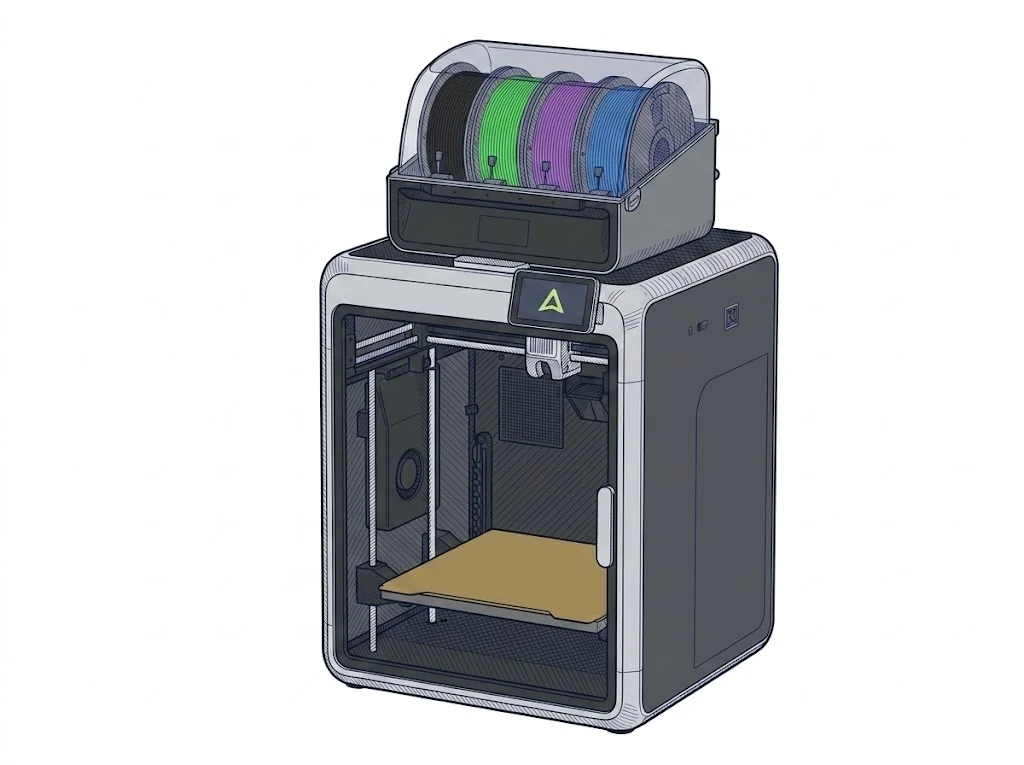
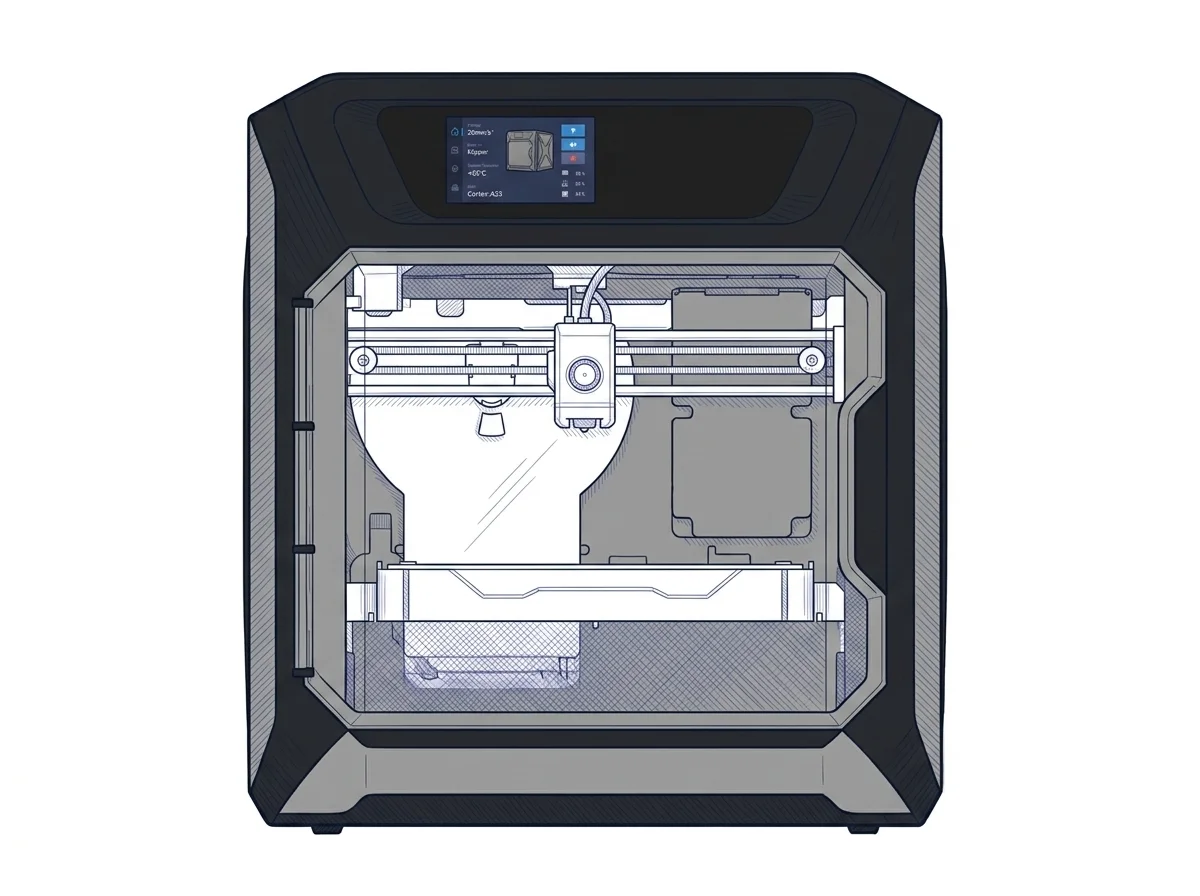
The differences that matter
- Price: ~€625 vs €1049 → the gap matters if you never need a bed larger than 300 mm.
- Work area: 260×260 mm vs 390×390 mm → the Max4 prints much bigger single parts.
- Nozzle temperature: 300°C vs a declared 370°C → the Max4 opens the door to technical materials like nylon or PC.
- Bed temperature: 100°C vs 120°C → more headroom for ABS/ASA/nylon on the Max4.
Which one to choose
Choose K2 Combo if…
Anyone printing everyday parts — hardware, prototypes, spares in PLA, PETG or ABS — on a 260×260 mm bed spends less (~€625) but has neither the space for large single-piece prints nor the temperatures for demanding technical materials (300°C nozzle, 100°C bed).
Choose Max4 if…
Anyone printing large single-piece parts (up to 390×390 mm) or working with technical materials such as nylon or PC, which need a nozzle rated up to 370°C and a bed up to 120°C, pays more (€1049) and manages a bulkier, heavier machine (40 kg).
Where to buy
Paid link: the price for you does not change. Methodology
Filaments for these printers
The most chosen spools among the materials both printers can print according to their specifications.
- ELEGOO PLA PLA1.75 mm1 kg Check the price on Amazon →
- Bambu Lab PLA PLA1.75 mm1 kg Check the price on Amazon →
- SUNLU PETG (Polyethylene Terephthalate Glycol) PETG (Polyethylene Terephthalate Glycol)1.75 mm1 kg Check the price on Amazon →
- SUNLU PLA PLA1.75 mm1 kg Check the price on Amazon →
- OVERTURE PETG (Polyethylene Terephthalate Glycol) PETG (Polyethylene Terephthalate Glycol)High speed1.75 mm1 kg Check the price on Amazon →
Paid link: the price for you does not change. Methodology
As an Amazon Associate I earn from qualifying purchases.
MakerSpecs is an independent atlas. We don't sell products: the purchase links are the same as on the two product sheets and don't influence the verdict. The sheets have the complete data.