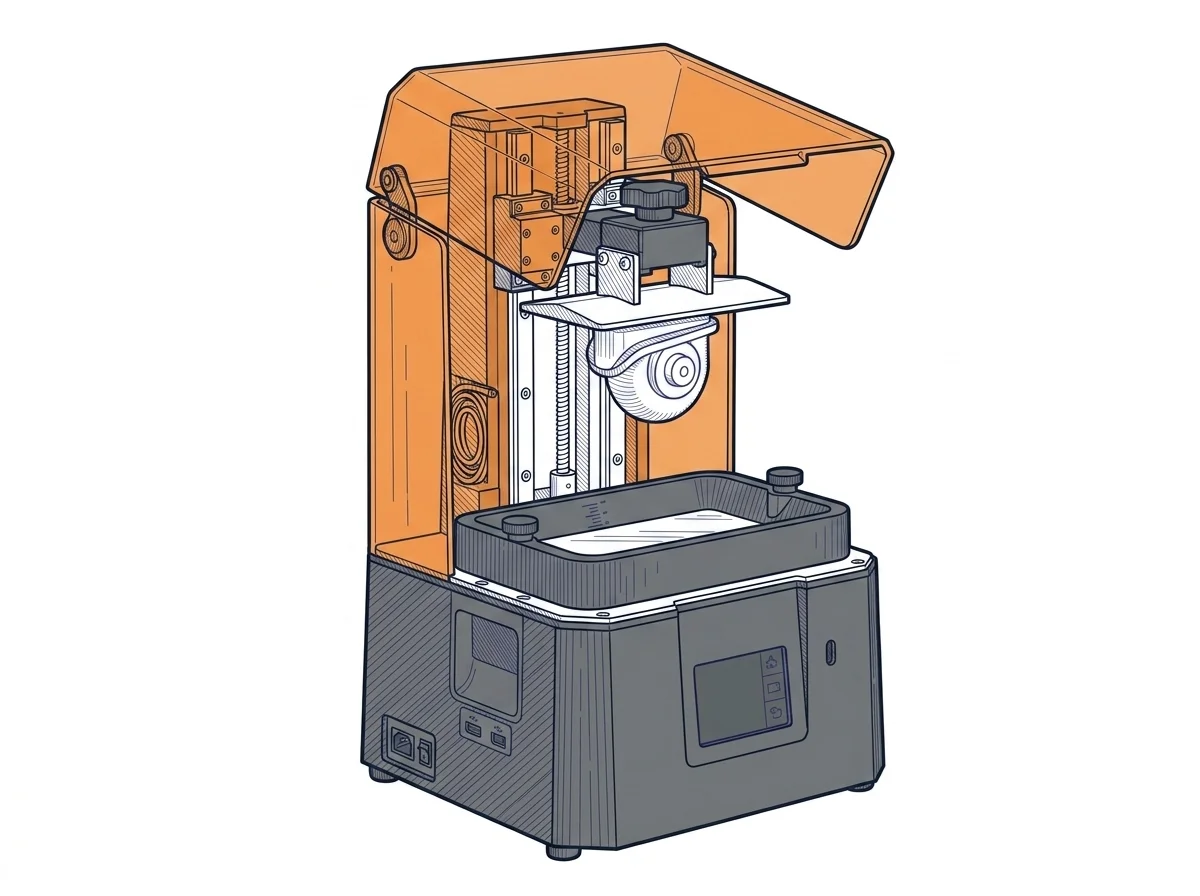
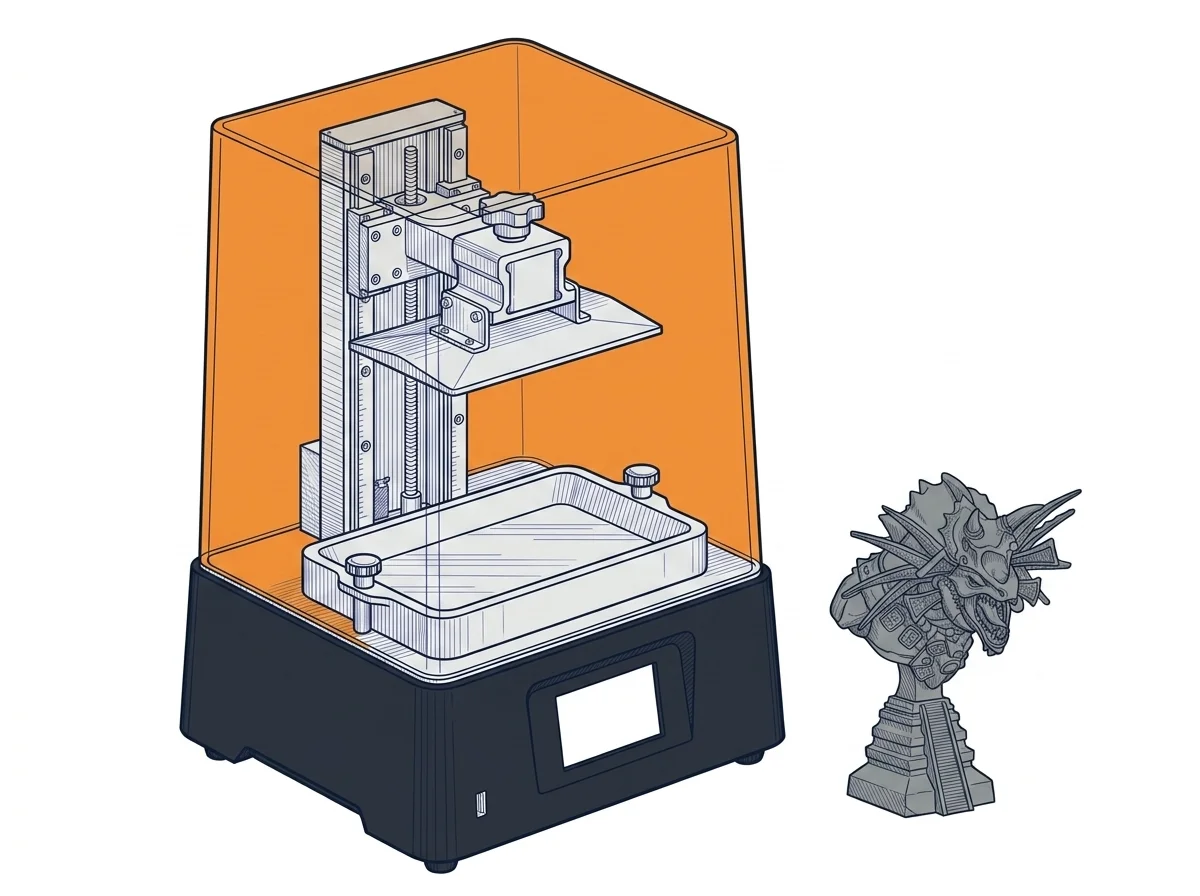
Creality HALOT R6 vs Phrozen Sonic Mini 8K
Technical comparison · Resin 3D printing
Two mono-LCD resin printers, one for beginners and one for people who want more detail. What decides it is pixel fineness against a €310 price gap.
| Parameter | ||
|---|---|---|
| Identity | ||
| Launch year | 2024 | 2021 |
| Use tier | F1 — Entry | F2 — Intermediate |
| Price | ||
| Price (€) | ~180–250 € | ~450–600 € |
| Universal specs | ||
| Dimensions (W×D×H) (cm) | 23.55 × 23 × 39.55 cm | 29 × 29 × 43 cm |
| Weight (kg) | 4.25 kg | 10 kg |
| Work area (mm) | 130.56 × 82.62 mm | 165 × 72 mm |
| Z-axis height (mm) | 160 mm | 180 mm |
| Power (W) | 100 W | 50 W |
| Voltage (V) | 100 V | — |
| Maximum speed | 60 | — |
| Declared precision | 50 µm | 22 μm |
| Category specs | ||
| Build area XY (short side) (mm) | 82.62 mm | 72 mm |
| XY resolution (µm) | 50 µm | 22 µm |
| Light source | Mono LCD | Mono LCD |
| Print speed (mm/h) | 60 mm/h | 80 mm/h |
| Tilt / peel system | Standard FEP | Standard FEP |
| Ecosystem | ||
| Cloud dependency | No | No |
| Software notes | The device is compatible with major slicing software options on the market, including the proprietary Creality HALOT BOX suite, CHITUBOX, and Lychee Slicer. File preparation is primarily handled via a local computer for export to a USB flash drive. The integrated wireless connectivity allows for basic remote management and monitoring through the Creality Cloud application, yet the machine remains fully operational offline using the built-in touch screen interface, ensuring flexibility even without internet access. | The system integrates seamlessly with the leading third-party slicing software available on the market, offering substantial operational flexibility. Users can utilize popular solutions such as ChiTuBox and Lychee Slicer, which feature pre-configured and optimized profiles for this specific model, simplifying file preparation and advanced support management. Connectivity occurs primarily via a USB port for offline file transfer, ensuring total stability during the printing process without the risk of interruptions caused by network fluctuations. Exposure parameters are fully customizable directly within the software, allowing for precise optimization across a wide range of both proprietary and third-party resins. |
The differences that matter
- XY resolution 22 µm against 50 µm → curved surfaces and small details come out cleaner on the Sonic Mini.
- Price €525 against €215 → for the same use, the difference buys fineness, not more space.
- Plate 165 × 72 mm against 130.56 × 82.62 mm → the Sonic Mini is longer, the HALOT R6 deeper: it depends on the shape of your parts.
- Connectivity: Wi-Fi against USB only → the HALOT R6 can be managed remotely, the Sonic Mini needs the stick.
Which one to choose
Choose HALOT R6 if…
You are starting with resin, or print a few parts at a time, and want to spend less: it costs €310 less and its plate is 82.6 mm deep against 72 mm. You can start and monitor prints over Wi-Fi with the Creality Cloud app, or run it offline from the touchscreen. The trade-off is a 50 µm pixel (declared value), less suited to tiny detail.
Choose Sonic Mini 8K if…
You print miniatures or small parts where detail shows: 22 µm declared against 50 µm, and a plate 165 mm long that holds a row of parts side by side. It costs €310 more, is only 72 mm deep, weighs 10 kg against 4.25, and files arrive by USB stick only.
Where to buy
Paid link: the price for you does not change. Methodology
MakerSpecs is an independent atlas. We don't sell products: the purchase links are the same as on the two product sheets and don't influence the verdict. The sheets have the complete data.