Bambu Lab P1S vs Bambu Lab P2S
Technical comparison · Fused filament fabrication (FFF/FDM)
Choose the Bambu Lab P1S if you want a price point between €399 and €499 and native OrcaSlicer compatibility for parameter control. Choose the Bambu Lab P2S if you require a maximum speed of 600 mm/s, support for up to 20 colors, and a 110 °C heated bed.
| Parameter | ||
|---|---|---|
| Identity | ||
| Launch year | 2023 | 2025 |
| Use tier | F2 — Intermediate | F2 — Intermediate |
| Price | ||
| Price (€) | ~399–499 € | 519 € |
| Universal specs | ||
| Dimensions (W×D×H) (cm) | 38.9 × 38.9 × 45.8 cm | 39.2 × 40.6 × 47.8 cm |
| Weight (kg) | 12.95 kg | 14.9 kg |
| Work area (mm) | 256 × 256 mm | 256 × 256 mm |
| Z-axis height (mm) | 256 mm | 256 mm |
| Power (W) | 1000 W | 1200 W |
| Voltage (V) | 100 V | — |
| Maximum speed | 500 mm/s | 600 mm/s |
| Category specs | ||
| Footprint X×Y (short side) (mm) | 256 mm | 256 mm |
| Build height Z (mm) | 256 mm | 256 mm |
| Kinematics | CoreXY | CoreXY |
| Max nozzle temperature (°C) | 300 °C | 300 °C |
| Max bed temperature (°C) | 100 °C | 110 °C |
| Max print speed (mm/s) | 500 mm/s | 600 mm/s |
| Enclosed chamber | Yes | Yes |
| Filament sensor | Yes | Yes |
| Auto bed leveling | Mesh | Mesh |
| Standard nozzle diameter (mm) | 0.4 mm | 0.4 mm |
| Multi-extruder | No | No |
| Native Klipper | No | No |
| Input shaper | Yes | Yes |
| Multicolor printing | Yes | Yes |
| Multicolor requires accessory | Yes | Yes |
| Max colors | 16 | 20 |
| Ecosystem | ||
| Cloud dependency | No | No |
| Software notes | The P1S is managed through Bambu Studio, Bambu Lab's proprietary slicer available for Windows, macOS, and Linux, or via OrcaSlicer, the widely adopted open-source fork that provides finer parameter control. The Bambu Handy mobile app enables remote monitoring and print launching. The printer supports local LAN connections without a mandatory cloud account, though some advanced features — such as remote timelapses and OTA firmware updates — require a Bambu account. | The official slicer is Bambu Studio, available for macOS, Windows, and Linux. The printer also accepts standard G-code exported from third-party slicers such as PrusaSlicer, SuperSlicer, and Cura, though certain advanced Bambu-specific features — including RFID-based filament detection and some automatic calibration modes — are only available within Bambu Studio. Remote control is handled via the Bambu Handy mobile app and desktop app; push notifications require cloud connectivity. |
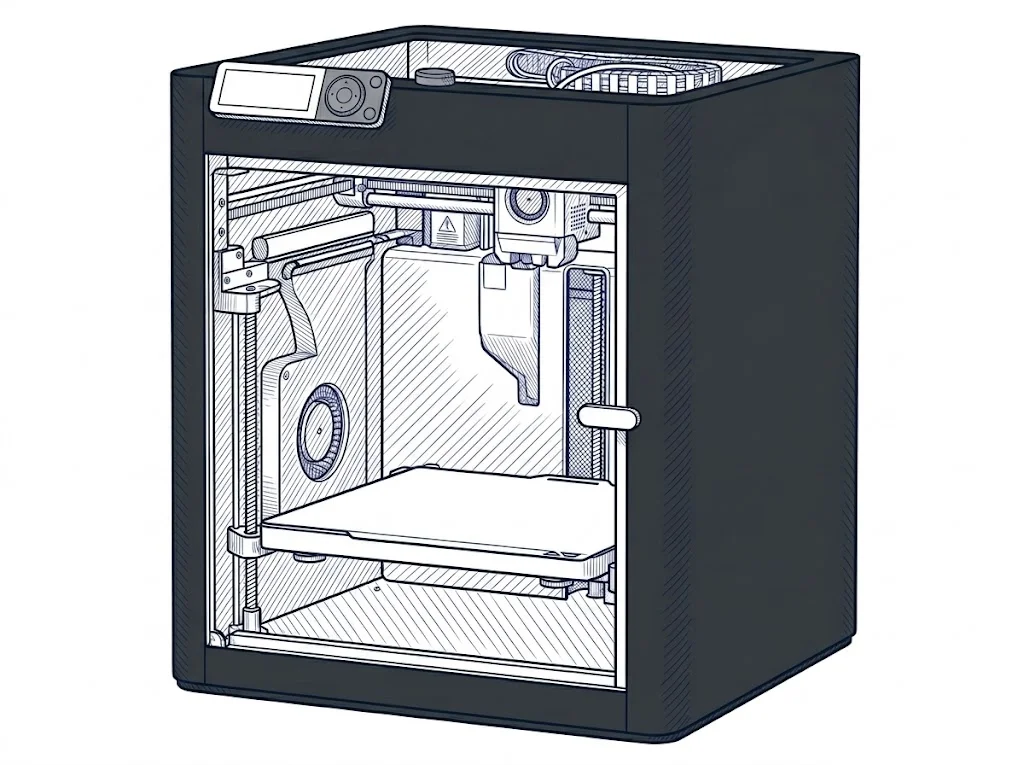
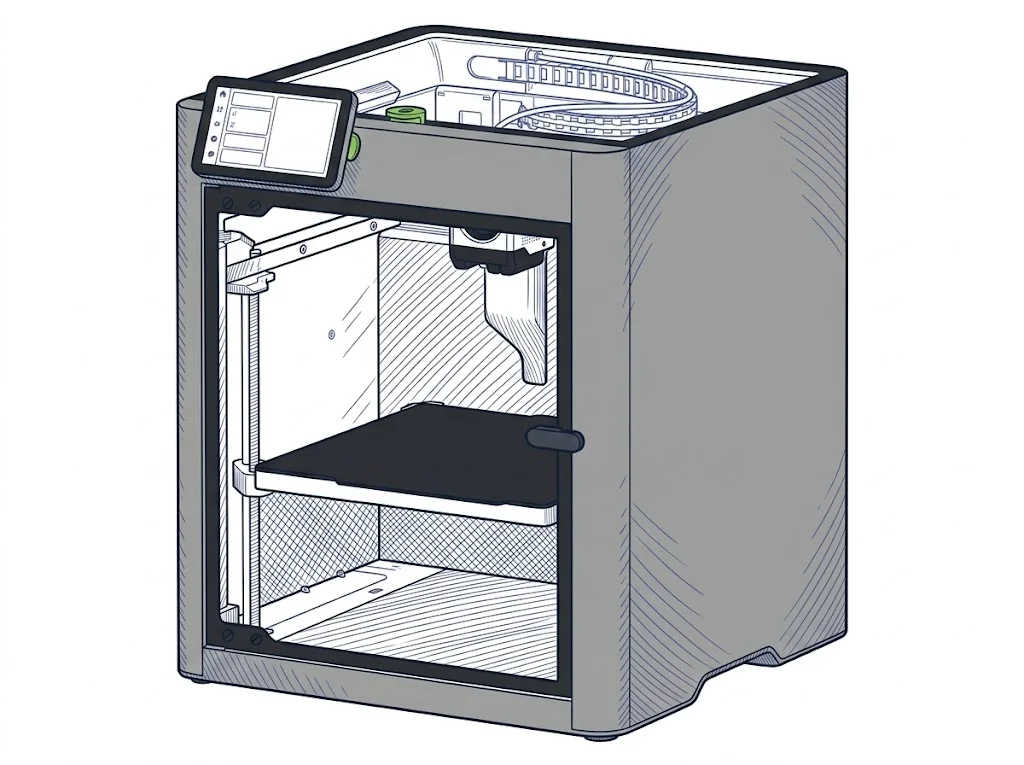
The differences that matter
- Speed and Power: The P2S reaches a maximum speed of 600 mm/s with a 1200 W power rating, compared to 500 mm/s and 1000 W on the P1S.
- Bed Temperature: The P2S heatbed reaches 110 °C, while the P1S caps at 100 °C (both reach 300 °C nozzle temperature).
- Multicolor Capacity: The P2S supports up to 20 maximum colors via accessory, compared to 16 on the P1S.
- Dimensions and Weight: The P2S measures 39.2 × 40.6 × 47.8 cm at 14.9 kg, whereas the P1S measures 38.9 × 38.9 × 45.8 cm at 12.95 kg.
- Software Ecosystem: The P1S features explicit OrcaSlicer usage, whereas the P2S accepts G-code from third-party slicers (PrusaSlicer, SuperSlicer, Cura), while locking RFID detection and specific calibrations to Bambu Studio.
Which one to choose
Choose P1S if…
Choose the Bambu Lab P1S if you need a lower-cost F2 CoreXY printer (€399–499), accepting a top speed of 500 mm/s, a bed temperature limit of 100 °C, and up to 16 colors with full OrcaSlicer support.
Choose P2S if…
Choose the Bambu Lab P2S if you require higher performance with a 600 mm/s max speed, 110 °C bed temperature, and up to 20 colors via accessory, at a price of €519, 1200 W power rating, and 14.9 kg weight.
Where to buy
Paid link: the price for you does not change. Methodology
As an Amazon Associate I earn from qualifying purchases.
Filaments for these printers
The most chosen spools among the materials both printers can print according to their specifications.
- ELEGOO PLA PLA1.75 mm1 kg Check the price on Amazon →
- Bambu Lab PLA PLA1.75 mm1 kg Check the price on Amazon →
- SUNLU PETG (Polyethylene Terephthalate Glycol) PETG (Polyethylene Terephthalate Glycol)1.75 mm1 kg Check the price on Amazon →
- SUNLU PLA PLA1.75 mm1 kg Check the price on Amazon →
- OVERTURE PETG (Polyethylene Terephthalate Glycol) PETG (Polyethylene Terephthalate Glycol)High speed1.75 mm1 kg Check the price on Amazon →
Paid link: the price for you does not change. Methodology
As an Amazon Associate I earn from qualifying purchases.
MakerSpecs is an independent atlas. We don't sell products: the purchase links are the same as on the two product sheets and don't influence the verdict. The sheets have the complete data.