Bambu Lab H2C vs Prusa Research XL
Technical comparison · Fused filament fabrication (FFF/FDM)
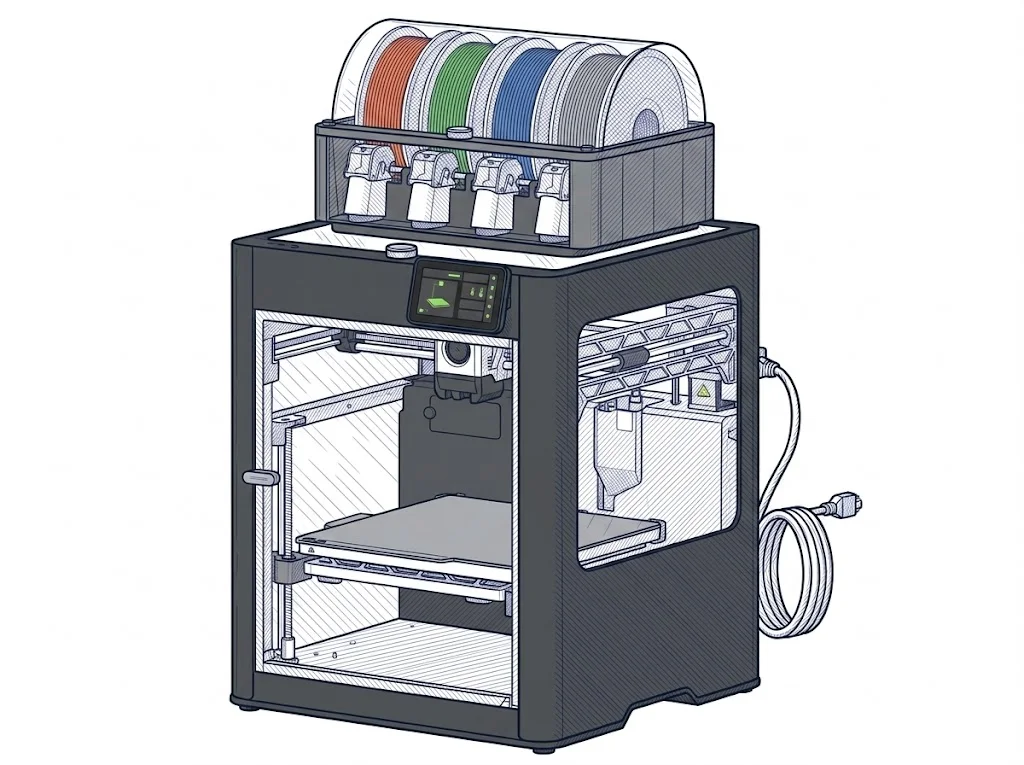
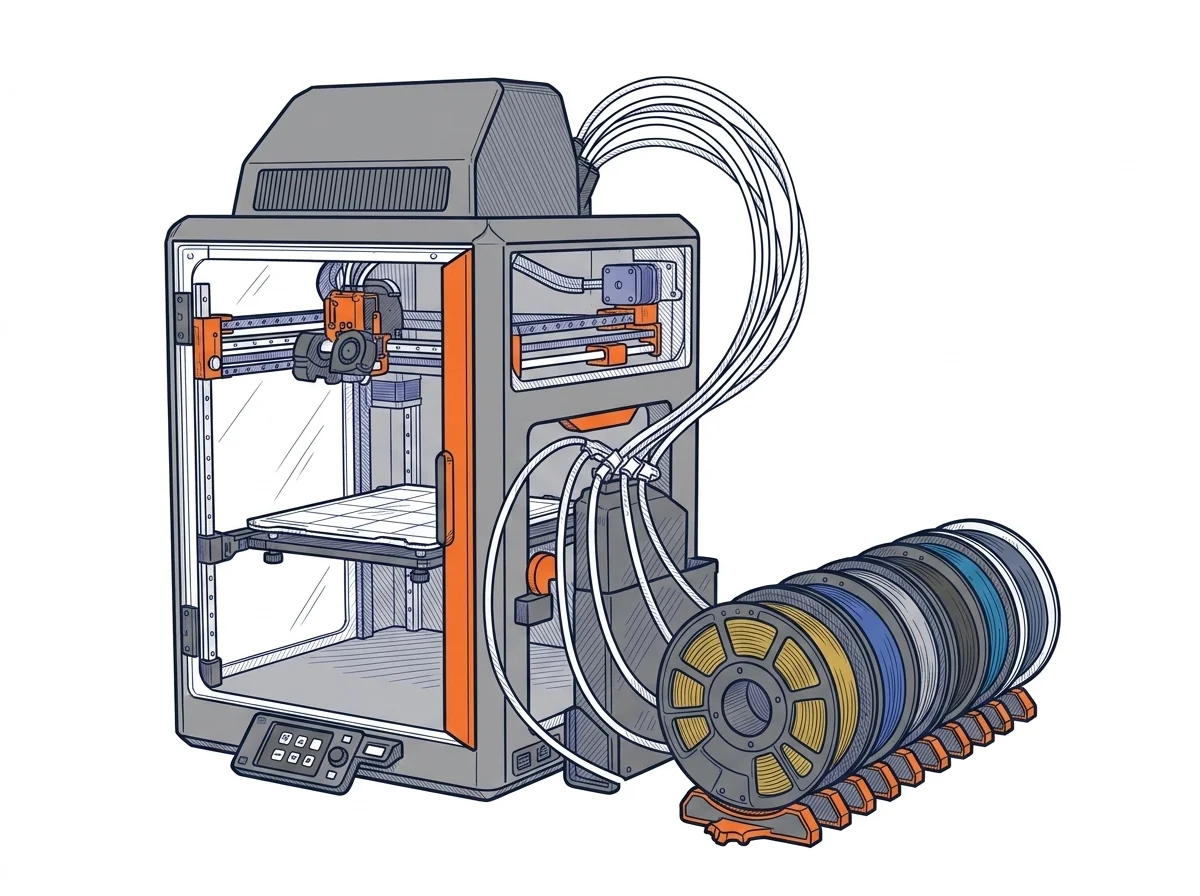
H2C and XL (CORE One L) are both advanced printers in a similar price range, but they start from opposite philosophies: one is a closed, optimized system, the other an open-source project built for people who want to touch the firmware. The €449 price gap matters less than the choice between a closed and an open ecosystem.
| Parameter | ||
|---|---|---|
| Identity | ||
| Launch year | 2025 | 2025 |
| Use tier | F3 — Advanced | F2 — Intermediate |
| Price | ||
| Price (€) | 2249 € | ~1700–1900 € |
| Universal specs | ||
| Dimensions (W×D×H) (cm) | 49.2 × 51.4 × 62.6 cm | — |
| Weight (kg) | 32.5 kg | — |
| Work area (mm) | 330 × 320 mm | 300 × 300 mm |
| Z-axis height (mm) | 325 mm | 330 mm |
| Power (W) | 1800 W | — |
| Voltage (V) | — | 230 V |
| Maximum speed | 1000 mm/s | — |
| Declared precision | 50 μm | — |
| Category specs | ||
| Footprint X×Y (short side) (mm) | 320 mm | — |
| Build height Z (mm) | 325 mm | — |
| Kinematics | CoreXY | — |
| Max nozzle temperature (°C) | 350 °C | — |
| Max bed temperature (°C) | 120 °C | — |
| Max print speed (mm/s) | 1000 mm/s | — |
| Enclosed chamber | Yes | — |
| Filament sensor | Yes | — |
| Auto bed leveling | Mesh | — |
| Standard nozzle diameter (mm) | 0.4 mm | — |
| Multi-extruder | Yes | — |
| Native Klipper | No | — |
| Input shaper | Yes | — |
| Multicolor printing | Yes | — |
| Multicolor requires accessory | Yes | — |
| Max colors | 24 | — |
| Ecosystem | ||
| Cloud dependency | No | No |
| Software notes | The printer is operated through Bambu Studio, Bambu Lab's open-source slicer based on PrusaSlicer, available for Windows, macOS, and Linux. Remote control is available via the Bambu Handy app or Bambu Suite. The machine includes a 5" color touchscreen for local operation and connects over dual-band Wi-Fi. The firmware is proprietary; Klipper is not natively supported. | Compatible with PrusaSlicer (open source, with material profiles verified and maintained by Prusa Research), OrcaSlicer, and SuperSlicer, as well as any slicer that exports standard G-code. The firmware is based on Prusa Research's open-source Marlin fork, with input shaping support. Unlike Bambu Lab models, which use a partially proprietary protocol and work best with Bambu Studio, the CORE One L accepts generic G-code via USB, SD card, and PrusaConnect. The user is not locked into a single software ecosystem and can freely modify or update the firmware. |
The differences that matter
- Price: €2249 for the H2C versus about €1800 for the XL.
- Work area: 330×320 mm on the H2C versus 300×300 mm on the XL, a modest but real margin.
- Software: the H2C works best with Bambu Studio and proprietary firmware; the XL runs open-source Marlin and accepts generic G-code with no lock-in.
- Missing data: the manufacturer doesn't list the XL's chamber, dual extrusion or max colors here — check Prusa's own site before deciding.
Which one to choose
Choose H2C if…
Pick the H2C if you want multicolor printing without hassle: up to 24 colors, dual extrusion and a 120°C enclosed chamber for technical materials like ABS and ASA. It's built to work well out of the box with its dedicated slicer.
Choose XL if…
Pick the XL if you don't want to be locked into one software ecosystem: it accepts generic G-code from PrusaSlicer, OrcaSlicer or SuperSlicer, the Marlin firmware is open source and modifiable, and it costs €449 less. It's the choice for anyone who wants full control over the machine.
Where to buy
Paid link: the price for you does not change. Methodology
As an Amazon Associate I earn from qualifying purchases.
MakerSpecs is an independent atlas. We don't sell products: the purchase links are the same as on the two product sheets and don't influence the verdict. The sheets have the complete data.