Bambu Lab A2L vs Bambu Lab X1 Carbon
Technical comparison · Fused filament fabrication (FFF/FDM)
The A2L and X1 Carbon aren't direct alternatives: the price roughly triples moving from one to the other. The choice comes down to budget and material type more than a piece-by-piece technical comparison.
| Parameter | ||
|---|---|---|
| Identity | ||
| Launch year | 2026 | 2022 |
| Use tier | F2 — Intermediate | F2 — Intermediate |
| Price | ||
| Price (€) | 379 € | ~1050–1250 € |
| Universal specs | ||
| Dimensions (W×D×H) (cm) | 54.4 × 52.9 × 50.5 cm | 38.9 × 38.9 × 45.7 cm |
| Weight (kg) | 12.8 kg | 14.13 kg |
| Work area (mm) | 330 × 320 mm | 256 × 256 mm |
| Z-axis height (mm) | 325 mm | 256 mm |
| Power (W) | — | 1000 W |
| Maximum speed | 500 mm/s | 500 mm/s |
| Declared precision | — | 7 μm |
| Category specs | ||
| Footprint X×Y (short side) (mm) | 320 mm | 256 mm |
| Build height Z (mm) | 325 mm | 256 mm |
| Kinematics | Cartesian | CoreXY |
| Max nozzle temperature (°C) | 300 °C | 300 °C |
| Max bed temperature (°C) | 80 °C | 110 °C |
| Max print speed (mm/s) | 500 mm/s | 500 mm/s |
| Enclosed chamber | No | Yes |
| Filament sensor | Yes | Yes |
| Auto bed leveling | Mesh | Mesh |
| Standard nozzle diameter (mm) | 0.4 mm | 0.4 mm |
| Multi-extruder | No | No |
| Native Klipper | No | No |
| Input shaper | Yes | Yes |
| Multicolor printing | Yes | Yes |
| Multicolor requires accessory | Yes | Yes |
| Max colors | 19 | 16 |
| Ecosystem | ||
| Cloud dependency | No | No |
| Software notes | The A2L is compatible with Bambu Studio, Bambu Lab's proprietary slicer for Windows and macOS, which provides native access to all machine features including AMS multi-color management. Third-party slicers that export standard G-code — such as PrusaSlicer and OrcaSlicer — are supported, though some advanced features may not be available outside Bambu Studio. Connectivity is via Wi-Fi; basic printing functions do not require a cloud account. | The printer is controlled via Bambu Studio, the proprietary slicer available for Windows, macOS, and Linux, as well as the Bambu Handy mobile app. LAN mode is supported, allowing full local control without an internet connection or cloud account. Remote monitoring via Bambu Cloud is optional. Bambu Studio accepts 3MF, STL, OBJ, and STEP files and includes advanced features such as vibration compensation and flow rate control. |
The differences that matter
- Price: €379 vs about €1150 → the X1 Carbon costs almost three times as much.
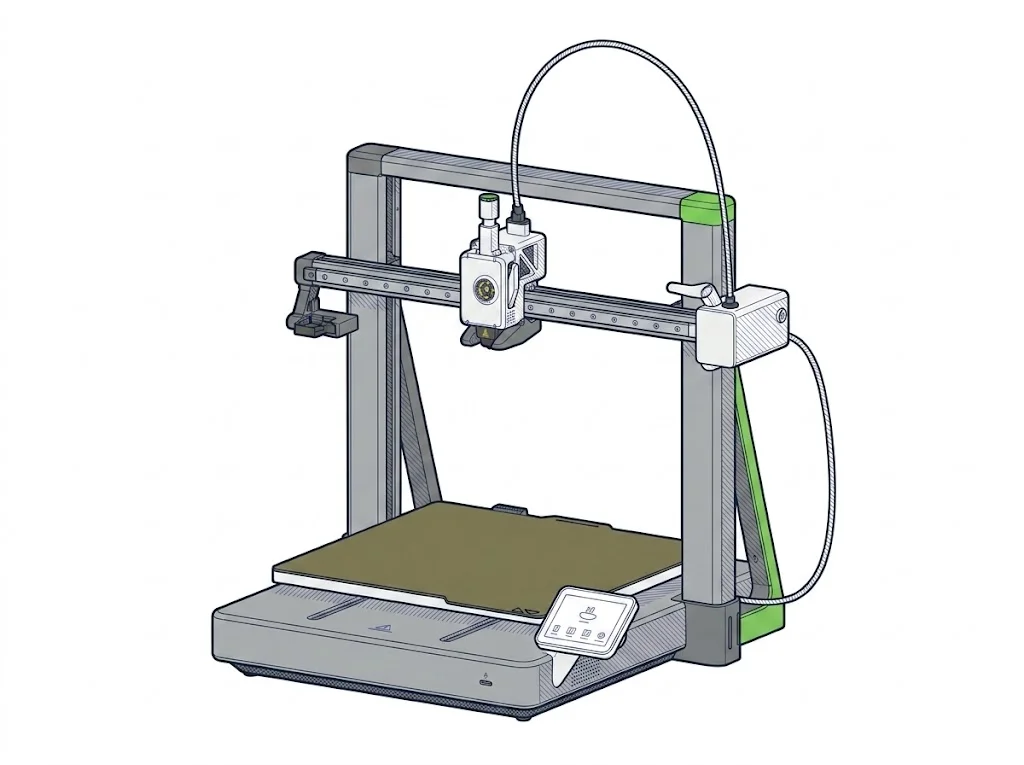
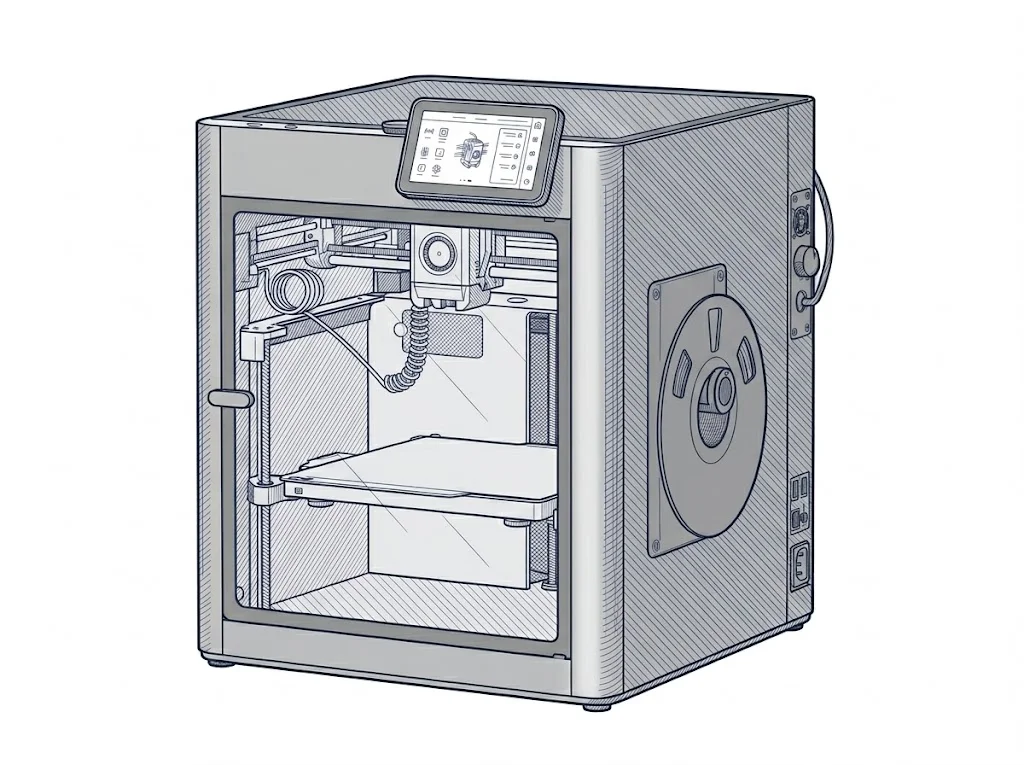
- Enclosed chamber: absent on the A2L, present on the X1 Carbon → more thermal stability for ABS/ASA on the latter.
- Bed temperature: 80°C vs 110°C → the X1 Carbon covers more technical materials.
- Work area: 330×320 mm vs 256×256 mm → the A2L prints larger single parts.
Which one to choose
Choose A2L if…
Anyone printing large single-piece parts in PLA or PETG — supports, organizers, bulky components — gets the larger bed of the two (330×320 mm) at a modest price. The bed tops out at 80°C though: ABS and ASA stay out of reach for reliable adhesion.
Choose X1 Carbon if…
Anyone printing ABS, ASA or other materials that need a more stable environment works inside the X1 Carbon's enclosed chamber, with a bed that reaches up to 110°C. The cost is a higher price for a smaller bed (256×256 mm).
Where to buy
Paid link: the price for you does not change. Methodology
As an Amazon Associate I earn from qualifying purchases.
Filaments for these printers
The most chosen spools among the materials both printers can print according to their specifications.
- ELEGOO PLA PLA1.75 mm1 kg Check the price on Amazon →
- Bambu Lab PLA PLA1.75 mm1 kg Check the price on Amazon →
- SUNLU PETG (Polyethylene Terephthalate Glycol) PETG (Polyethylene Terephthalate Glycol)1.75 mm1 kg Check the price on Amazon →
- SUNLU PLA PLA1.75 mm1 kg Check the price on Amazon →
- OVERTURE PETG (Polyethylene Terephthalate Glycol) PETG (Polyethylene Terephthalate Glycol)High speed1.75 mm1 kg Check the price on Amazon →
Paid link: the price for you does not change. Methodology
As an Amazon Associate I earn from qualifying purchases.
MakerSpecs is an independent atlas. We don't sell products: the purchase links are the same as on the two product sheets and don't influence the verdict. The sheets have the complete data.