Atomstack P1 Ultra vs Ortur LM3 40W
Technical comparison · Diode laser (405–460 nm)
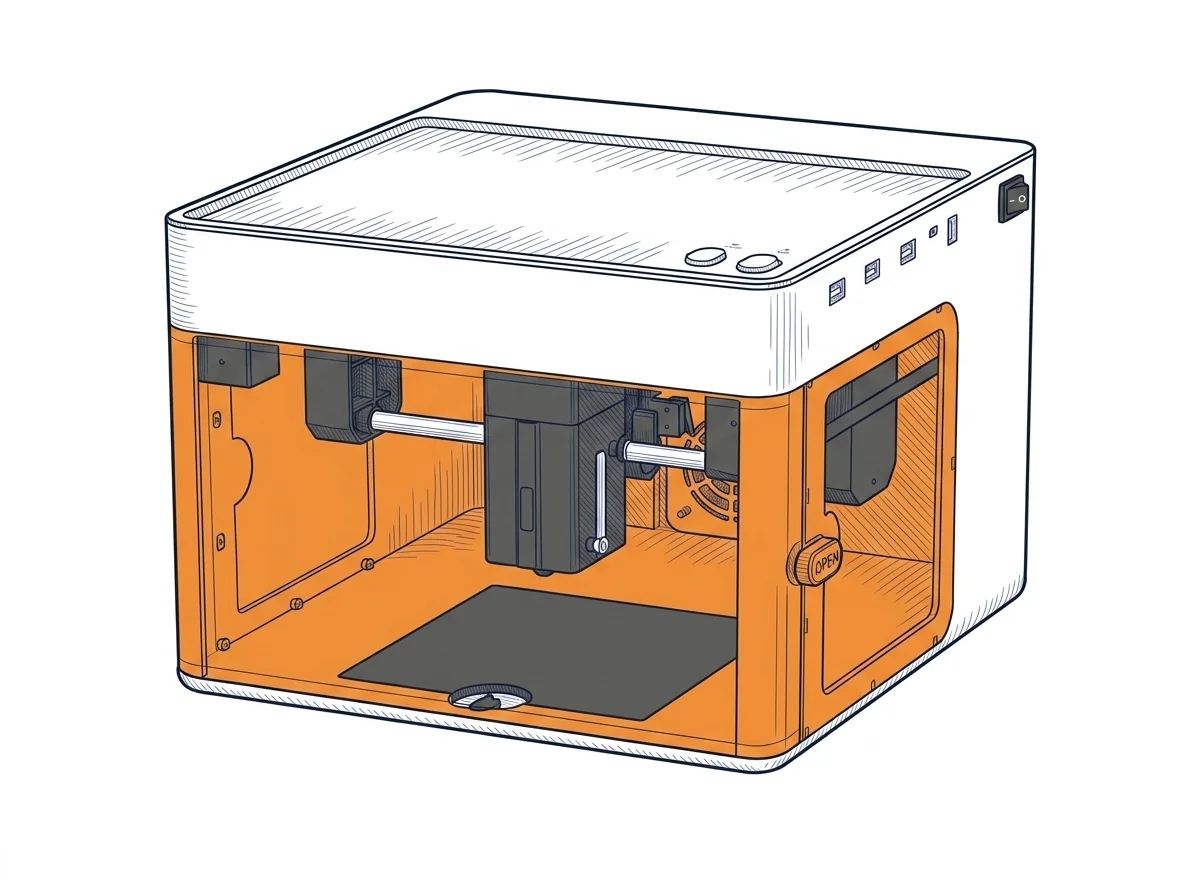
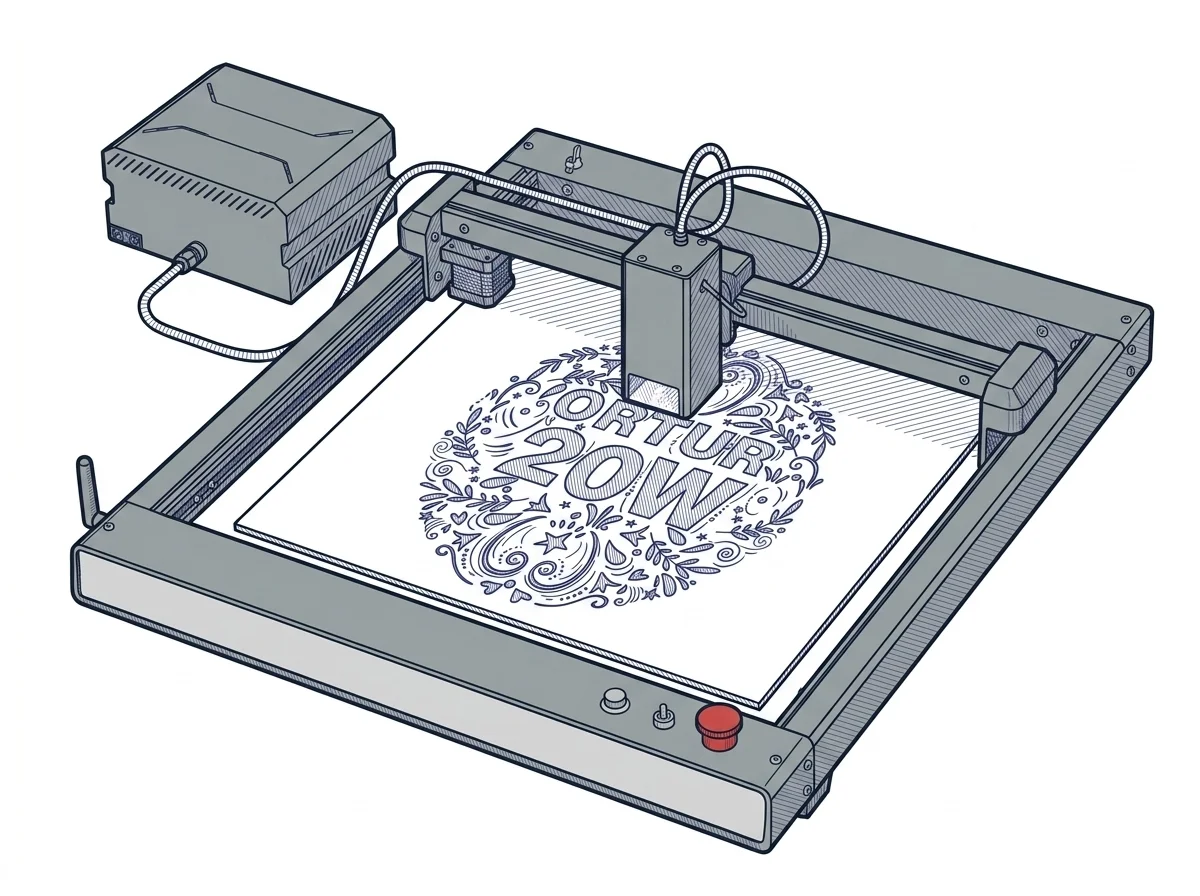
They do not serve the same job: the Atomstack P1 is a portable engraver with a 130 × 130 mm area, the Ortur LM3 works over 400 × 380 mm and declares cuts through several millimetres of wood. The first personalises small objects, the second cuts and engraves panels.
| Parameter | ||
|---|---|---|
| Identity | ||
| Launch year | 2024 | 2023 |
| Use tier | F1 — Entry | F2 — Intermediate |
| Price | ||
| Price (€) | ~250–350 € | ~600–800 € |
| Universal specs | ||
| Dimensions (W×D×H) (cm) | 26.5 × 30.3 × 18.5 cm | 65.8 × 62.5 × 15 cm |
| Weight (kg) | 3 kg | — |
| Work area (mm) | 130 × 130 mm | 400 × 380 mm |
| Z-axis height (mm) | 0 mm | — |
| Power (W) | 24 W | — |
| Voltage (V) | 24 V | — |
| Maximum speed | 180 mm/s | 20000 mm/min |
| Declared precision | 0.01 mm | 0.08 mm |
| Category specs | ||
| Work area (short side) (mm) | 130 mm | 380.0 mm |
| Rated power (W) | 5 W | 20.0 W |
| Source technology | Diode | Diode |
| Max travel speed (mm/s) | 180 mm/s | — |
| Max processing speed (mm/s) | 180 mm/s | 333.33 mm/s |
| Max cut depth per material | Balsa wood up to 3-4mm, acrylic up to 2-3mm in multiple passes | 15mm Pine, 10mm Plywood, 8mm Black Acrylic |
| Wavelength (nm) | 455 nm | — |
| Min resolution (µm) | 10 µm | 80.0 µm |
| Autofocus | No | No |
| Rotary included/compatible | No | No |
| Passthrough | No | — |
| Supported software | LightBurn, Other | Proprietary, LightBurn, Other |
| Frame | — | Open, optional enclosure |
| Air assist | — | Optional |
| Fume extraction | Optional filter | Optional filter |
| Ecosystem | ||
| Cloud dependency | No | No |
| Software notes | The system offers versatile compatibility and can be controlled either through industry-standard software solutions or via dedicated mobile applications. It fully supports LightBurn for users seeking advanced control over engraving parameters and complex project management, alongside LaserGRBL, an open-source option ideal for Windows environments. Furthermore, the integrated wireless connectivity allows operation through the proprietary smartphone and tablet application, optimizing the workflow for quick engravings directly from graphic files stored on mobile devices without needing a permanent physical computer connection. | The LM3 uses firmware based on the open GRBL protocol, compatible with LightBurn (diode license ~$60 one-time), LaserGRBL (free, open-source), and the proprietary Ortur iOS/Android app with selectable novice and advanced modes. LightBurn offers advanced variable power control, path optimization, and optional camera alignment; LaserGRBL covers basic engraving tasks at no additional cost. The open GRBL protocol ensures compatibility with third-party tools and standard G-code generators. Communication is via USB; the Ortur app allows remote job launching via Wi-Fi without a connected PC. |
The differences that matter
- Area 130 × 130 mm against 400 × 380 mm → a 20 cm panel does not fit on the Atomstack.
- Declared cutting: balsa 3-4 mm against plywood up to 10 mm → real wood cutting calls for the Ortur.
- Price about 300 € against about 700 € → the Atomstack costs about 400 euro less.
Which one to choose
Choose P1 Ultra if…
you engrave small objects, such as name tags or keyrings, and want a 3 kg machine that is easy to move. Cutting is limited: balsa up to 3-4 mm and acrylic up to 2-3 mm in several passes (manufacturer-declared values). It costs about 400 euro less.
Choose LM3 40W if…
you cut and engrave panels up to 400 × 380 mm, such as plywood or pine; the maker declares up to 10 mm of plywood and 15 mm of pine, which are upper limits, not everyday work. You accept a 66 × 63 cm footprint and about 400 euro more.
Where to buy
Paid link: the price for you does not change. Methodology
As an Amazon Associate I earn from qualifying purchases.
MakerSpecs is an independent atlas. We don't sell products: the purchase links are the same as on the two product sheets and don't influence the verdict. The sheets have the complete data.