Atomstack Atelier 12W vs Ortur UFERO 2 10W
Technical comparison · Diode laser (405–460 nm)
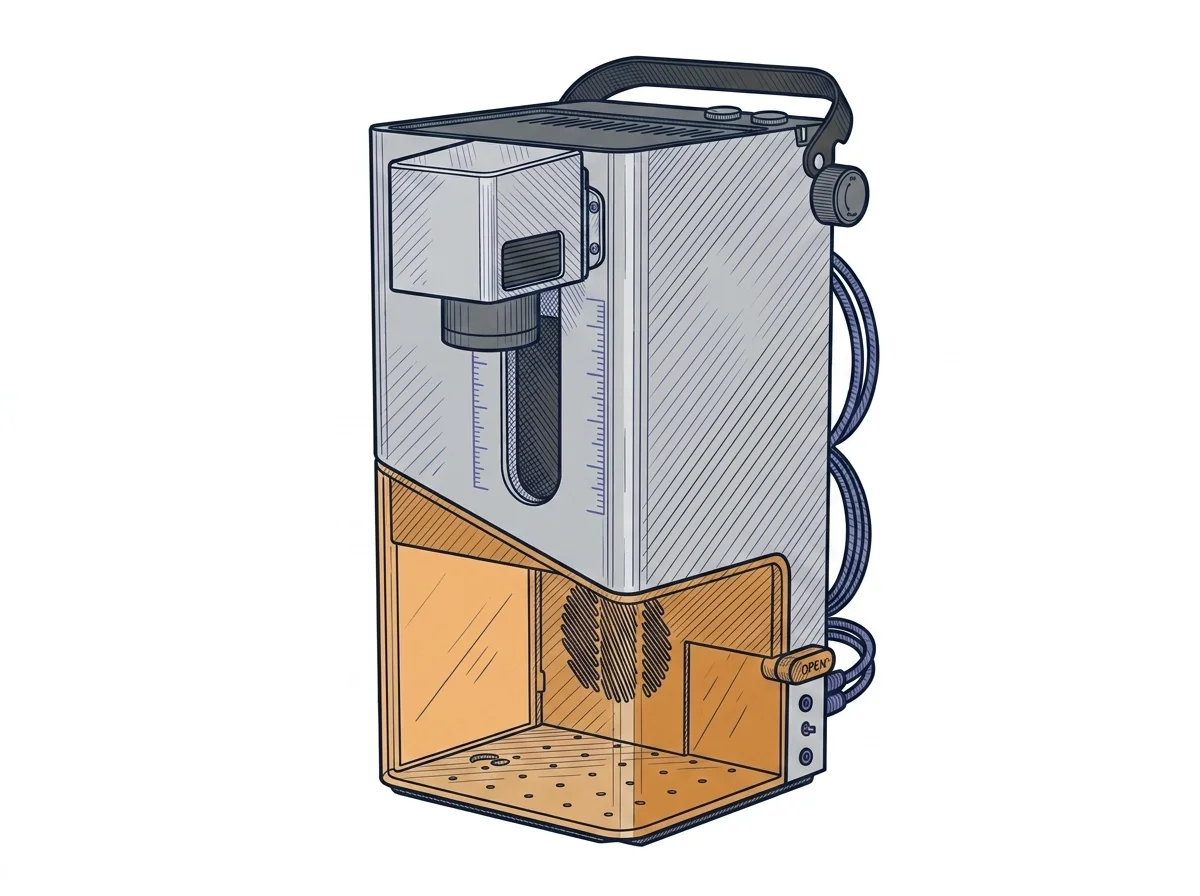
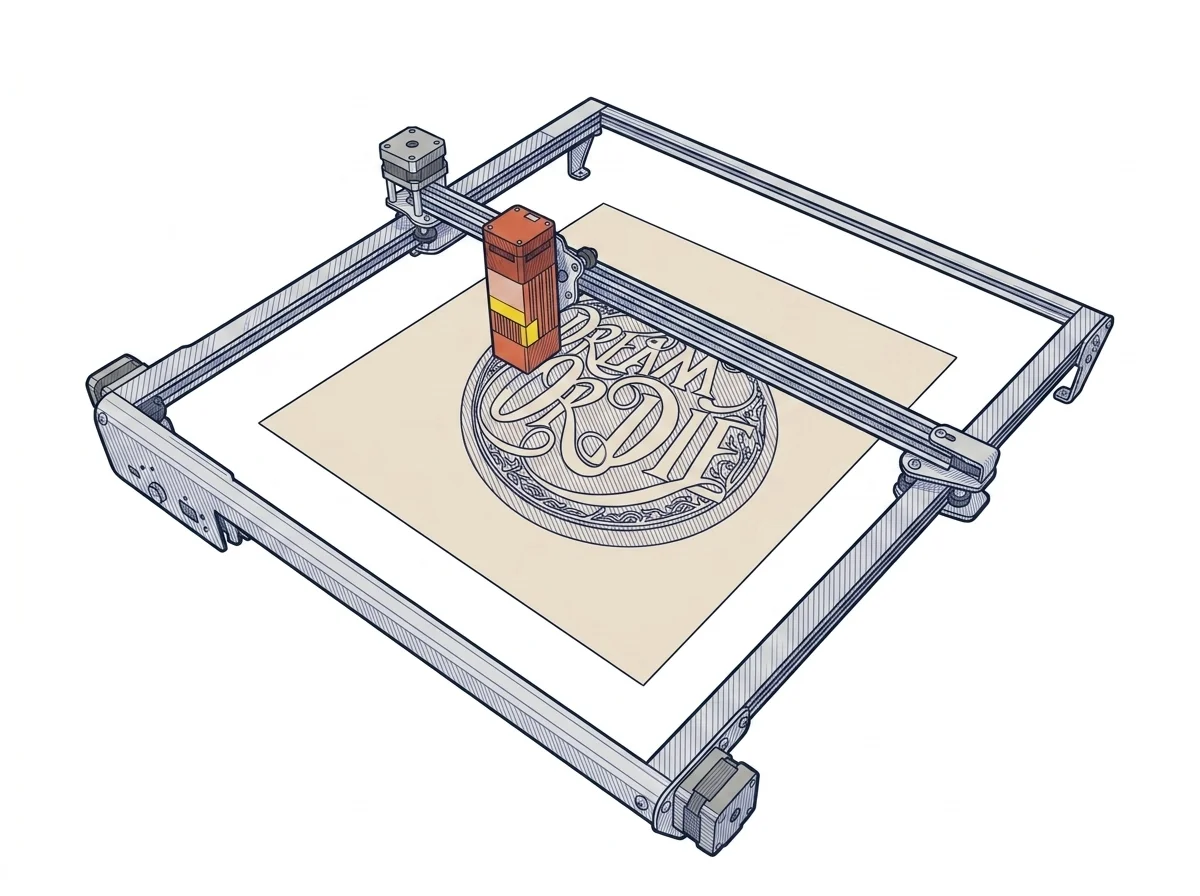
These are not machines for the same job. The Atelier 12W is a galvo head covering a 120 × 120 mm field; the UFERO 2 10W has a 390 × 390 mm bed and cuts panels.
| Parameter | ||
|---|---|---|
| Identity | ||
| Launch year | 2025 | 2021 |
| Use tier | F2 — Intermediate | F2 — Intermediate |
| Price | ||
| Price (€) | ~600–800 € | ~220–320 € |
| Universal specs | ||
| Dimensions (W×D×H) (cm) | 30 × 30 × 41.5 cm | — |
| Weight (kg) | 3.49 kg | — |
| Work area (mm) | 120 × 120 mm | 390 × 390 mm |
| Power (W) | 96 W | — |
| Voltage (V) | 24 V | — |
| Maximum speed | 4000 mm/s | 10000 mm/min |
| Declared precision | 0.01 mm | 0.01 mm |
| Category specs | ||
| Work area (short side) (mm) | 120 mm | — |
| Rated power (W) | 12 W | 10.0 W |
| Source technology | Diode | — |
| Max travel speed (mm/s) | 4000 mm/s | 166.67 mm/s |
| Max processing speed (mm/s) | 4000 mm/s | — |
| Max cut depth per material | — | 8mm pine board, 5mm Acrylic |
| Wavelength (nm) | 455 nm | — |
| Min resolution (µm) | — | 10.0 µm |
| Autofocus | — | No |
| Rotary included/compatible | No | — |
| Passthrough | No | — |
| Supported software | Proprietary, LightBurn | — |
| Fume extraction | Optional filter | — |
| Ecosystem | ||
| Cloud dependency | No | No |
| Software notes | The control of the machine is fully compatible with the industry standard LightBurn, ensuring users have access to advanced tools for design, layer management, and vector path optimization directly via USB connection. The proprietary software provided by the manufacturer is also supported, making it ideal for quick engraving and marking operations or for users who prefer a more streamlined interface. The absence of constraints related to cloud architectures ensures full hardware operability even in offline environments, protecting the confidentiality of work files and ensuring the tool's longevity is not dependent on external remote server support. | Controlled by open GRBL firmware, it is compatible with LightBurn (paid, Windows/macOS/Linux) and LaserGRBL (free, Windows). The standard protocol is independent of proprietary software and allows the use of any GCode client. File transfer is via USB or microSD card, without cloud dependency. |
The differences that matter
- Field 120 × 120 mm against 390 × 390 mm → on the Atelier a piece over 12 cm does not fit; on the UFERO 2 you engrave a whole board.
- Speed up to 4000 mm/s (240,000 mm/min) against up to 10,000 mm/min, values declared by the manufacturer → on the Atelier a run of small marks takes far less time.
- About €700 against about €270 → the UFERO 2 costs about €430 less.
- Cutting declared for the UFERO 2: pine up to 8 mm, acrylic up to 5 mm → a limit reached with multiple passes, not everyday work.
Which one to choose
Choose Atelier 12W if…
you mark or engrave many small pieces in a row, such as tags or gadgets a few centimetres across, and time per piece matters. You can use LightBurn or the manufacturer's software, even offline. You accept paying much more for a field that does not go beyond 12 cm.
Choose UFERO 2 10W if…
you engrave large boards and panels, or cut shapes in pine plywood and thin acrylic, and want to stay on open GRBL with LightBurn, LaserGRBL or microSD files. The trade-off is speed: at 10,000 mm/min a dense engraving takes much longer.
Where to buy
Paid link: the price for you does not change. Methodology
MakerSpecs is an independent atlas. We don't sell products: the purchase links are the same as on the two product sheets and don't influence the verdict. The sheets have the complete data.