Atomstack A70 Max vs Sculpfun S9 Pro
Technical comparison · Diode laser (405–460 nm)
Two diode lasers for different jobs: the A70 Max is a 70 W machine with an 850×800 mm bed, the S9 Pro a 10 W laser with a 400×410 mm bed. The choice depends on panel size and cutting thickness, with about 800 € between them (1300 € against 499 €).
| Parameter | ||
|---|---|---|
| Identity | ||
| Launch year | 2024 | 2022 |
| Use tier | F3 — Advanced | F2 — Intermediate |
| Price | ||
| Price (€) | ~1100–1500 € | 499 € |
| Universal specs | ||
| Dimensions (W×D×H) (cm) | 105.6 × 116.8 × 23 cm | — |
| Weight (kg) | 15 kg | 3 kg |
| Work area (mm) | 850 × 800 mm | 400 × 410 mm |
| Power (W) | 360 W | 10 W |
| Voltage (V) | — | 240 V |
| Maximum speed | 400 mm/s | — |
| Declared precision | 0.01 mm | 0.01 mm |
| Category specs | ||
| Work area (short side) (mm) | 800 mm | 400 mm |
| Rated power (W) | 70 W | 10 W |
| Source technology | Diode | Diode |
| Max travel speed (mm/s) | 400 mm/s | — |
| Max processing speed (mm/s) | 400 mm/s | — |
| Max cut depth per material | 25 mm (legno), 30 mm (acrilico) | 15mm wood, 10mm acrylic |
| Wavelength (nm) | 455 nm | 450 nm |
| Min resolution (µm) | 10 µm | 10 µm |
| Autofocus | No | No |
| Rotary included/compatible | No | No |
| Passthrough | No | — |
| Supported software | Proprietary, LightBurn, Other | LightBurn, Other |
| Frame | Open, optional enclosure | — |
| Fume extraction | Optional filter | — |
| Ecosystem | ||
| Cloud dependency | No | No |
| Software notes | The system offers excellent versatility in terms of software control, ensuring native compatibility with standard solutions in the maker industry. It fully supports LightBurn, the most popular professional application for laser cutting and engraving management, and LaserGRBL, an open-source alternative ideal for more straightforward operations. Additionally, the machine features wireless connectivity capabilities that allow file transmission and monitoring via a proprietary mobile application, optimizing the workshop workflow. The absence of restrictions tied to proprietary cloud ecosystems ensures complete offline operational continuity, protecting project privacy and ensuring that the machine remains fully functional regardless of local network conditions. | Compatible with major engraving software like LightBurn and LaserGRBL. It connects via USB and supports files in NC, BMP, JPG, PNG, and DXF formats. |
The differences that matter
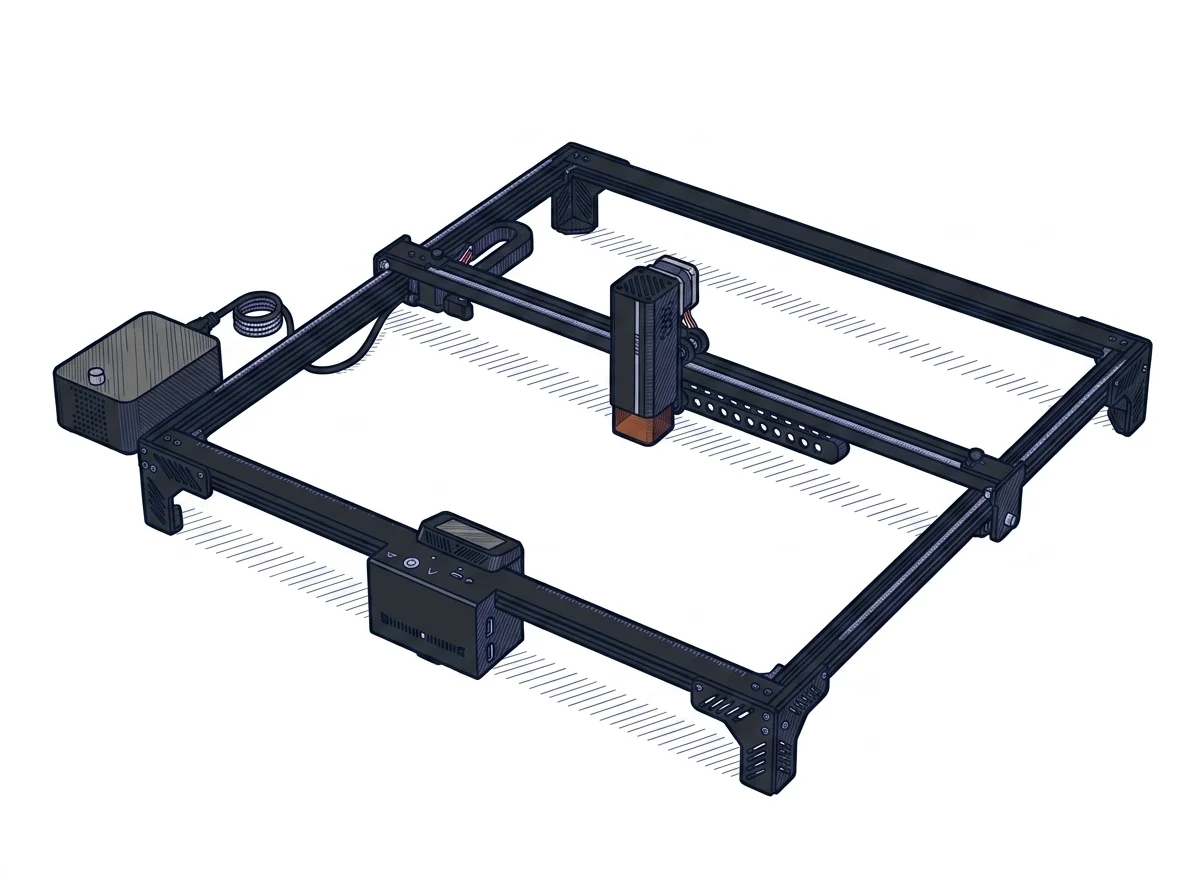
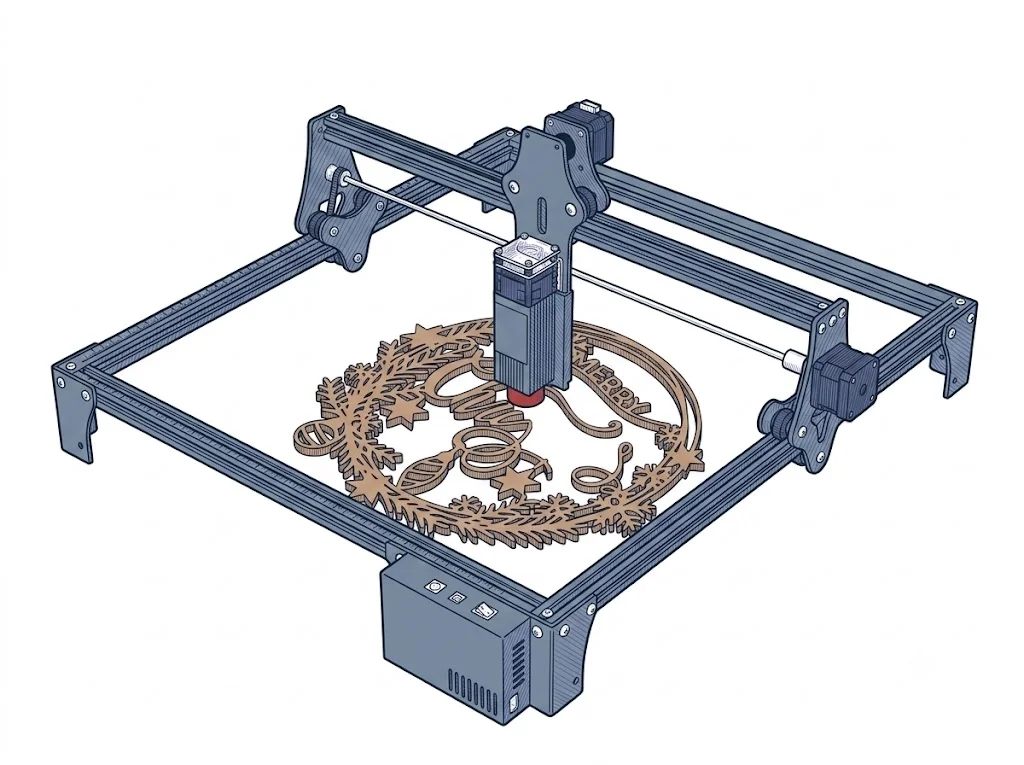
- Bed 850×800 mm vs 400×410 mm → a large panel is worked whole only on the A70 Max.
- Power 70 W vs 10 W → stated cutting up to 25 mm of wood against 15 mm.
- Weight 15 kg vs 3 kg → the S9 Pro moves by hand, the A70 Max stays where you set it up.
- Price 1300 € vs 499 € → the S9 Pro costs about 800 € less.
Which one to choose
Choose A70 Max if…
A70 Max: an 800 mm panel is worked in one go, and stated cutting reaches 25 mm in wood and 30 mm in acrylic (manufacturer's limits, not everyday work). The trade-off: about 800 € more, 15 kg and a 105.6×116.8 cm footprint that needs dedicated space.
Choose S9 Pro if…
S9 Pro: 3 kg and 499 €, it moves easily and sits on a table, for engraving and cutting pieces within 400×410 mm, with a stated 15 mm in wood and 10 mm in acrylic. The trade-off: 10 W against 70 W and a bed that can't take large panels.
Where to buy
Paid link: the price for you does not change. Methodology
As an Amazon Associate I earn from qualifying purchases.
MakerSpecs is an independent atlas. We don't sell products: the purchase links are the same as on the two product sheets and don't influence the verdict. The sheets have the complete data.