Anycubic Kobra 2 Neo vs Anycubic Kobra 3 V2
Technical comparison · Fused filament fabrication (FFF/FDM)
Choose Anycubic Kobra 2 Neo if you are looking for an essential and budget-friendly 3D printer under 200 euros. Choose Anycubic Kobra 3 V2 if you want higher speeds up to 600 mm/s, a larger build volume, and support for multicolor printing up to 8 colors.
| Parameter | ||
|---|---|---|
| Identity | ||
| Launch year | 2023 | 2025 |
| Use tier | F1 — Entry | F1 — Entry |
| Price | ||
| Price (€) | ~149–199 € | 349 € |
| Price updated on | 06/2026 | 06/2026 |
| Universal specs | ||
| Dimensions (W×D×H) (cm) | 44 × 44 × 48.5 cm | 45.29 × 50.47 × 48.3 cm |
| Weight (kg) | 7.3 kg | 9.37 kg |
| Work area (mm) | 220 × 220 mm | 255 × 255 mm |
| Z-axis height (mm) | 250 mm | 260 mm |
| Power (W) | 400 W | 400 W |
| Maximum speed | 250 mm/s | 600 mm/s |
| Declared precision | — | 0.05 mm |
| Category specs | ||
| Footprint X×Y (short side) (mm) | 220 mm | 255 mm |
| Build height Z (mm) | 250 mm | 260 mm |
| Kinematics | Cartesian | Cartesian |
| Max nozzle temperature (°C) | 260 °C | 300 °C |
| Max bed temperature (°C) | 110 °C | 110 °C |
| Max print speed (mm/s) | 250 mm/s | 600 mm/s |
| Enclosed chamber | No | No |
| Filament sensor | No | Yes |
| Auto bed leveling | Mesh | Mesh |
| Standard nozzle diameter (mm) | 0.4 mm | 0.4 mm |
| Multi-extruder | No | No |
| Native Klipper | No | Yes |
| Input shaper | Yes | Yes |
| Multicolor printing | No | Yes |
| Multicolor requires accessory | — | Yes |
| Max colors | 1 | 8 |
| Ecosystem | ||
| Cloud dependency | No | No |
| Software notes | The machine is compatible with major slicing software on the market such as Cura, PrusaSlicer, and Simplify3D, supporting STL and OBJ formats. It features Marlin firmware with advanced functionalities like Linear Advance and Input Shaping. | Powered by Anycubic Kobra OS (based on Klipper) and operated via a 4.3-inch capacitive touch interface. Compatible with Anycubic Slicer, OrcaSlicer, and other third-party software. It offers Wi-Fi connectivity and integration with the Anycubic app for remote monitoring. Multicolor printing requires the external ACE Pro module, sold separately. |
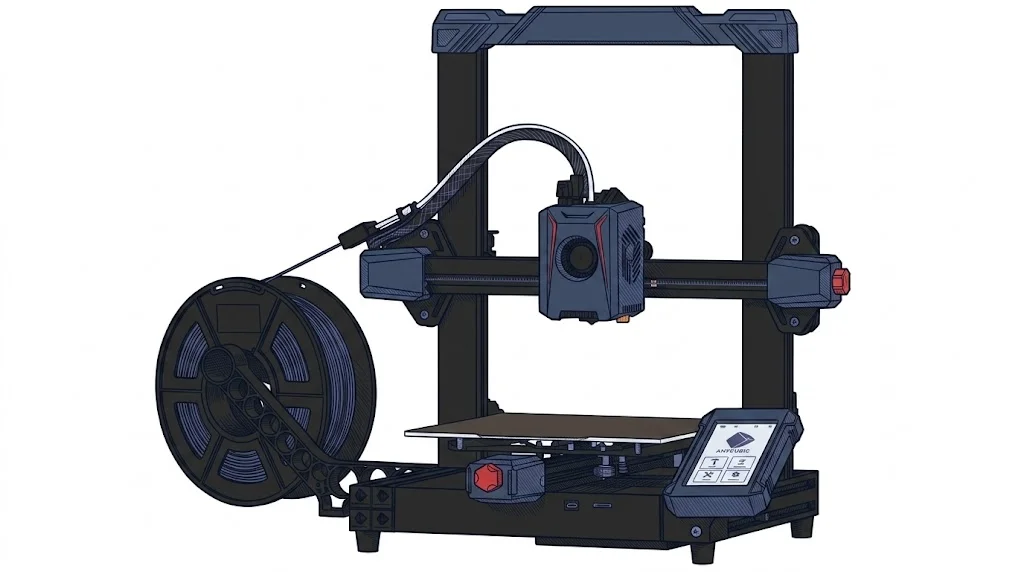
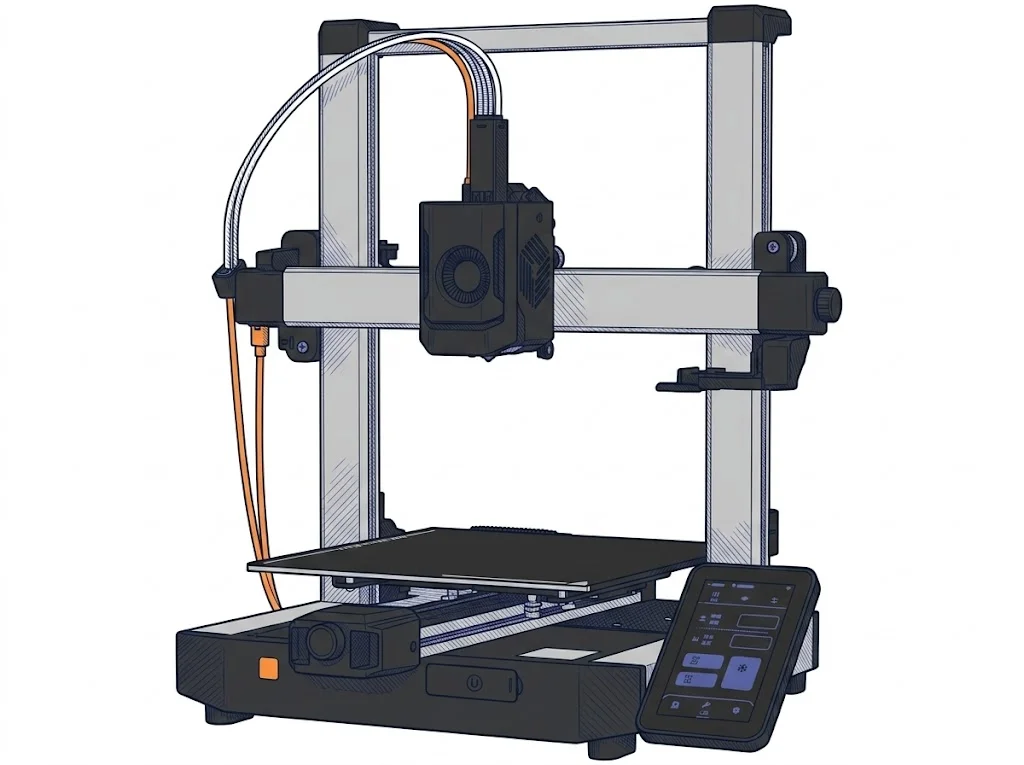
The differences that matter
- Speed and firmware: Kobra 3 V2 reaches a maximum speed of 600 mm/s powered by Kobra OS (Klipper) with Wi-Fi connectivity, whereas Kobra 2 Neo is limited to 250 mm/s with Marlin firmware and local management.
- Build volume and dimensions: Kobra 3 V2 offers a 255 × 255 × 260 mm workspace compared to the 220 × 220 × 250 mm of Kobra 2 Neo, resulting in a heavier operational weight (9.37 kg vs. 7.3 kg).
- Nozzle temperature: The Kobra 3 V2 model supports a maximum nozzle temperature of 300 °C, expanding compatibility compared to the 260 °C maximum of Kobra 2 Neo.
- Filament management and multicolor: Kobra 3 V2 integrates a filament sensor as standard and supports printing up to 8 colors via the ACE Pro accessory (sold separately), features absent in Kobra 2 Neo (limited to 1 color and without a sensor).
Which one to choose
Choose Kobra 2 Neo if…
The Anycubic Kobra 2 Neo (2023) is suitable for users on a tight budget (~149–199 €) who require standard specifications, such as a 220 × 220 × 250 mm build volume and a maximum speed of 250 mm/s, managed by Marlin firmware without the need for native wireless features or filament sensors.
Choose Kobra 3 V2 if…
The Anycubic Kobra 3 V2 (2025) is the ideal choice for use profiles requiring high productivity and material versatility, thanks to its maximum speed of 600 mm/s, an increased build volume of 255 × 255 × 260 mm, nozzle temperature up to 300 °C, Kobra OS (Klipper-based) operating system with Wi-Fi, and support for multicolor printing up to 8 colors via the external ACE Pro module.
Where to buy
Paid link: the price for you does not change. Methodology
Filaments for these printers
The most chosen spools among the materials both printers can print according to their specifications.
- ELEGOO PLA PLA1.75 mm1 kg Check the price on Amazon →
- Bambu Lab PLA PLA1.75 mm1 kg Check the price on Amazon →
- SUNLU PETG (Polyethylene Terephthalate Glycol) PETG (Polyethylene Terephthalate Glycol)1.75 mm1 kg Check the price on Amazon →
- SUNLU PLA PLA1.75 mm1 kg Check the price on Amazon →
- OVERTURE PETG (Polyethylene Terephthalate Glycol) PETG (Polyethylene Terephthalate Glycol)High speed1.75 mm1 kg Check the price on Amazon →
Paid link: the price for you does not change. Methodology
As an Amazon Associate I earn from qualifying purchases.
MakerSpecs is an independent atlas. We don't sell products: the purchase links are the same as on the two product sheets and don't influence the verdict. The sheets have the complete data.