Anycubic Photon P1 vs Elegoo Saturn 4 Ultra
Technical comparison · Resin 3D printing
Nearly identical plate, about 223×126 mm against 218.88×122.88 mm, and close pixel sizes: what decides is the price, about 275 € more for the Photon P1.
| Parameter | ||
|---|---|---|
| Identity | ||
| Launch year | 2026 | 2024 |
| Use tier | F2 — Intermediate | F2 — Intermediate |
| Price | ||
| Price (€) | ~649–699 € | 399 € |
| Universal specs | ||
| Dimensions (W×D×H) (cm) | 36.6 × 33.8 × 53.9 cm | 32.7 × 32.9 × 54.8 cm |
| Weight (kg) | 13.6 kg | 14.5 kg |
| Work area (mm) | 223 × 126 mm | 218.88 × 122.88 mm |
| Z-axis height (mm) | 230 mm | 220 mm |
| Power (W) | 215 W | 150 W |
| Voltage (V) | — | 24 V |
| Maximum speed | 0.58 mm/min | 150 mm/s |
| Declared precision | 16.8 μm | 19 μm |
| Category specs | ||
| Build area XY (short side) (mm) | 126 mm | 122.88 mm |
| XY resolution (µm) | 16.8 µm | 19 µm |
| Light source | Mono LCD | Mono LCD |
| UV power (mW/cm²) | 5 mW/cm² | — |
| Print speed (mm/h) | 35 mm/h | 150 mm/h |
| Tilt / peel system | Standard FEP | Tilt |
| Ecosystem | ||
| Cloud dependency | No | No |
| Software notes | Model preparation for the Photon P1 is primarily handled by Anycubic Photon Workshop, a proprietary slicing software that has evolved significantly, offering an intuitive interface alongside advanced mesh repair and support tools. The printer still maintains an open nature, being fully compatible with popular third-party slicers widely appreciated by the community, such as Chitubox, Lychee Slicer, and Tango. Network connectivity via Wi-Fi and a LAN port, alongside the traditional USB port, allows for seamless remote control, integrating perfectly with the Anycubic mobile app. This flexibility grants users the freedom to choose their preferred software workflow, always ensuring the maximum output quality of the printed file. | The device natively supports the proprietary ChituBox preparation software and is fully compatible with popular third-party slicers in the industry. File management and remote monitoring are handled via the desktop application connected to the local Wi-Fi network. Advanced functions of the integrated camera enable automatic time-lapse video generation and anomaly identification during the placement of initial layers. File transfer is not bound to mandatory proprietary remote servers, ensuring operational continuity offline via the USB port. |
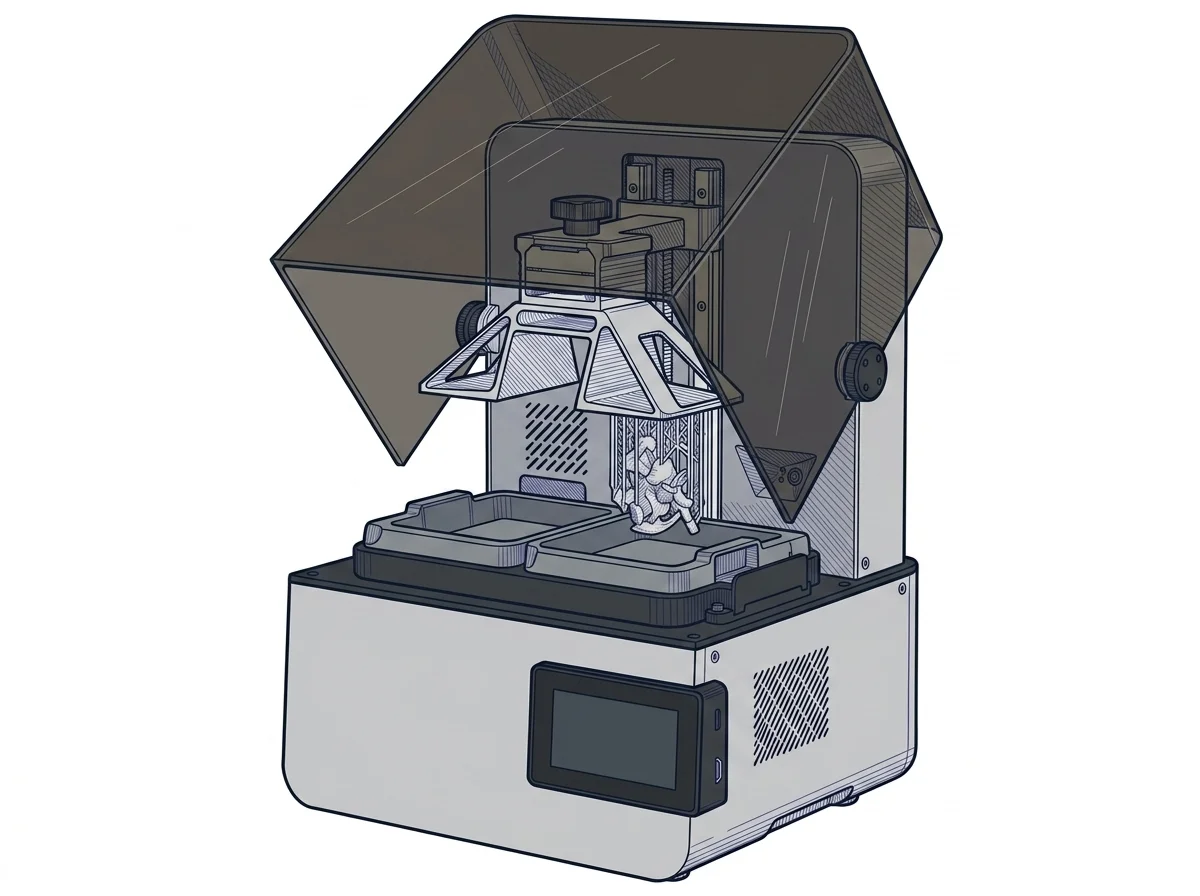
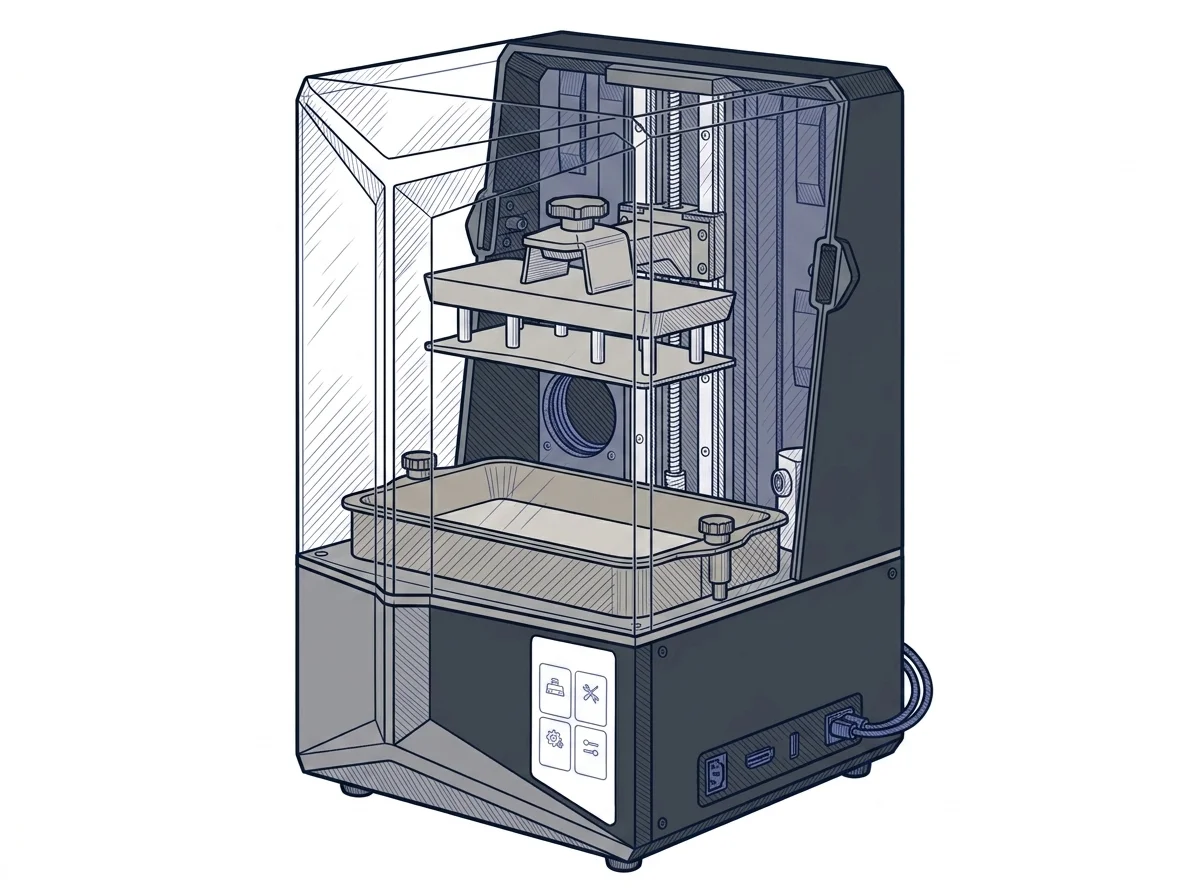
The differences that matter
- Price: 399 € vs about 674 € → the Saturn 4 Ultra costs 275 € less for the same plate.
- XY resolution: 16.8 µm vs 19 µm → a minimal gap that only shows on the smallest details.
- Equipment: built-in camera on the Saturn 4 Ultra, LAN port on the Photon P1 → remote monitoring goes through different routes.
Which one to choose
Choose Photon P1 if…
you want the finest pixels for miniatures and small parts: 16.8 µm stated against 19 µm, with Wi-Fi, a LAN port, USB and the Anycubic app for remote control. You pay about 275 € more for a 2.2 µm gap in pixel size, and the plate stays at 223×126 mm.
Choose Saturn 4 Ultra if…
you print miniatures and small parts and would rather keep 275 € in your pocket: the plate is practically the same. It adds a built-in camera that records time-lapse and flags anomalies on the first layers. The trade-off is the stated resolution, 19 µm against 16.8 µm.
Where to buy
Paid link: the price for you does not change. Methodology
As an Amazon Associate I earn from qualifying purchases.
MakerSpecs is an independent atlas. We don't sell products: the purchase links are the same as on the two product sheets and don't influence the verdict. The sheets have the complete data.