Anycubic Photon Mono 4 Ultra vs Creality HALOT R6
Technical comparison · Resin 3D printing
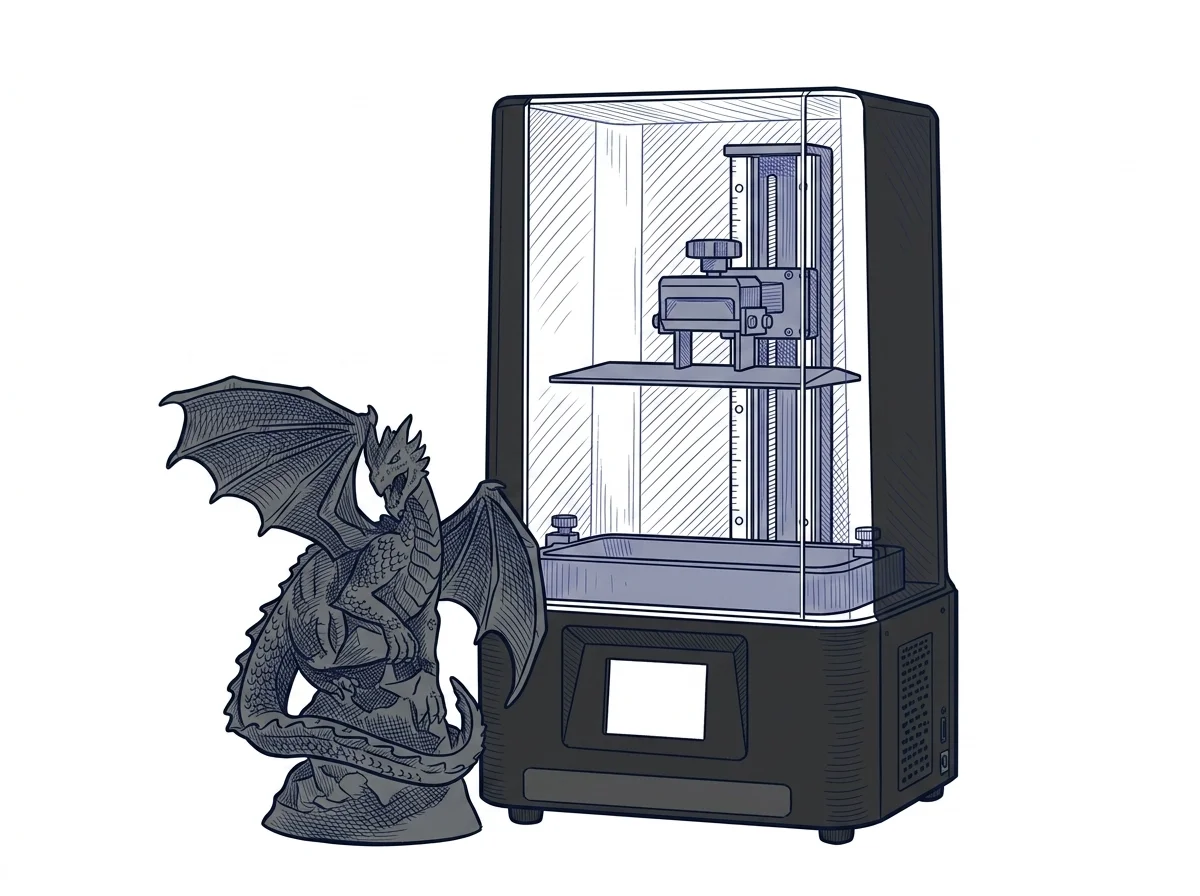
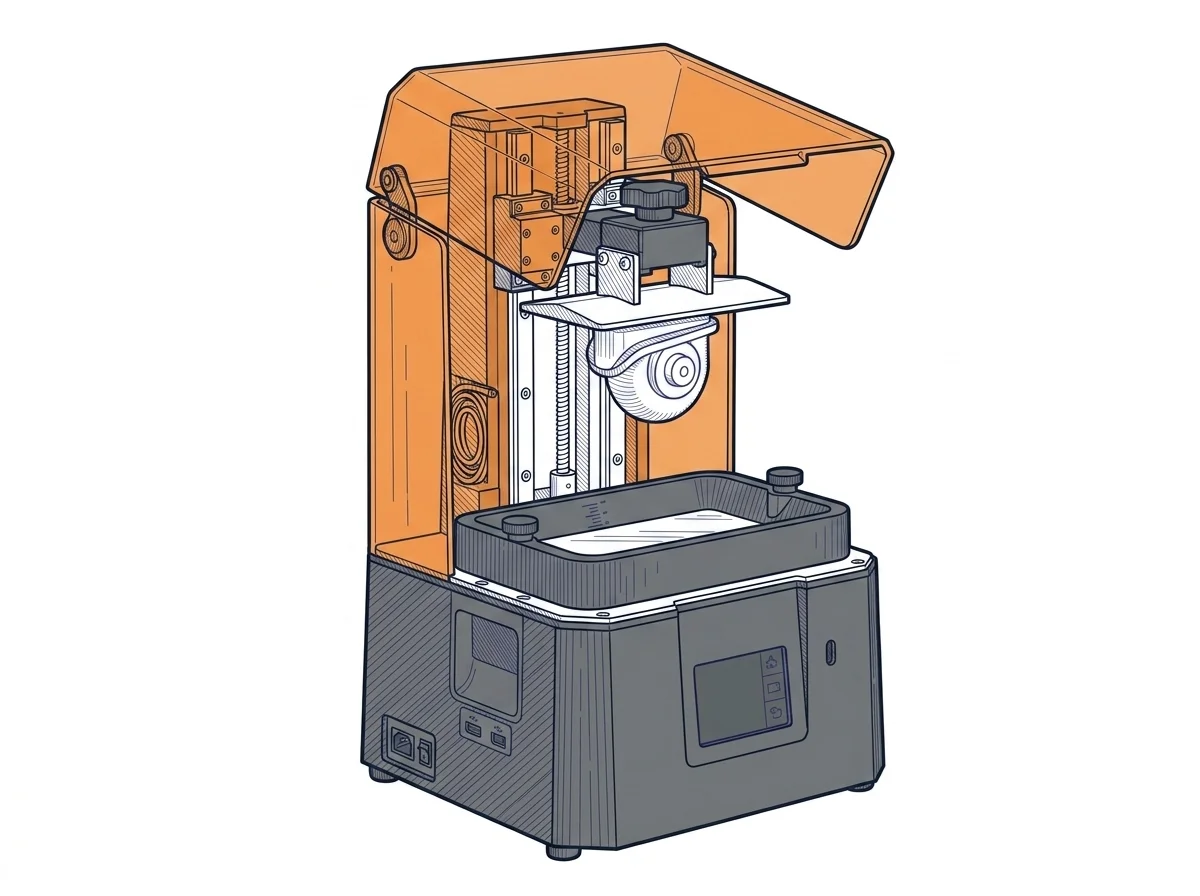
Two resin printers with a monochrome LCD screen, one entry-level and one costing about €85 more. What decides it is detail: 17 µm of declared XY resolution against 50 µm.
| Parameter | ||
|---|---|---|
| Identity | ||
| Launch year | 2024 | 2024 |
| Use tier | F2 — Intermediate | F1 — Entry |
| Price | ||
| Price (€) | 299 € | ~180–250 € |
| Universal specs | ||
| Dimensions (W×D×H) (cm) | 25.1 × 25.1 × 38.3 cm | 23.55 × 23 × 39.55 cm |
| Weight (kg) | 4.1 kg | 4.25 kg |
| Work area (mm) | 153.36 × 87.03 mm | 130.56 × 82.62 mm |
| Z-axis height (mm) | 165 mm | 160 mm |
| Power (W) | 66 W | 100 W |
| Voltage (V) | 240 V | 100 V |
| Maximum speed | 105 mm/min | 60 |
| Declared precision | 17 μm | 50 µm |
| Category specs | ||
| Build area XY (short side) (mm) | 87.03 mm | 82.62 mm |
| XY resolution (µm) | 17 µm | 50 µm |
| Light source | Mono LCD | Mono LCD |
| Print speed (mm/h) | 105 mm/h | 60 mm/h |
| Tilt / peel system | Standard FEP | Standard FEP |
| Ecosystem | ||
| Cloud dependency | No | No |
| Software notes | The system supports standard file formats derived from the main slicing software on the market, offering full compatibility with Anycubic Photon Workshop. The native application provides advanced tools for optimal model orientation, automatic or manual generation of complex supports, and geometric resin compensation to prevent shrinkage issues. Although the printer includes network connectivity features for optional remote monitoring of the work cycle and file transfer via local network, all fundamental configuration and printing operations remain fully accessible offline via the integrated touch screen and USB input. | The device is compatible with major slicing software options on the market, including the proprietary Creality HALOT BOX suite, CHITUBOX, and Lychee Slicer. File preparation is primarily handled via a local computer for export to a USB flash drive. The integrated wireless connectivity allows for basic remote management and monitoring through the Creality Cloud application, yet the machine remains fully operational offline using the built-in touch screen interface, ensuring flexibility even without internet access. |
The differences that matter
- XY resolution: 17 µm against 50 µm → finer surfaces and small details on the Photon.
- Declared speed: 105 mm/h against 60 mm/h → for the same part height the Photon finishes sooner.
- Price: €299 against €215 → about €85 more for the Photon.
Which one to choose
Choose Photon Mono 4 Ultra if…
you print parts with small details and want the larger bed, 153×87 mm against 131×83 mm, to fit more parts in the same print. You spend about €85 more and prepare files with Photon Workshop, Anycubic's own program.
Choose HALOT R6 if…
you print parts where a declared 50 µm is enough and want to spend about €85 less. The trade-off is the declared print speed, 60 mm/h against 105 mm/h, and a smaller bed. It reads files from CHITUBOX and Lychee Slicer as well as Creality's own software.
Where to buy
Paid link: the price for you does not change. Methodology
MakerSpecs is an independent atlas. We don't sell products: the purchase links are the same as on the two product sheets and don't influence the verdict. The sheets have the complete data.