Cebora SYNSTAR 330 TC vs Cebora SYNSTAR 270 T SRS
Technical comparison · MIG/MAG welding (wire feed)
SYNSTAR 270 T SRS leads on the available specs (starting with price); SYNSTAR 330 TC makes sense only for non-technical reasons (availability, support, ecosystem), or if the missing data matters in your case.
| Parameter |
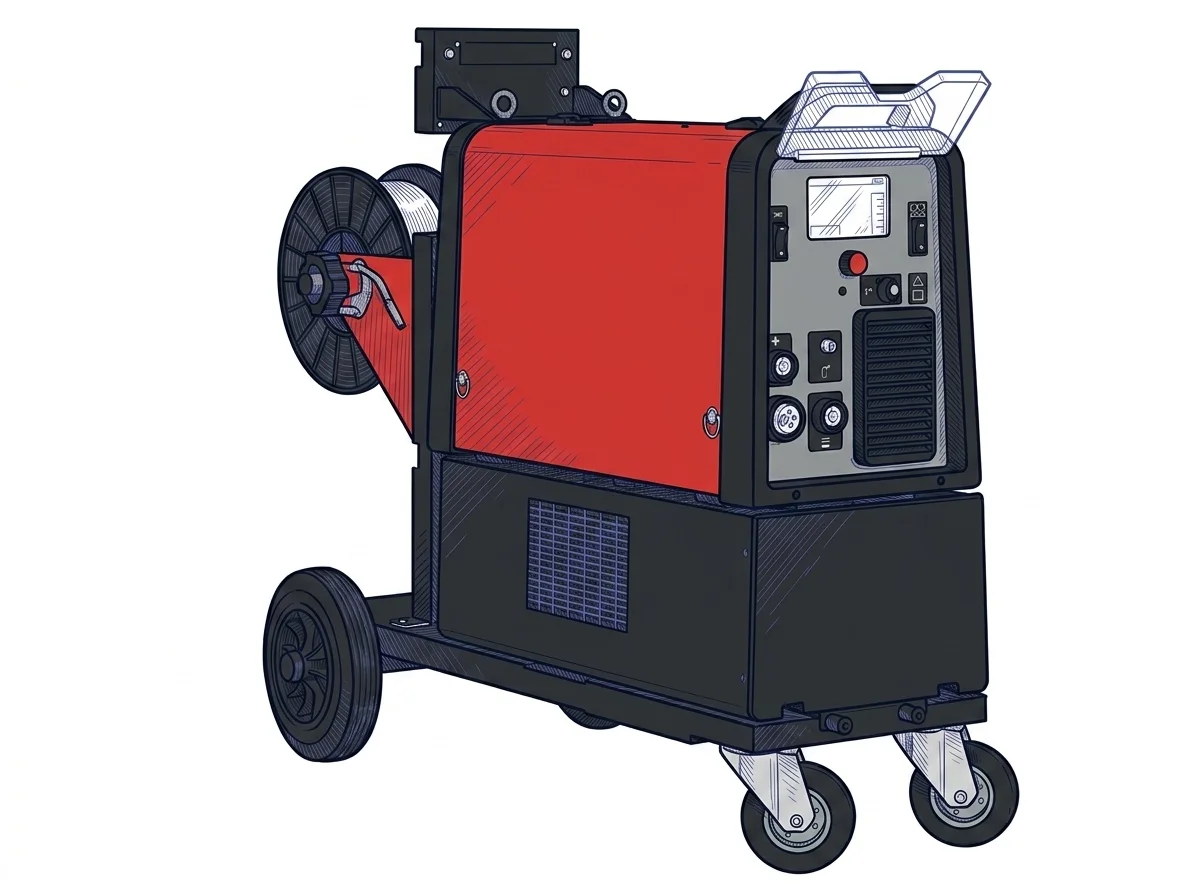 SYNSTAR 330 TC
Cebora
F4 · Semi-professional
SYNSTAR 330 TC
Cebora
F4 · Semi-professional
|
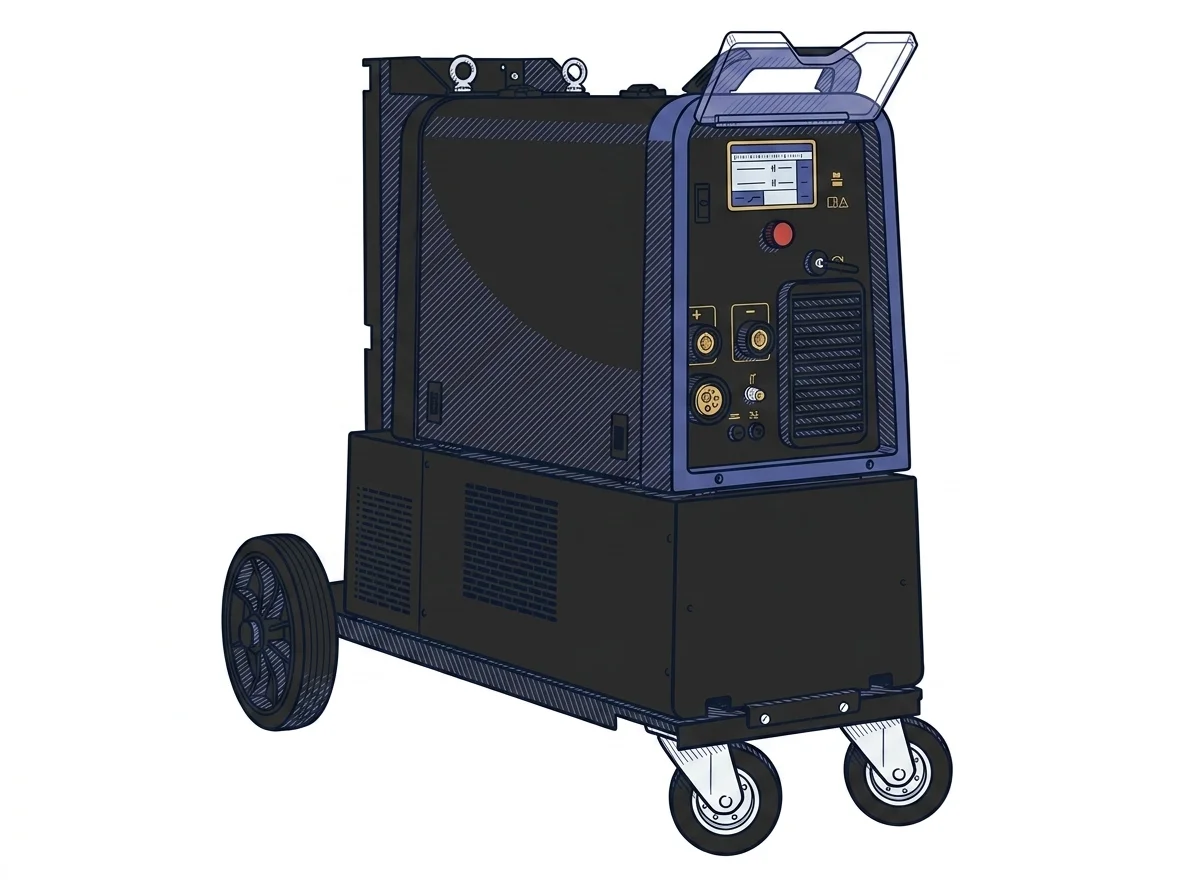 SYNSTAR 270 T SRS
Cebora
F3 · Advanced
SYNSTAR 270 T SRS
Cebora
F3 · Advanced
|
|---|---|---|
| Identity | ||
| Launch year | 2016 | — |
| Use tier | F4 — Semi-professional | F3 — Advanced |
| Price | ||
| Price (€) | ~4500–6000 € | ~3500–4500 € |
| Universal specs | ||
| Dimensions (W×D×H) (cm) | 51 × 102.2 × 96 cm | 51 × 102 × 86.5 cm |
| Weight (kg) | 72 kg | 68 kg |
| Power (W) | 12400 W | 9300 W |
| Voltage (V) | 400 V | 400 V |
| Category specs | ||
| Welding type | Multi-process | MIG/MAG |
| Max welding current (A) | 330 A | 270 A |
| Max wire diameter (mm) | 1.2 mm | 1.2 mm |
| Duty cycle (rated current) (%) | 40 % | — |
| Synergic control | True | True |
| Power source technology | Inverter | Inverter |
| Aluminium ready | True | True |
| Pulse capable | True | — |
| Input voltage | 400 V (three-phase) | 400 V (three-phase) |
| Supported spool | Ø300 mm (~15 kg) | Ø300 mm (~15 kg) |
| Ecosystem | ||
| Cloud dependency | No | No |
| Software notes | The power source is managed through a 5-inch color LCD touchscreen interface, allowing intuitive control of all welding functions. The operator can easily select parameters, activate MIG Short, pulse, or double pulse functions, and access aluminum-specific features such as Automatic Hot Start and Automatic Crater Filler. System firmware updates are performed quickly and simply via the integrated USB port. It is also pre-arranged for wireless connectivity with personal protective equipment, such as a compatible auto-darkening welding helmet. | The power source features an advanced synergic control system that significantly simplifies initial setup, offering numerous pre-loaded curves for welding various alloys. The standout software feature is the integration of the exclusive Spatter Reduction System (SRS). This proprietary Cebora algorithm constantly monitors arc parameters in real-time, dynamically optimizing metal transfer to drastically reduce the formation of spatter. This advanced electronic control minimizes post-weld cleanup time and ensures cleaner weld beads, while interacting smoothly with the operator through an intuitive and comprehensive digital control panel. |
The differences that matter
- Price: SYNSTAR 330 TC 5250 € vs SYNSTAR 270 T SRS 4000 € — SYNSTAR 270 T SRS wins (+31%)
Which one to choose
MakerSpecs is an independent atlas. We don't sell products: this comparison links to both sheets, where you'll find complete data and official links.