Anycubic Kobra 2 Neo 3D Printer vs Prusa Research MK4S 3D Printer kit
Technical comparison · Fused filament fabrication (FFF/FDM)
Kobra 2 Neo 3D Printer and MK4S 3D Printer kit are not direct competitors: very different prices (~4.7×). Kobra 2 Neo 3D Printer costs less (~€174) and is the entry-level choice; MK4S 3D Printer kit offers more capability at a higher price (~€819). Judge them by budget, not head-to-head.
| Parameter |
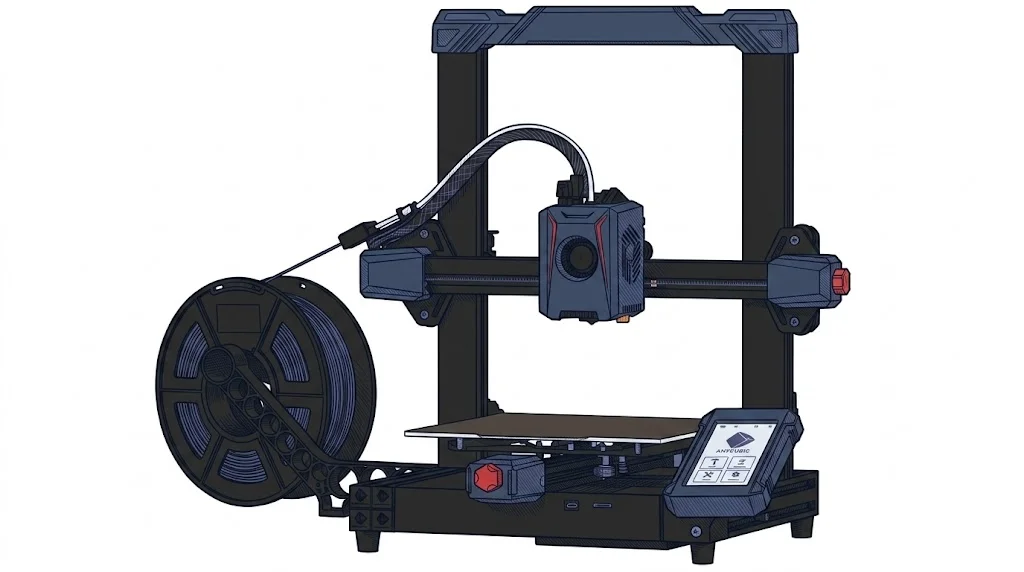 Kobra 2 Neo 3D Printer
Anycubic
F1 · Entry
Kobra 2 Neo 3D Printer
Anycubic
F1 · Entry
|
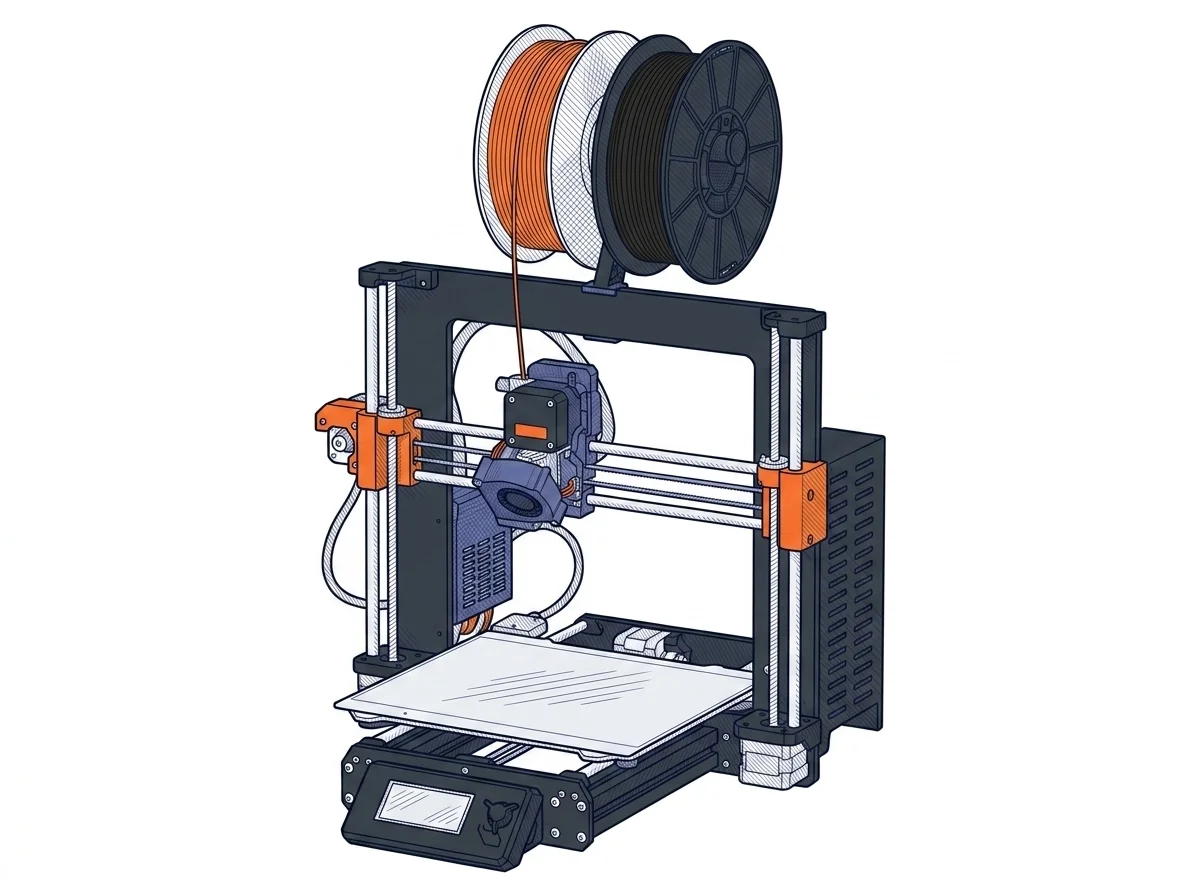 MK4S 3D Printer kit
Prusa Research
F2 · Intermediate
MK4S 3D Printer kit
Prusa Research
F2 · Intermediate
|
|---|---|---|
| Awards | — | |
| Identity | ||
| Launch year | 2023 | 2025 |
| Use tier | F1 — Entry | F2 — Intermediate |
| Price | ||
| Price (€) | ~149–199 € | 819 € |
| Price updated on | 06/2026 | — |
| Universal specs | ||
| Dimensions (W×D×H) (cm) | 44 × 44 × 48.5 cm | 50 × 55 × 40 cm |
| Weight (kg) | 7.3 kg | 7 kg |
| Work area (mm) | 220 × 220 mm | 250 × 210 mm |
| Z-axis height (mm) | 250 mm | 220 mm |
| Power (W) | 400 W | 240 W |
| Voltage (V) | — | 230 V |
| Maximum speed | 250 mm/s | 500 mm/s |
| Category specs | ||
| Footprint X×Y (short side) (mm) | 220 mm | 250 mm |
| Build height Z (mm) | 250 mm | 220 mm |
| Kinematics | Cartesian | Cartesian |
| Max nozzle temperature (°C) | 260 °C | 290 °C |
| Max bed temperature (°C) | 110 °C | 120 °C |
| Max print speed (mm/s) | 250 mm/s | 500 mm/s |
| Enclosed chamber | False | False |
| Filament sensor | False | True |
| Auto bed leveling | Mesh | Mesh |
| Standard nozzle diameter (mm) | 0.4 mm | 0.4 mm |
| Multi-extruder | False | False |
| Native Klipper | False | False |
| Input shaper | True | True |
| Multicolor printing | false | True |
| Multicolor requires accessory | — | True |
| Max colors | 1 | 5 |
| Ecosystem | ||
| Cloud dependency | No | No |
| Software notes | The machine is compatible with major slicing software on the market such as Cura, PrusaSlicer, and Simplify3D, supporting STL and OBJ formats. It features Marlin firmware with advanced functionalities like Linear Advance and Input Shaping. | The MK4S runs proprietary Prusa firmware based on Marlin, not GRBL. It is managed through PrusaSlicer (with over 180 official profiles included), Simplify3D, or Cura with community profiles. Files are loaded via USB, local network, or PrusaConnect and the Prusa mobile app; it is not compatible with LightBurn or LaserGRBL, being a filament printer. The machine can run fully offline with no cloud dependency, and receives regular firmware updates along with pre-tuned profiles for Prusament materials. |
MakerSpecs Awards
Best price Entry
The lowest list price among entry-level Fused filament fabrication (FFF/FDM) machines: €174. The second cheapest starts at €260. (Excluding manufacturer or retailer discounts.)
How we assign awards →Nessun riconoscimento in questa fascia.
The differences that matter
- Price: Kobra 2 Neo 3D Printer 174 € vs MK4S 3D Printer kit 819 € — Kobra 2 Neo 3D Printer wins (+371%)
- Max print speed: Kobra 2 Neo 3D Printer 250 mm/s vs MK4S 3D Printer kit 500 mm/s — MK4S 3D Printer kit wins (+100%)
- Max colors: Kobra 2 Neo 3D Printer 1 vs MK4S 3D Printer kit 5 — MK4S 3D Printer kit wins (+400%)
- Filament sensor: MK4S 3D Printer kit yes, Kobra 2 Neo 3D Printer no
- Multicolor printing: MK4S 3D Printer kit yes, Kobra 2 Neo 3D Printer no
Which one to choose
Choose Kobra 2 Neo 3D Printer if…
you value price and build height z. It is the cheapest in its class.
Choose MK4S 3D Printer kit if…
you value max print speed, max colors and filament sensor.
MakerSpecs is an independent atlas. We don't sell products: this comparison links to both sheets, where you'll find complete data and official links.