Anycubic Photon Mono M7 vs Phrozen Sonic Mini
Technical comparison · Resin 3D printing
Both are resin printers with a mono LCD screen, but they sit 279 € apart and the build plate is 223 × 126 mm against 120 × 68 mm. The choice comes down to how many parts, and how fine, you print in one go.
| Parameter | ||
|---|---|---|
| Identity | ||
| Launch year | 2024 | 2020 |
| Use tier | F2 — Intermediate | F1 — Entry |
| Price | ||
| Price (€) | 499 € | ~190–250 € |
| Universal specs | ||
| Dimensions (W×D×H) (cm) | 31.2 × 31.5 × 52 cm | 25 × 25 × 33 cm |
| Weight (kg) | 11.5 kg | 4.5 kg |
| Work area (mm) | 223 × 126 mm | 120 × 68 mm |
| Z-axis height (mm) | 230 mm | 130 mm |
| Power (W) | 120 W | 40 W |
| Voltage (V) | 100 V | — |
| Maximum speed | 130 mm/s | — |
| Declared precision | 16.8 μm | 62.5 μm |
| Category specs | ||
| Build area XY (short side) (mm) | 126 mm | 68 mm |
| XY resolution (µm) | 16.8 µm | 62.5 µm |
| Light source | Mono LCD | Mono LCD |
| Print speed (mm/h) | 130 mm/h | 50 mm/h |
| Tilt / peel system | Film ACF | Standard FEP |
| Ecosystem | ||
| Cloud dependency | No | No |
| Software notes | File management and print preparation rely primarily on Anycubic Photon Workshop, which integrates optimized profiles to take advantage of the machine's reduced exposure times. The ecosystem supports network connectivity via Wi-Fi and allows remote monitoring and control through the Anycubic Cloud mobile application. While offering advanced cloud features for print queue management and firmware updates, the printer maintains full local offline operational capability. Compatibility with major third-party slicers such as ChiTuBox and Lychee Slicer is guaranteed upon manual configuration of the parameters. | The device operates primarily through third-party slicing software widely adopted within the maker community, such as ChiTuBox and Lychee Slicer, ensuring high flexibility in file preparation. Integration with these programs allows granular control over exposure parameters, support generation, and lift times. The machine features no integrated wireless connectivity or reliance on cloud platforms, requiring completed print files to be transferred exclusively via a removable USB flash drive. This configuration guarantees complete offline operational autonomy and mitigates the risk of interruptions caused by network issues or forced remote software updates. |
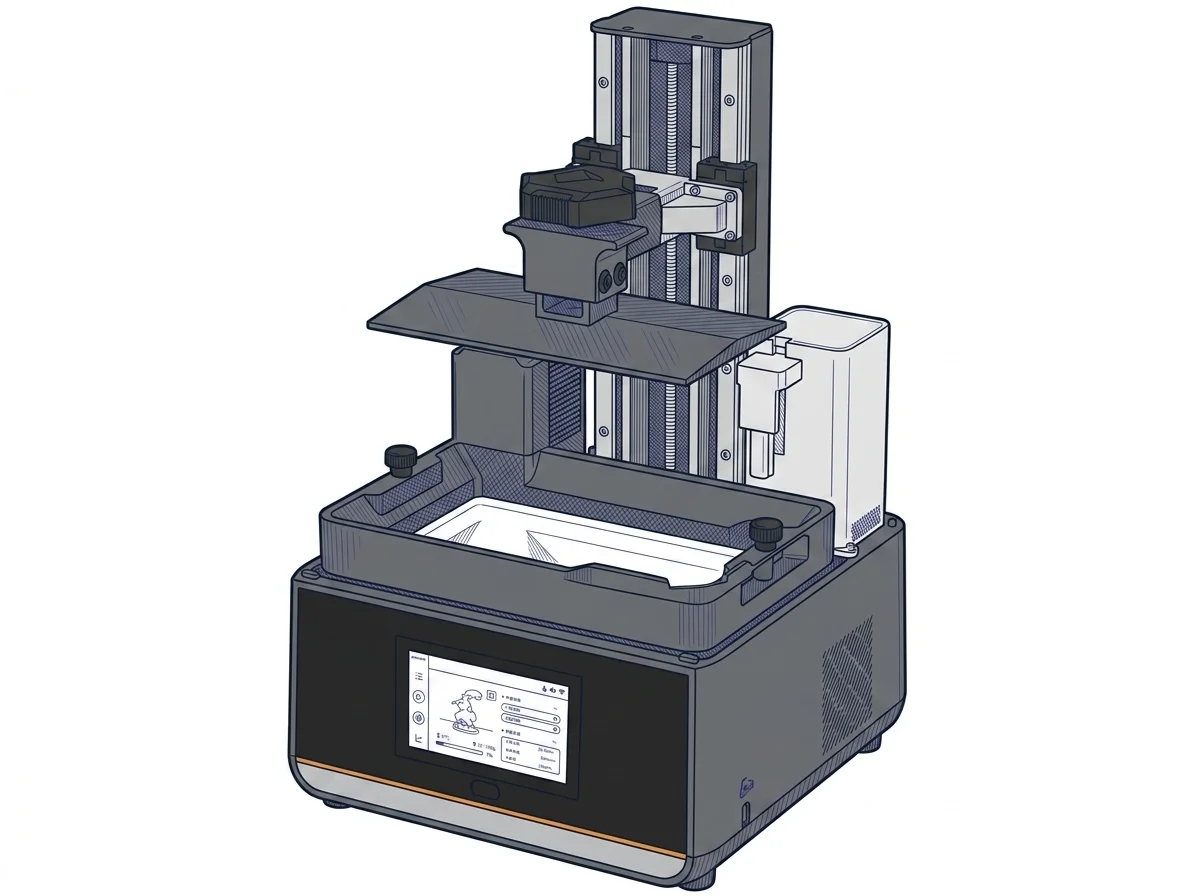
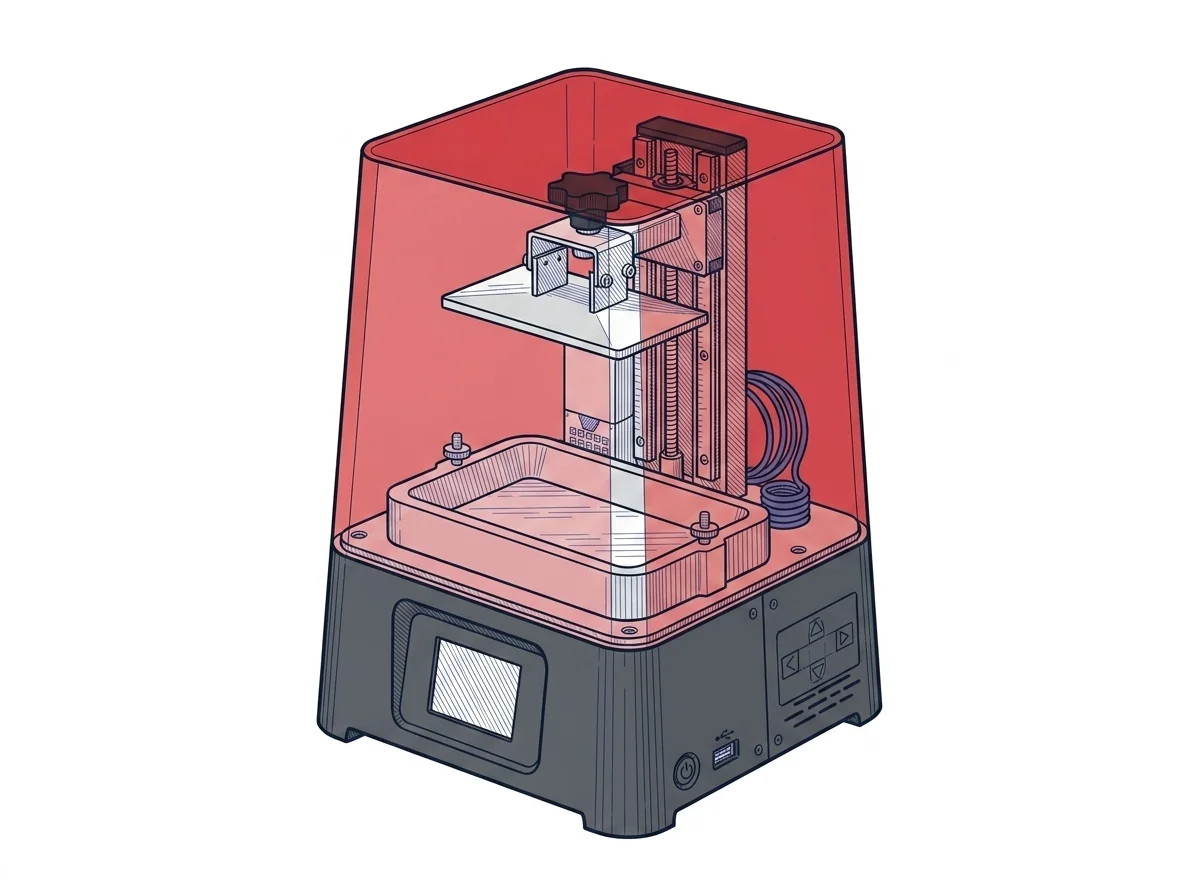
The differences that matter
- Pixel of 16.8 µm against 62.5 µm (manufacturer's declared values) → fine detail on small figures is sharper on the M7.
- Plate 223 × 126 mm against 120 × 68 mm → more parts fit in one print on the M7; the Sonic Mini means smaller batches.
- Price 499 € against about 220 € → the M7 costs 279 € more.
- Wi-Fi and app on the M7, USB stick only on the Sonic Mini → the Sonic Mini always works offline, but files travel by hand.
Which one to choose
Choose Photon Mono M7 if…
you print several parts per session, such as a batch of miniatures, and want to send jobs over Wi-Fi and check them from the app. The trade-off is 279 € more, a 31.2 × 31.5 cm footprint against 25 × 25 cm, and 11.5 kg on the bench instead of 4.5 kg.
Choose Sonic Mini if…
you are starting with resin or print one small piece at a time, on a compact bench, for around 220 €. You give up Wi-Fi (files go in by USB stick only) and roughly half the plate width, and the pixel is 62.5 µm instead of 16.8 µm, so the smallest details come out less crisp.
Where to buy
Paid link: the price for you does not change. Methodology
MakerSpecs is an independent atlas. We don't sell products: the purchase links are the same as on the two product sheets and don't influence the verdict. The sheets have the complete data.