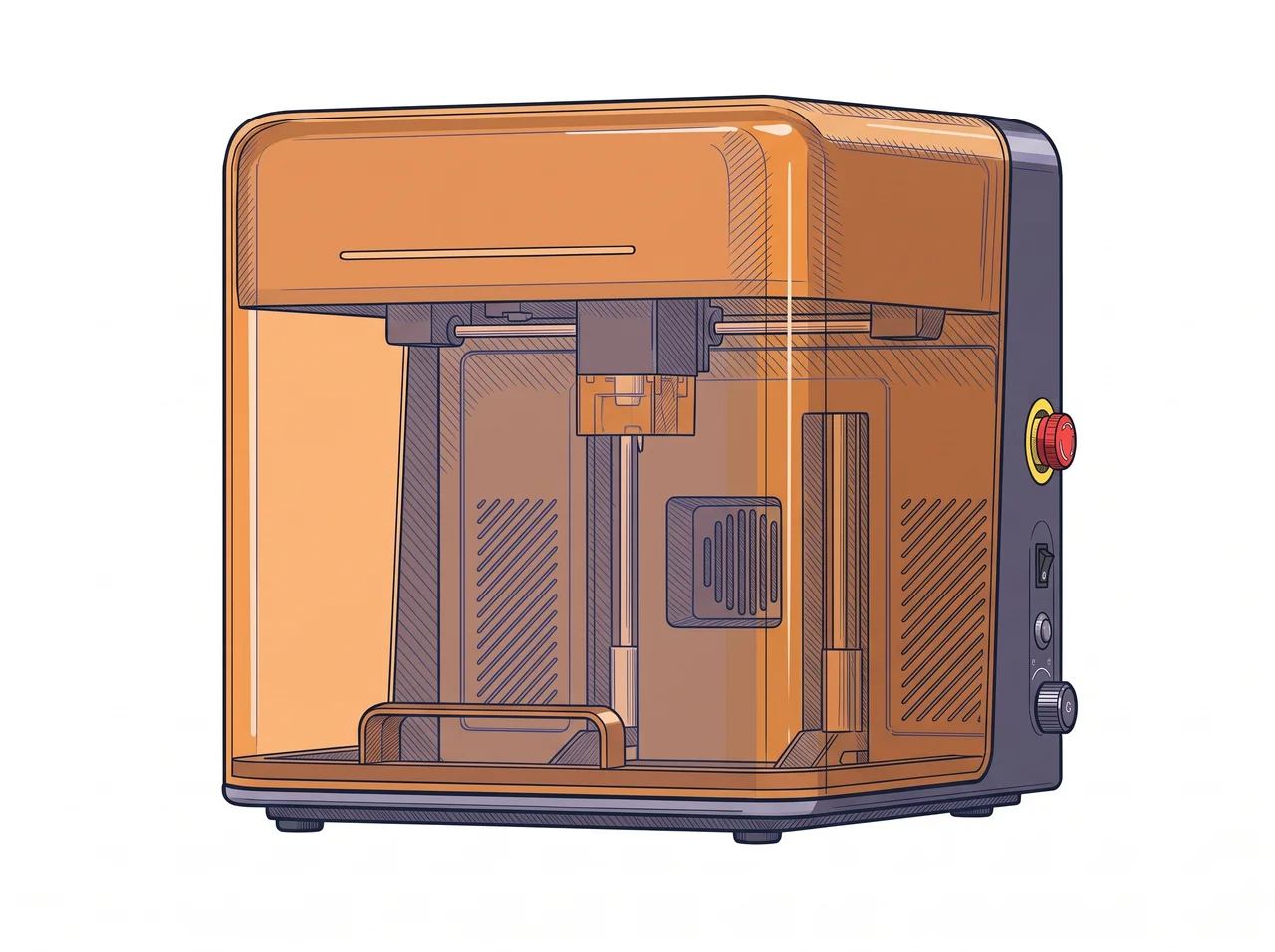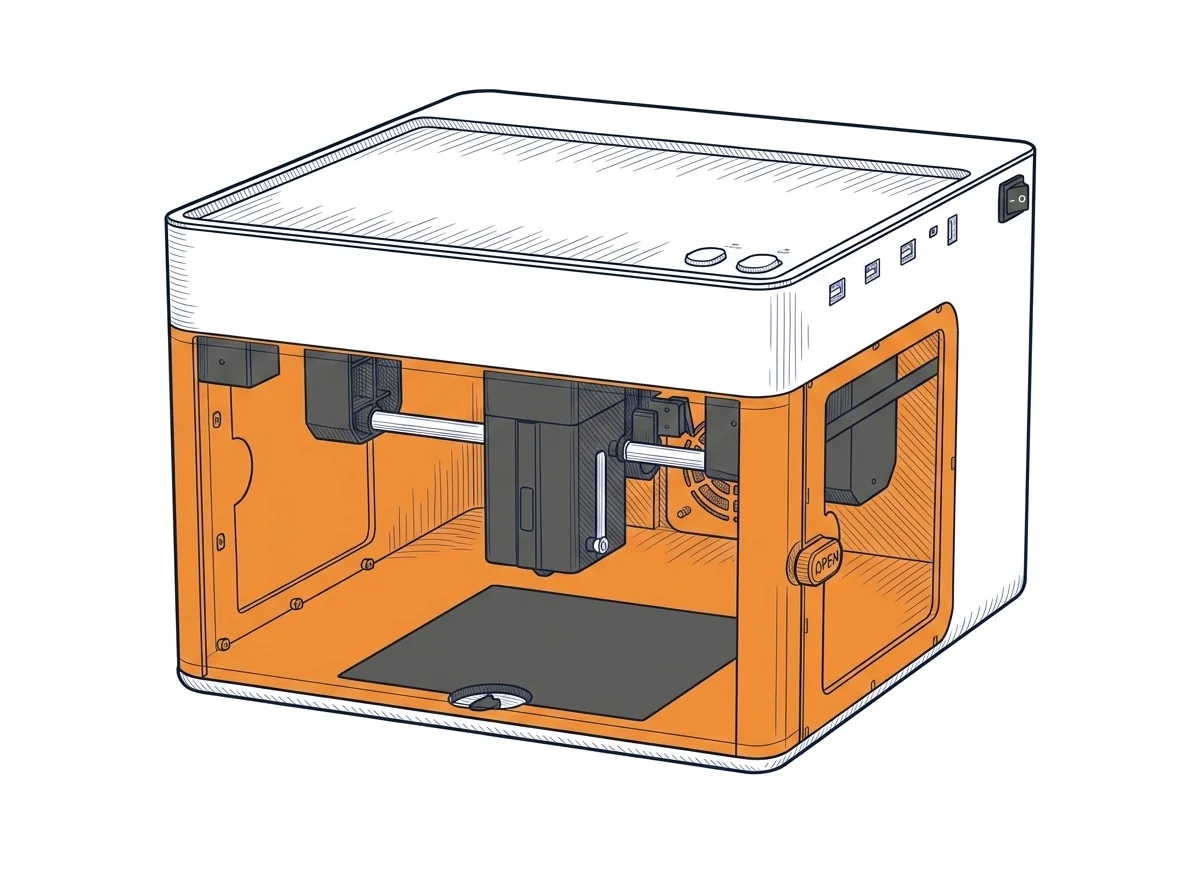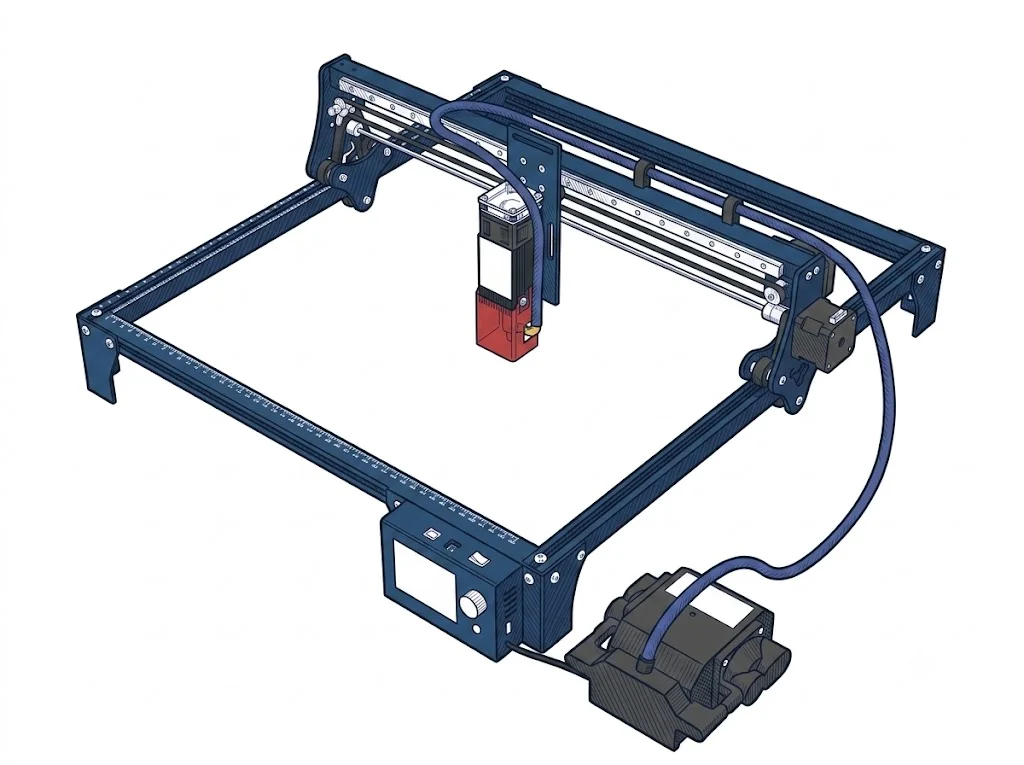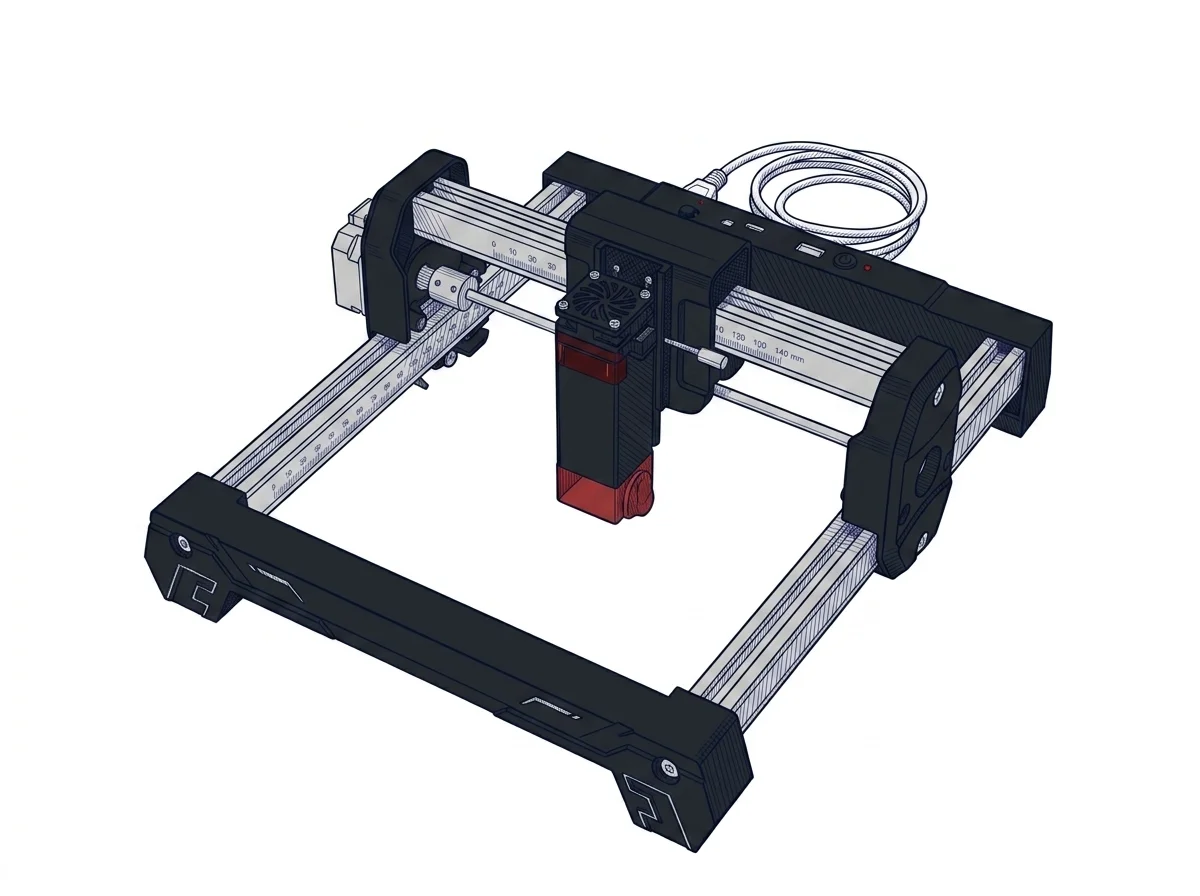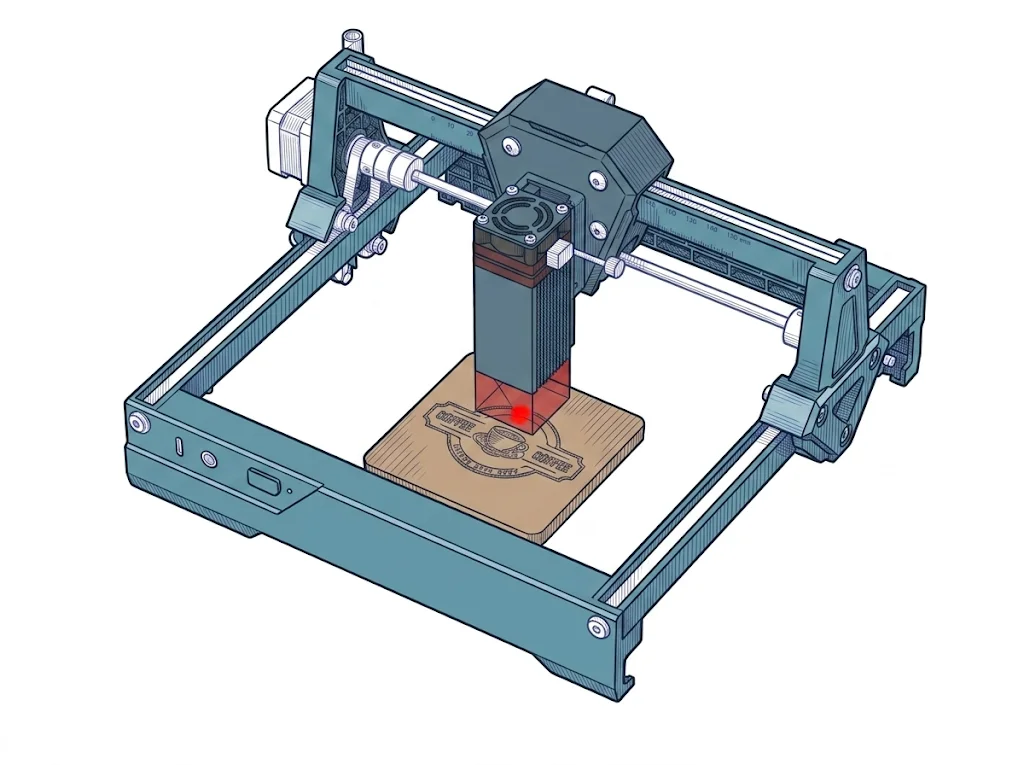
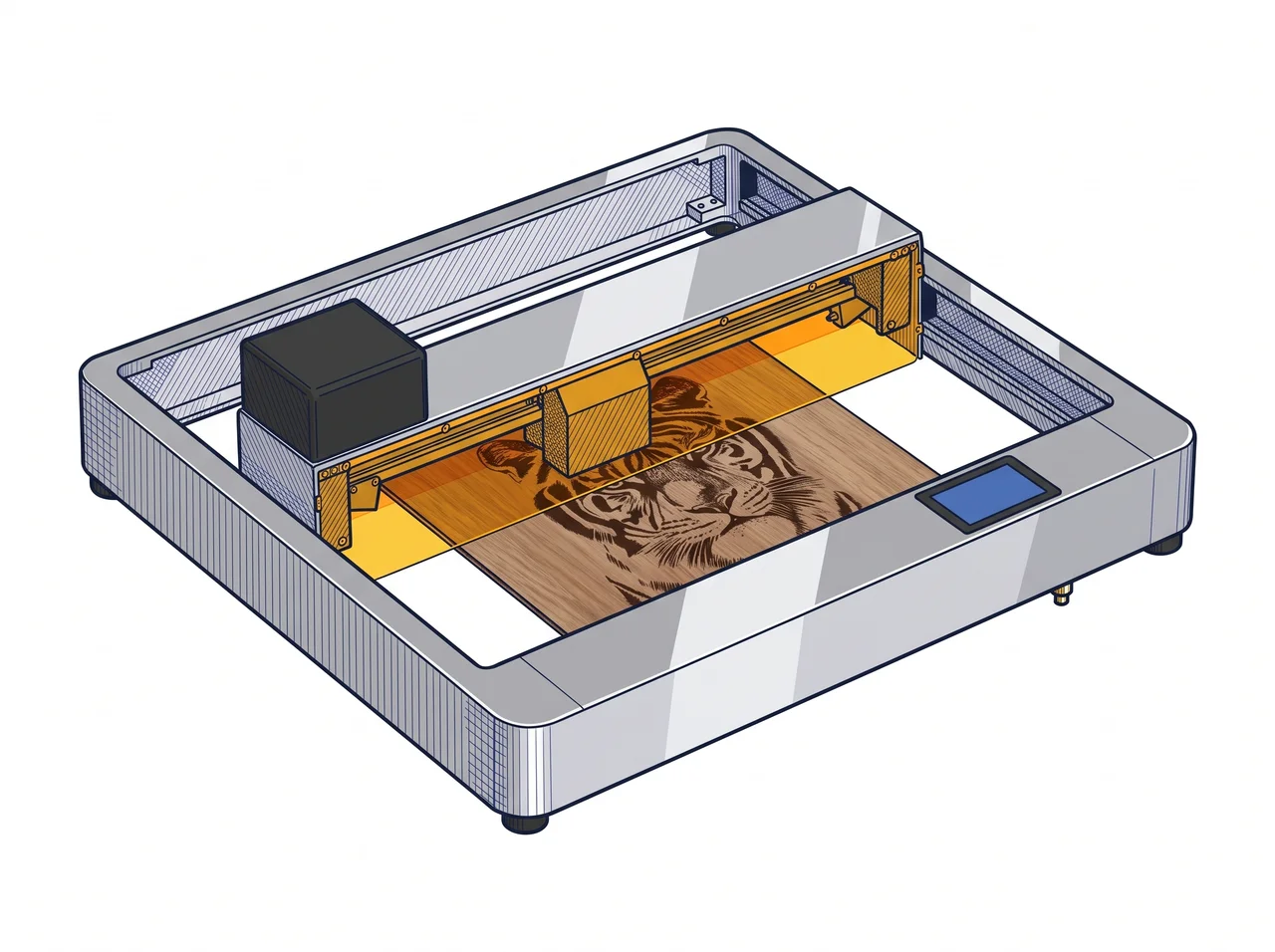
Diode laser (405–460 nm)
Phecda
Work area
400 × 400 mm (15.7 × 15.7 in)
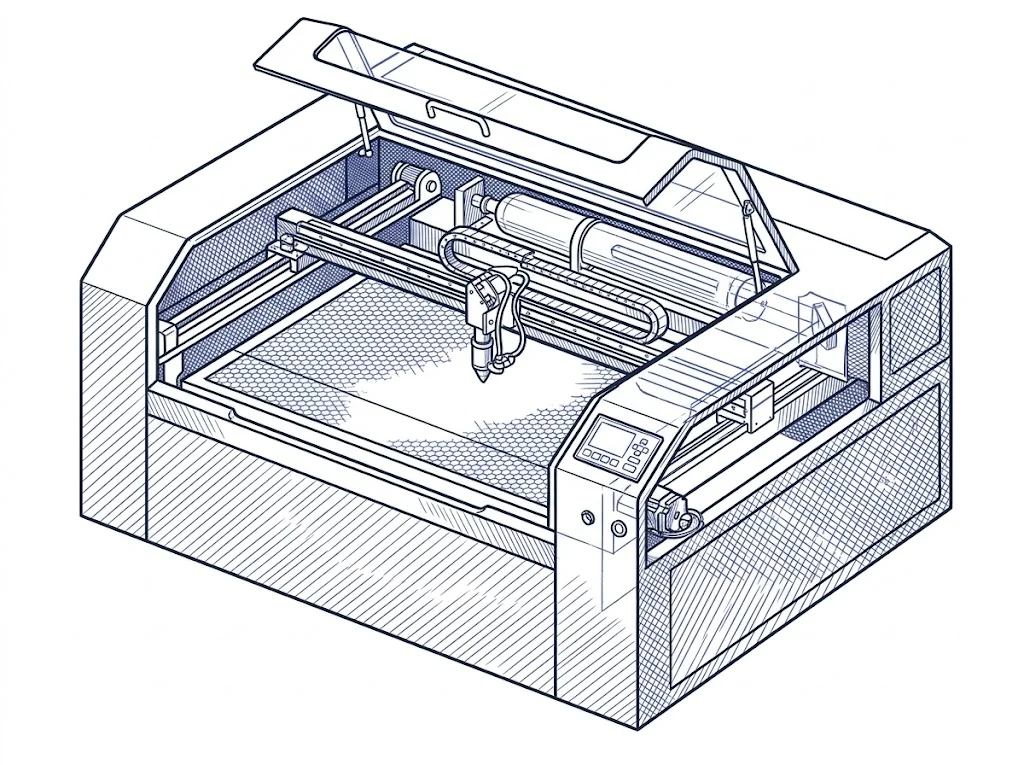
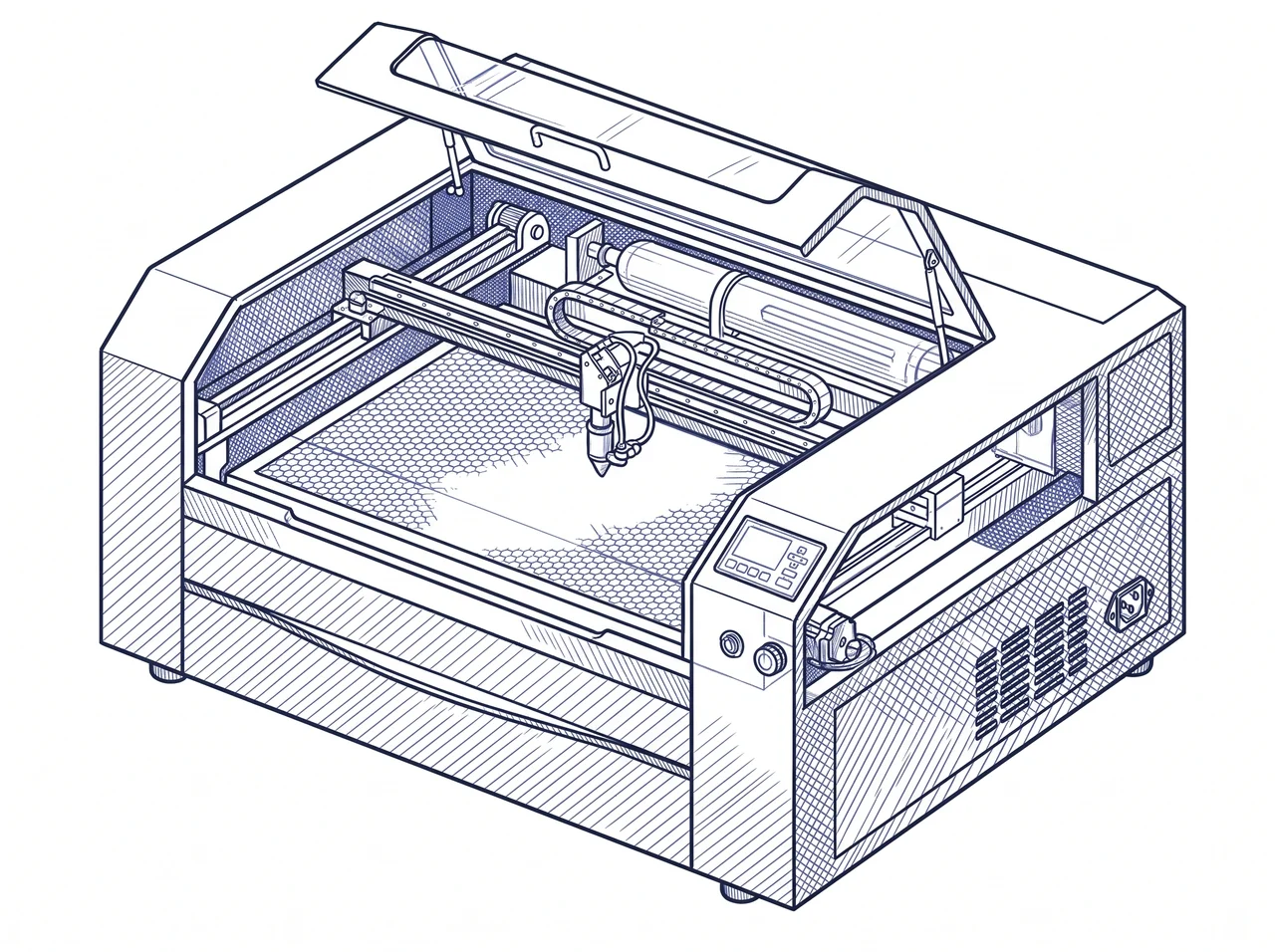
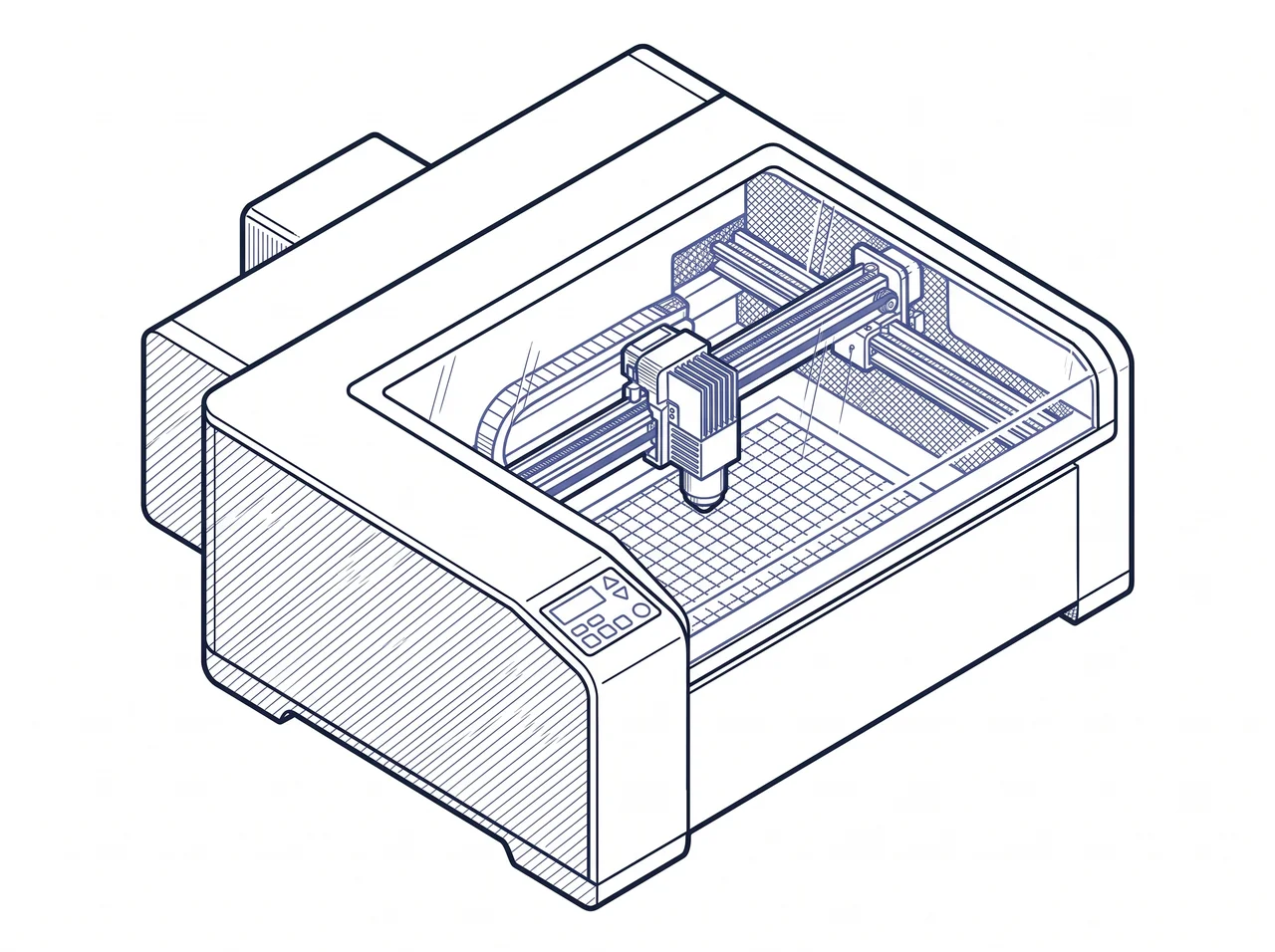
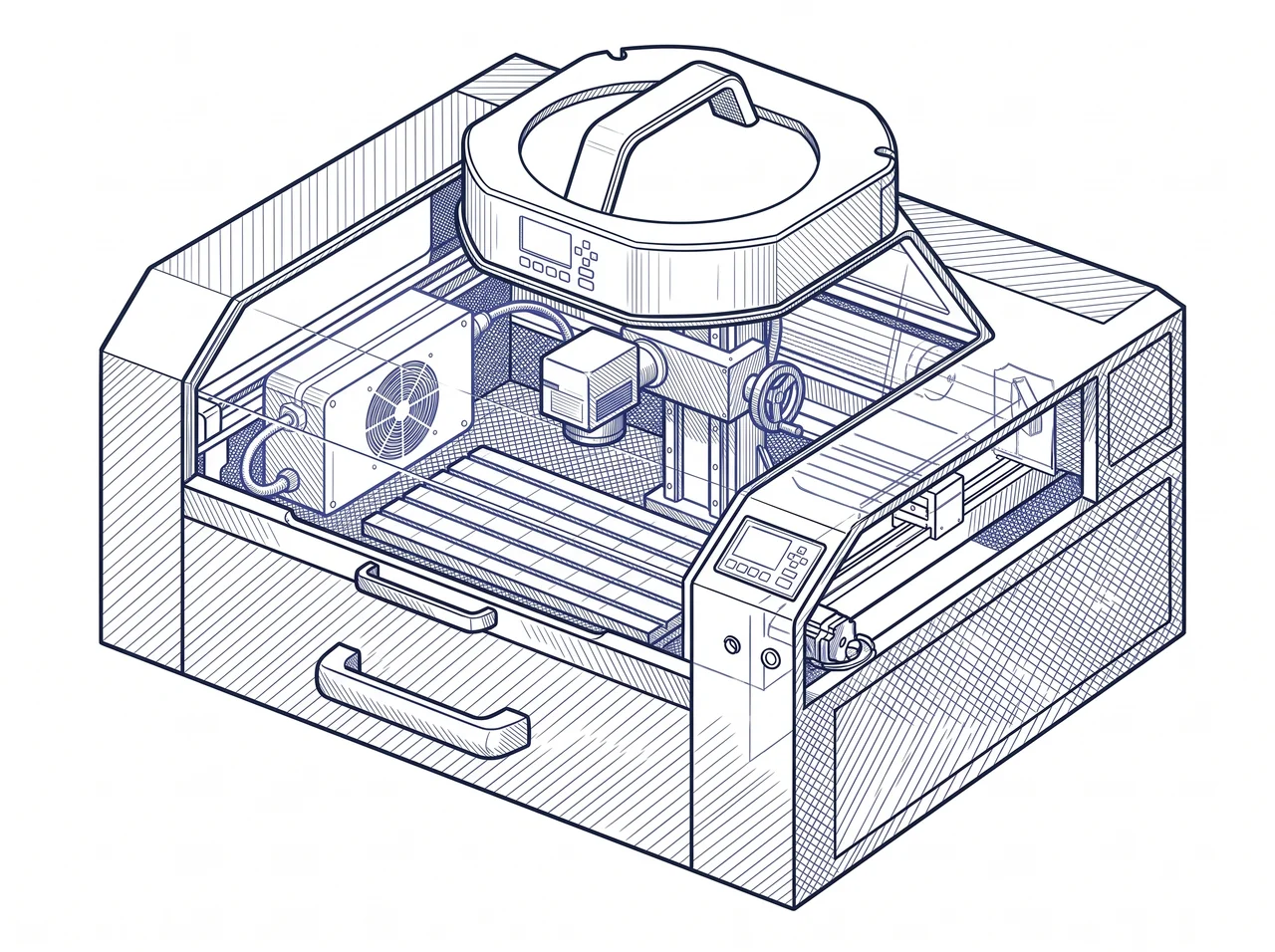
Laser cutting is the definitive high-energy-density cutting technology in the maker world: a coherent, monochromatic beam of light is focused through lenses or mirrors onto a microscopic spot on the material, triggering ablation, melting or combustion of the irradiated zone along a CNC-programmed path. The result is a high-precision cut with no physical contact between tool and workpiece, typical tolerances of ±0.1–0.3 mm and edges that rarely require post-processing.
The technological variants differ mainly in their light source: CO₂ (10,600 nm) excels on wood, acrylic, fabrics and organic materials; the diode laser (405–460 nm) is the entry-level choice for wood and light leather; the fibre laser (1,064 nm) is unbeatable for marking and cutting metals; the DPSS UV laser (355 nm) covers extreme-precision applications on sensitive materials. The choice of source determines material compatibility, speed, edge quality and machine cost.