Qidi Tech X-CF Pro vs Snapmaker 2.0 A350T 3-in-1
Technical comparison · Fused filament fabrication (FFF/FDM)
X-CF Pro and 2.0 A350T 3-in-1 are two fused filament fabrication (fff/fdm) in a similar class. Choose X-CF Pro if enclosed chamber matters more; choose 2.0 A350T 3-in-1 if max print speed and work area matters more. On the category's overall technical index, X-CF Pro scores 37/100 against 16/100 for 2.0 A350T 3-in-1.
| Parameter |
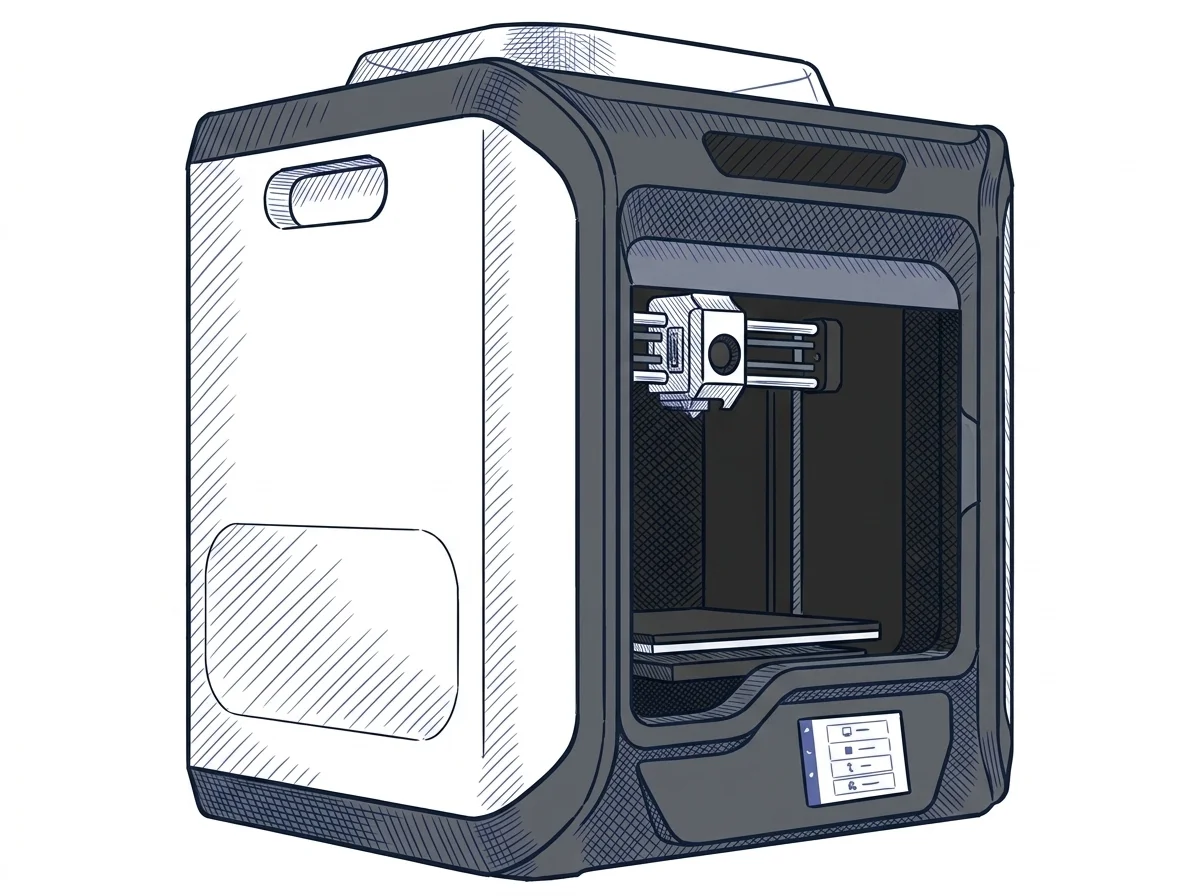 X-CF Pro
Qidi Tech
F2 · Intermediate
X-CF Pro
Qidi Tech
F2 · Intermediate
|
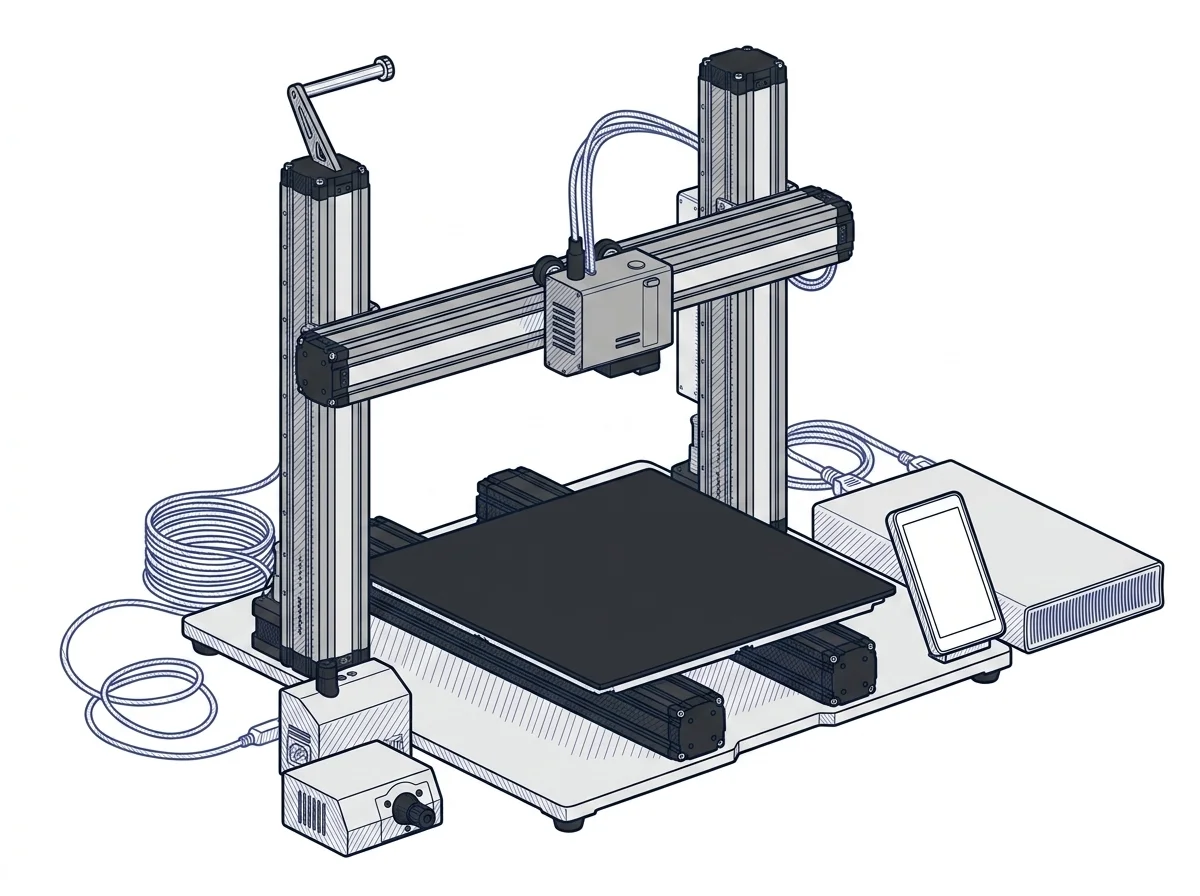 2.0 A350T 3-in-1
Snapmaker
F2 · Intermediate
2.0 A350T 3-in-1
Snapmaker
F2 · Intermediate
|
|---|---|---|
| Identity | ||
| Launch year | 2021 | 2022 |
| Use tier | F2 — Intermediate | F2 — Intermediate |
| Price | ||
| Price (€) | ~1700–1900 € | ~1400–1600 € |
| Universal specs | ||
| Dimensions (W×D×H) (cm) | 61 × 51.5 × 67.8 cm | 49.5 × 50.6 × 58 cm |
| Weight (kg) | 32.5 kg | — |
| Work area (mm) | 300 × 250 mm | 320 × 350 mm |
| Z-axis height (mm) | 300 mm | 330 mm |
| Power (W) | 450 W | 320 W |
| Voltage (V) | — | 230 V |
| Maximum speed | 60 mm/s | 100 mm/s |
| Declared precision | 0.05 mm | 0.005 mm |
| Category specs | ||
| Footprint X×Y (short side) (mm) | 250 mm | 320 mm |
| Build height Z (mm) | 300 mm | 330 mm |
| Kinematics | — | Cartesian |
| Max nozzle temperature (°C) | 350 °C | 275 °C |
| Max bed temperature (°C) | 120 °C | 80 °C |
| Max print speed (mm/s) | 60 mm/s | 100 mm/s |
| Enclosed chamber | True | False |
| Filament sensor | True | True |
| Auto bed leveling | Mesh | Mesh |
| Standard nozzle diameter (mm) | 0.4 mm | 0.4 mm |
| Multi-extruder | False | False |
| Native Klipper | False | False |
| Input shaper | False | False |
| Multicolor printing | False | False |
| Max colors | 1 | 1 |
| Ecosystem | ||
| Cloud dependency | No | No |
| Software notes | The printer is officially supported by QidiPrint, the manufacturer's proprietary slicing software, which includes pre-configured profiles optimized for carbon fiber and nylon printing. The system is also fully compatible with popular third-party slicers, including Ultimaker Cura and Simplify3D, giving users the flexibility to adapt their workflow. Basic connectivity includes Wi-Fi, a wired LAN network, and a USB port for manual file transfer. Although the native Marlin-based firmware lacks advanced network management features like Klipper, the machine can be successfully interfaced with external server systems such as OctoPrint via cable. | The machine is primarily managed via Snapmaker Luban, a free proprietary software integrating file preparation for 3D printing, laser engraving, and CNC milling into a single environment. While intuitive for beginners, experienced users may find limitations in advanced settings. However, the system accepts G-code files generated by third-party slicers like Cura or PrusaSlicer for 3D printing, and software like LightBurn or Fusion 360 for laser and CNC work, ensuring excellent operational versatility. |
The differences that matter
- Max print speed: X-CF Pro 60 mm/s vs 2.0 A350T 3-in-1 100 mm/s — 2.0 A350T 3-in-1 wins (+67%)
- Enclosed chamber: X-CF Pro yes, 2.0 A350T 3-in-1 no
- Work area: X-CF Pro 300×250 mm vs 2.0 A350T 3-in-1 320×350 mm — 2.0 A350T 3-in-1 wins (+49%)
- Price: X-CF Pro 1800 € vs 2.0 A350T 3-in-1 1500 € — 2.0 A350T 3-in-1 wins (+20%)
- Max nozzle temperature: X-CF Pro 350 °C vs 2.0 A350T 3-in-1 275 °C — X-CF Pro wins (+27%)
Which one to choose
Choose X-CF Pro if…
you value enclosed chamber, max nozzle temperature and max bed temperature.
Choose 2.0 A350T 3-in-1 if…
you value max print speed, work area and price.
MakerSpecs is an independent atlas. We don't sell products: this comparison links to both sheets, where you'll find complete data and official links.