Lincoln Electric POWER MIG 180 Dual vs Lincoln Electric CITOLINE i300
Technical comparison · MIG/MAG welding (wire feed)
POWER MIG 180 Dual and CITOLINE i300 are two mig/mag welding (wire feed) in a similar class. Choose POWER MIG 180 Dual if price matters more; choose CITOLINE i300 if synergic control and max wire feed speed matters more. On the category's overall technical index, CITOLINE i300 scores 90/100 against 52/100 for POWER MIG 180 Dual.
| Parameter |
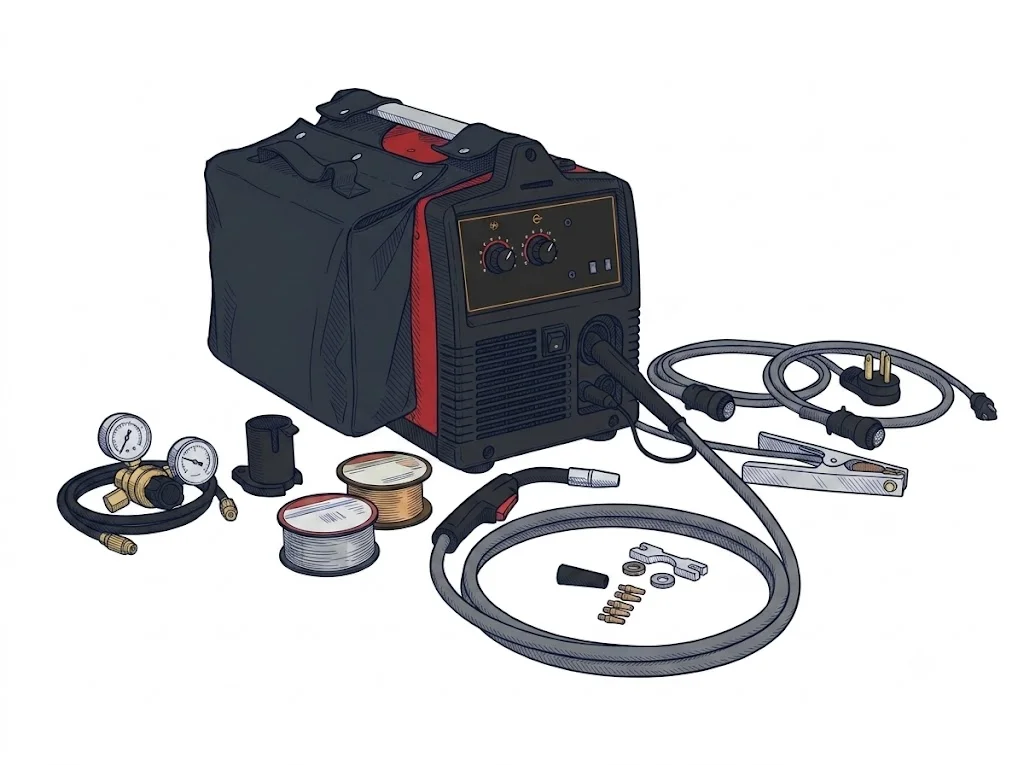 POWER MIG 180 Dual
Lincoln Electric
F2 · Intermediate
POWER MIG 180 Dual
Lincoln Electric
F2 · Intermediate
|
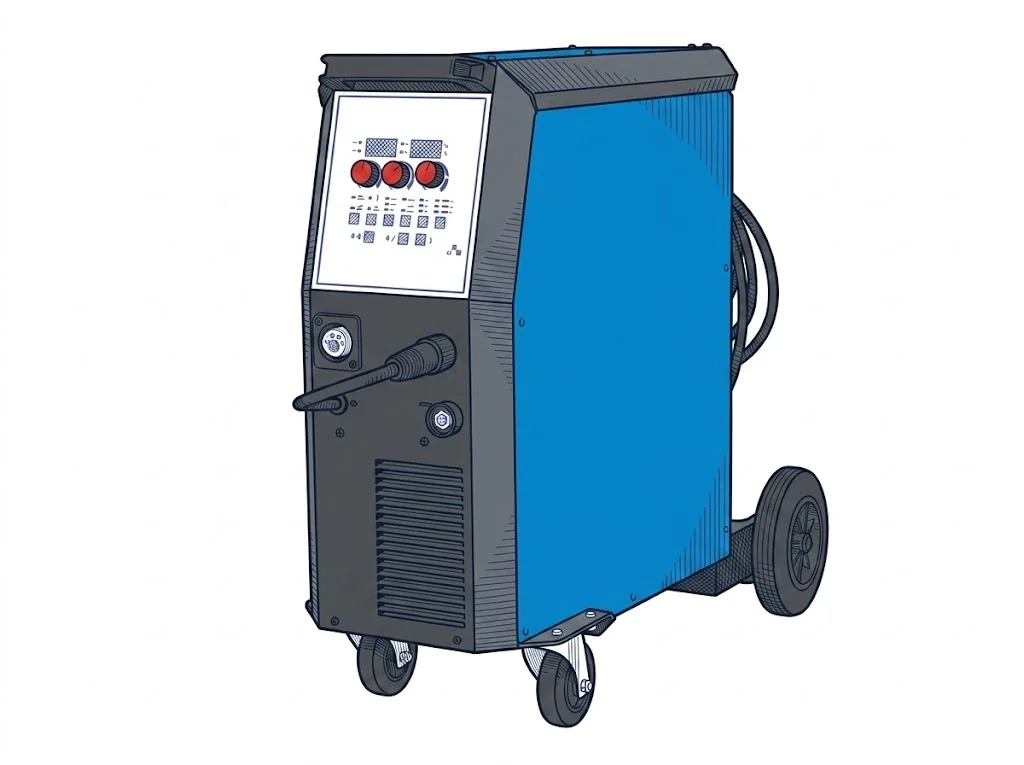 CITOLINE i300
Lincoln Electric
F3 · Advanced
CITOLINE i300
Lincoln Electric
F3 · Advanced
|
|---|---|---|
| Identity | ||
| Use tier | F2 — Intermediate | F3 — Advanced |
| Price | ||
| Price (€) | ~1500–1800 € | ~1800–2400 € |
| Universal specs | ||
| Dimensions (W×D×H) (cm) | 25.91 × 47.24 × 35.56 cm | 39.5 × 83 × 76 cm |
| Weight (kg) | 29.03 kg | 50 kg |
| Power (W) | — | 15000 W |
| Voltage (V) | 230 V | 400 V |
| Category specs | ||
| Welding type | MIG/MAG | Multi-process |
| Max wire feed speed (m/min) | 12.7 m/min | 18 m/min |
| Max welding current (A) | 180 A | 300 A |
| Max wire diameter (mm) | 1.14 mm | 1.6 mm |
| Duty cycle (rated current) (%) | 30 % | 35 % |
| Synergic control | False | True |
| Gasless capable | True | True |
| Power source technology | Transformer | Inverter |
| Aluminium ready | True | True |
| Pulse capable | False | False |
| Input voltage | Dual voltage | 400 V (three-phase) |
| Supported spool | Ø200 mm (~5 kg) | Ø300 mm (~15 kg) |
| Ecosystem | ||
| Cloud dependency | No | No |
| Software notes | As a traditional transformer-based welder, the POWER MIG 180 Dual is entirely analog, featuring no software interfaces, digital displays, or synergic controls. Adjustments are made exclusively via physical dials on the front panel: a stepped switch for voltage (following the transformer taps) and a continuous potentiometer for wire feed speed. This complete absence of complex electronics or cloud dependence ensures maximum long-term reliability and straightforward repairability. | Control over all operational functions is managed through an intuitive front-panel interface, featuring large LED displays that provide high readability even under strong lighting conditions. The power source integrates 24 factory-preset synergic programs, which are engineered to greatly simplify the configuration of welding parameters across various materials, including carbon steel, stainless steel, aluminum, and flux-cored wire. Operators can also easily access the traditional 2T and 4T trigger modes, alongside fully adjustable Run-In and Burnback functions to refine the welding arc. Consistent with most industrial systems in this specific equipment category, absolutely no connection to cloud services or reliance on external software applications is required. |
The differences that matter
- Price: POWER MIG 180 Dual 1650 € vs CITOLINE i300 2100 € — POWER MIG 180 Dual wins (+27%)
- Synergic control: CITOLINE i300 yes, POWER MIG 180 Dual no
- Max wire feed speed: POWER MIG 180 Dual 12.7 m/min vs CITOLINE i300 18 m/min — CITOLINE i300 wins (+42%)
- Max wire diameter: POWER MIG 180 Dual 1.14 mm vs CITOLINE i300 1.6 mm — CITOLINE i300 wins (+40%)
Which one to choose
Choose CITOLINE i300 if…
you value synergic control, max wire feed speed and max wire diameter.
MakerSpecs is an independent atlas. We don't sell products: this comparison links to both sheets, where you'll find complete data and official links.