Cebora SYNSTAR 270 T SRS vs Telwin Bimax 140i Synergic
Technical comparison · MIG/MAG welding (wire feed)
SYNSTAR 270 T SRS and Bimax 140i Synergic are not direct competitors: very different prices (~12.7×). Bimax 140i Synergic costs less (~€315) and is the entry-level choice; SYNSTAR 270 T SRS offers more capability at a higher price (~€4000). Judge them by budget, not head-to-head.
| Parameter |
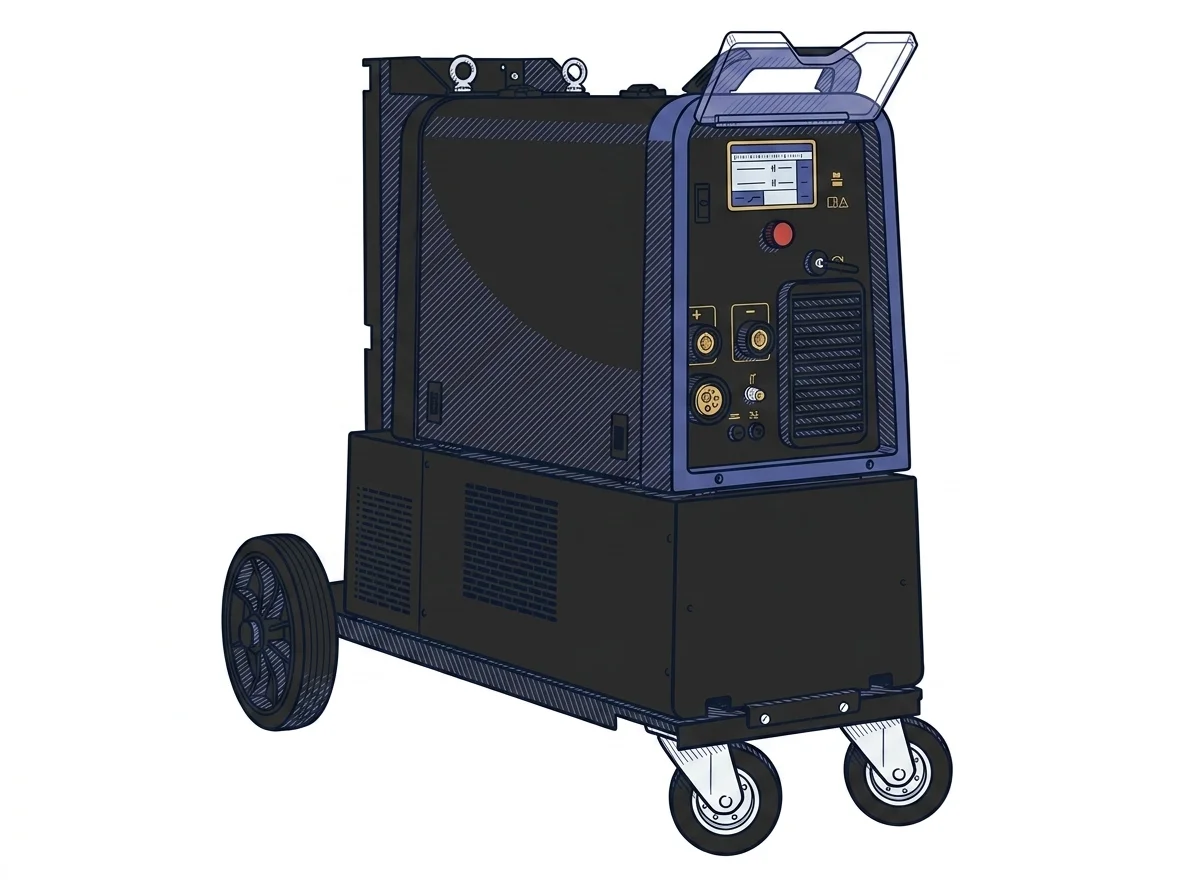 SYNSTAR 270 T SRS
Cebora
F3 · Advanced
SYNSTAR 270 T SRS
Cebora
F3 · Advanced
|
 Bimax 140i Synergic
Telwin
F2 · Intermediate
Bimax 140i Synergic
Telwin
F2 · Intermediate
|
|---|---|---|
| Identity | ||
| Use tier | F3 — Advanced | F2 — Intermediate |
| Price | ||
| Price (€) | ~3500–4500 € | ~280–350 € |
| Universal specs | ||
| Dimensions (W×D×H) (cm) | 51 × 102 × 86.5 cm | 17.2 × 37.9 × 25.2 cm |
| Weight (kg) | 68 kg | 6.3 kg |
| Power (W) | 9300 W | 2650 W |
| Voltage (V) | 400 V | 230 V |
| Category specs | ||
| Welding type | MIG/MAG | MIG/MAG |
| Max welding current (A) | 270 A | 140 A |
| Max wire diameter (mm) | 1.2 mm | 0.9 mm |
| Duty cycle (rated current) (%) | — | 15 % |
| Synergic control | True | True |
| Gasless capable | — | True |
| Power source technology | Inverter | Inverter |
| Aluminium ready | True | True |
| Pulse capable | — | False |
| Input voltage | 400 V (three-phase) | 230 V (single-phase) |
| Supported spool | Ø300 mm (~15 kg) | Ø100 mm (~1 kg) |
| Ecosystem | ||
| Cloud dependency | No | No |
| Software notes | The power source features an advanced synergic control system that significantly simplifies initial setup, offering numerous pre-loaded curves for welding various alloys. The standout software feature is the integration of the exclusive Spatter Reduction System (SRS). This proprietary Cebora algorithm constantly monitors arc parameters in real-time, dynamically optimizing metal transfer to drastically reduce the formation of spatter. This advanced electronic control minimizes post-weld cleanup time and ensures cleaner weld beads, while interacting smoothly with the operator through an intuitive and comprehensive digital control panel. | The machine is governed by a microprocessor control that manages the synergic logic of the welding process. The user simply selects the thickness of the material to be worked, and the system automatically adjusts the wire speed and the optimal arc voltage. This internal software drastically reduces setup times and prevents configuration errors typical of traditional power sources. There are no interfaces for computer connection, external firmware updates, or wireless connectivity, as the entire digital ecosystem is permanently integrated into the internal electronic board. The system is designed to be autonomous, offering an immediate user experience focused on the stability of the electric arc during real-time operation. |
The differences that matter
- Price: SYNSTAR 270 T SRS 4000 € vs Bimax 140i Synergic 315 € — Bimax 140i Synergic wins (+1170%)
- Max wire diameter: SYNSTAR 270 T SRS 1.2 mm vs Bimax 140i Synergic 0.9 mm — SYNSTAR 270 T SRS wins (+33%)
Which one to choose
MakerSpecs is an independent atlas. We don't sell products: this comparison links to both sheets, where you'll find complete data and official links.