Cebora SYNSTAR 270 T SRS vs Lincoln Electric POWER MIG 140C
Technical comparison · MIG/MAG welding (wire feed)
SYNSTAR 270 T SRS and POWER MIG 140C are not direct competitors: very different prices (~4.7×). POWER MIG 140C costs less (~€850) and is the entry-level choice; SYNSTAR 270 T SRS offers more capability at a higher price (~€4000). Judge them by budget, not head-to-head.
| Parameter |
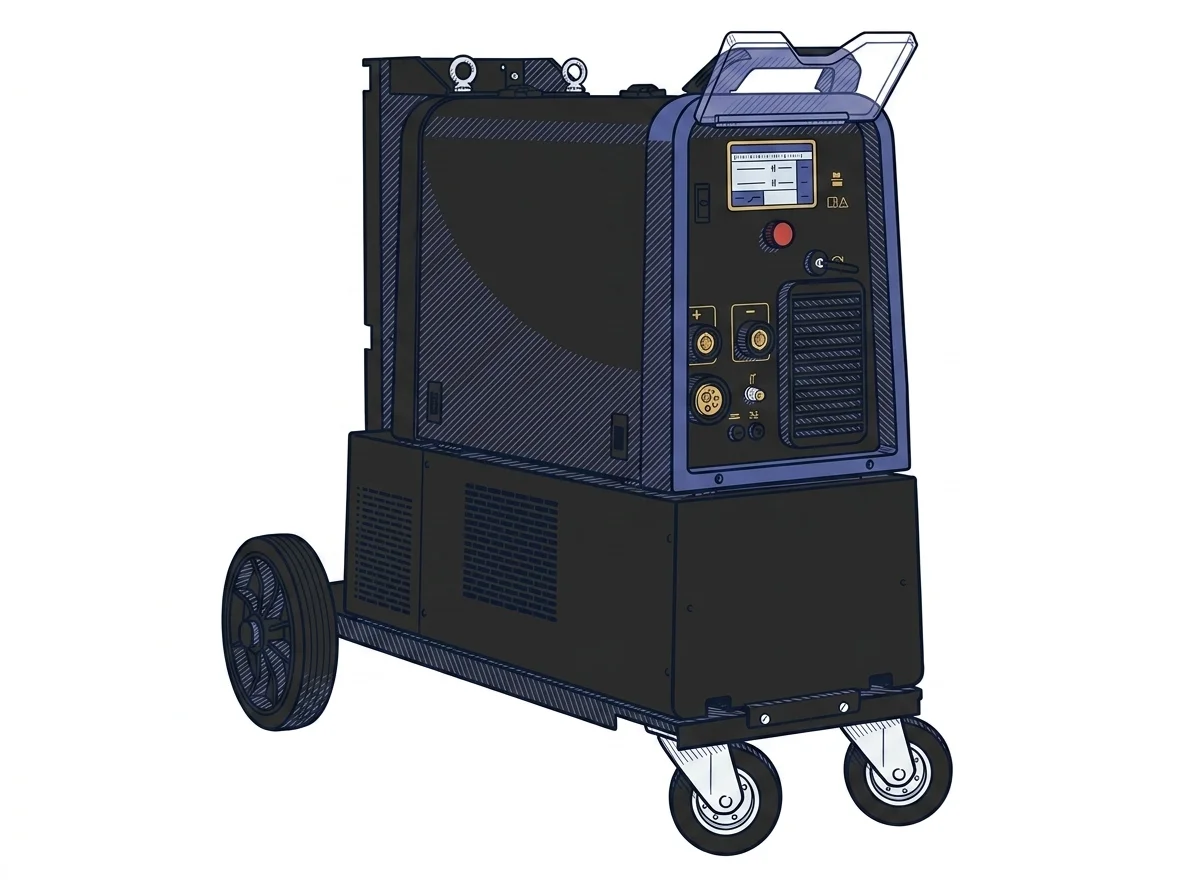 SYNSTAR 270 T SRS
Cebora
F3 · Advanced
SYNSTAR 270 T SRS
Cebora
F3 · Advanced
|
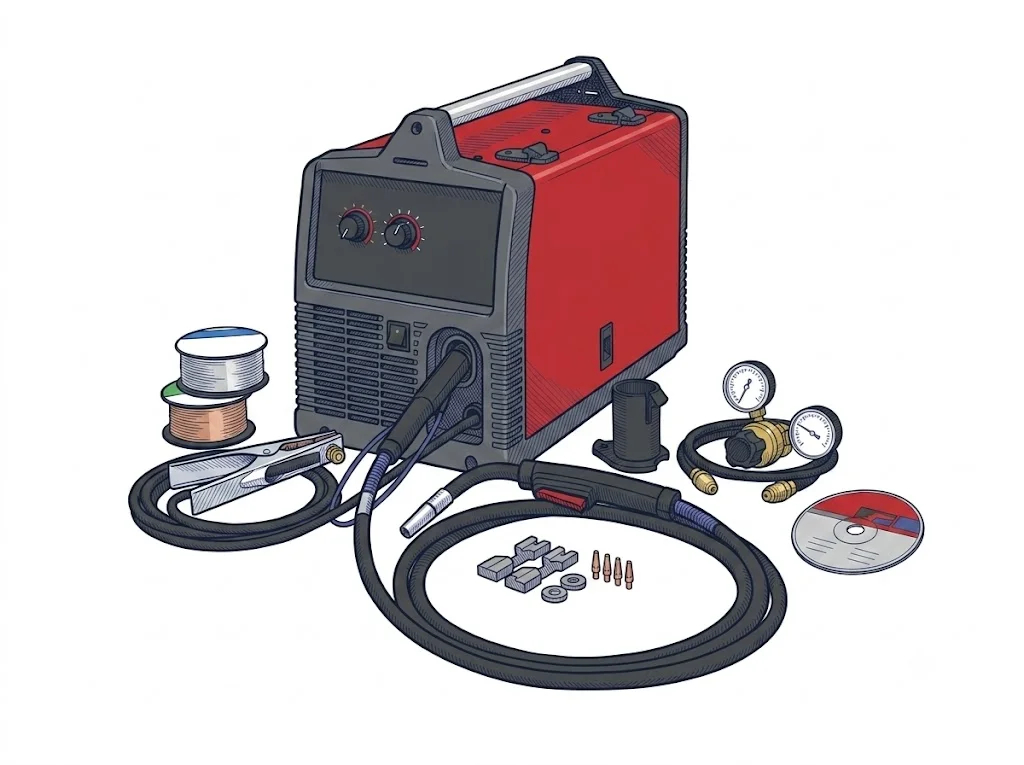 POWER MIG 140C
Lincoln Electric
F2 · Intermediate
POWER MIG 140C
Lincoln Electric
F2 · Intermediate
|
|---|---|---|
| Identity | ||
| Use tier | F3 — Advanced | F2 — Intermediate |
| Price | ||
| Price (€) | ~3500–4500 € | ~750–950 € |
| Universal specs | ||
| Dimensions (W×D×H) (cm) | 51 × 102 × 86.5 cm | 25.8 × 47.2 × 35.6 cm |
| Weight (kg) | 68 kg | 26.3 kg |
| Power (W) | 9300 W | — |
| Voltage (V) | 400 V | 120 V |
| Maximum speed | — | 12700 mm/min |
| Category specs | ||
| Welding type | MIG/MAG | MIG/MAG |
| Max wire feed speed (m/min) | — | 12.7 m/min |
| Max welding current (A) | 270 A | 140 A |
| Max wire diameter (mm) | 1.2 mm | 0.9 mm |
| Duty cycle (rated current) (%) | — | 20 % |
| Synergic control | True | False |
| Gasless capable | — | True |
| Power source technology | Inverter | Transformer |
| Aluminium ready | True | True |
| Pulse capable | — | False |
| Input voltage | 400 V (three-phase) | — |
| Supported spool | Ø300 mm (~15 kg) | Ø200 mm (~5 kg) |
| Ecosystem | ||
| Cloud dependency | No | No |
| Software notes | The power source features an advanced synergic control system that significantly simplifies initial setup, offering numerous pre-loaded curves for welding various alloys. The standout software feature is the integration of the exclusive Spatter Reduction System (SRS). This proprietary Cebora algorithm constantly monitors arc parameters in real-time, dynamically optimizing metal transfer to drastically reduce the formation of spatter. This advanced electronic control minimizes post-weld cleanup time and ensures cleaner weld beads, while interacting smoothly with the operator through an intuitive and comprehensive digital control panel. | As a traditional analog welding power source, the POWER MIG 140C does not feature digital interfaces, cloud connectivity, or management software. All settings, including wire feed speed and arc voltage, are adjusted manually using the dials on the front control panel. Setup relies entirely on the operator's experience or the parameter chart conveniently printed on the inside of the wire spool door. There are no menus, LCD screens, or synergic control functions that would require firmware updates. This purely electromechanical architecture ensures significant longevity and simplified maintenance over time, without the risk of software obsolescence typical of modern digitized machines. |
The differences that matter
- Price: SYNSTAR 270 T SRS 4000 € vs POWER MIG 140C 850 € — POWER MIG 140C wins (+371%)
- Synergic control: SYNSTAR 270 T SRS yes, POWER MIG 140C no
- Max wire diameter: SYNSTAR 270 T SRS 1.2 mm vs POWER MIG 140C 0.9 mm — SYNSTAR 270 T SRS wins (+33%)
Which one to choose
Choose SYNSTAR 270 T SRS if…
you value synergic control and max wire diameter.
MakerSpecs is an independent atlas. We don't sell products: this comparison links to both sheets, where you'll find complete data and official links.