Cebora SOUND MIG 2060/MD STAR DOUBLE PULSE vs Telwin Bimax 140i Synergic
Technical comparison · MIG/MAG welding (wire feed)
SOUND MIG 2060/MD STAR DOUBLE PULSE and Bimax 140i Synergic are not direct competitors: different use classes (F4 vs F2), very different prices (~6.8×). Bimax 140i Synergic costs less (~€315) and is the entry-level choice; SOUND MIG 2060/MD STAR DOUBLE PULSE offers more capability at a higher price (~€2150). Judge them by budget, not head-to-head.
| Parameter |
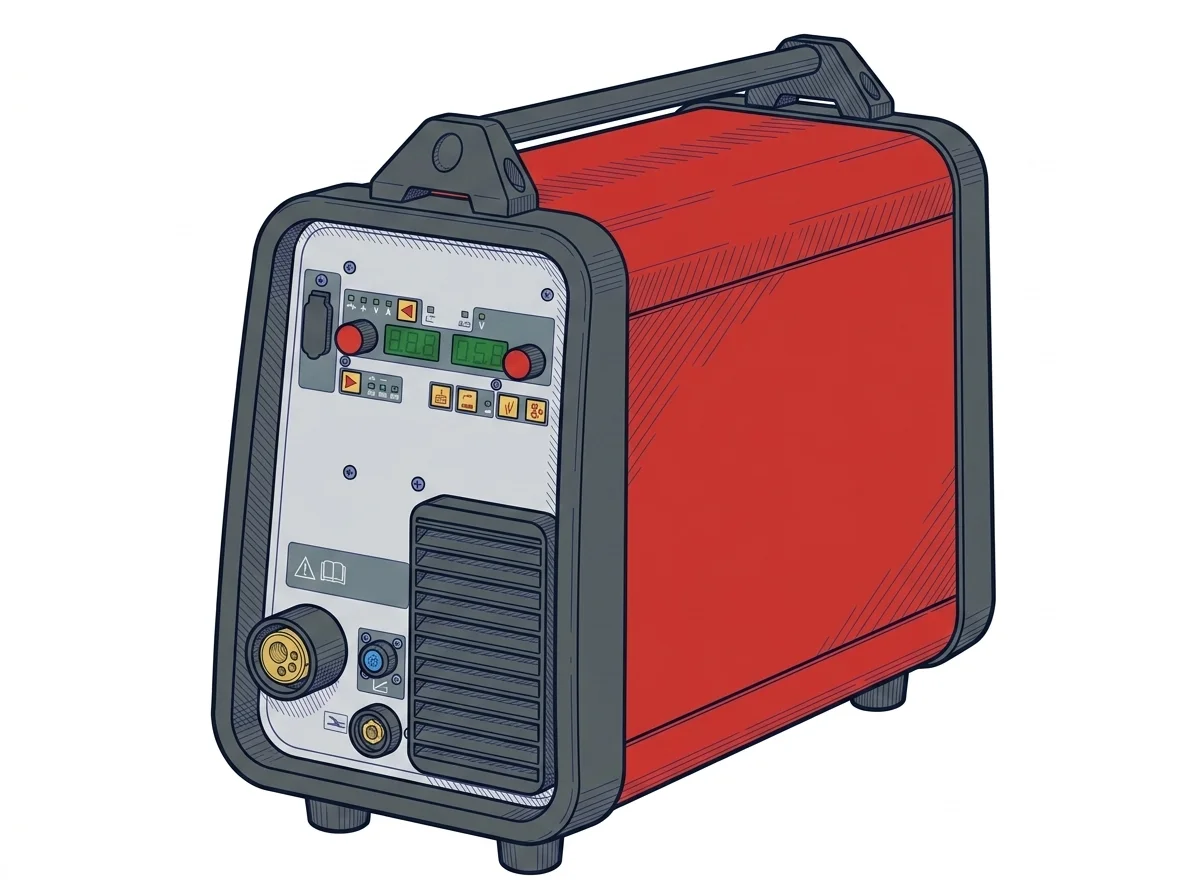 SOUND MIG 2060/MD STAR DOUBLE PULSE
Cebora
F4 · Semi-professional
SOUND MIG 2060/MD STAR DOUBLE PULSE
Cebora
F4 · Semi-professional
|
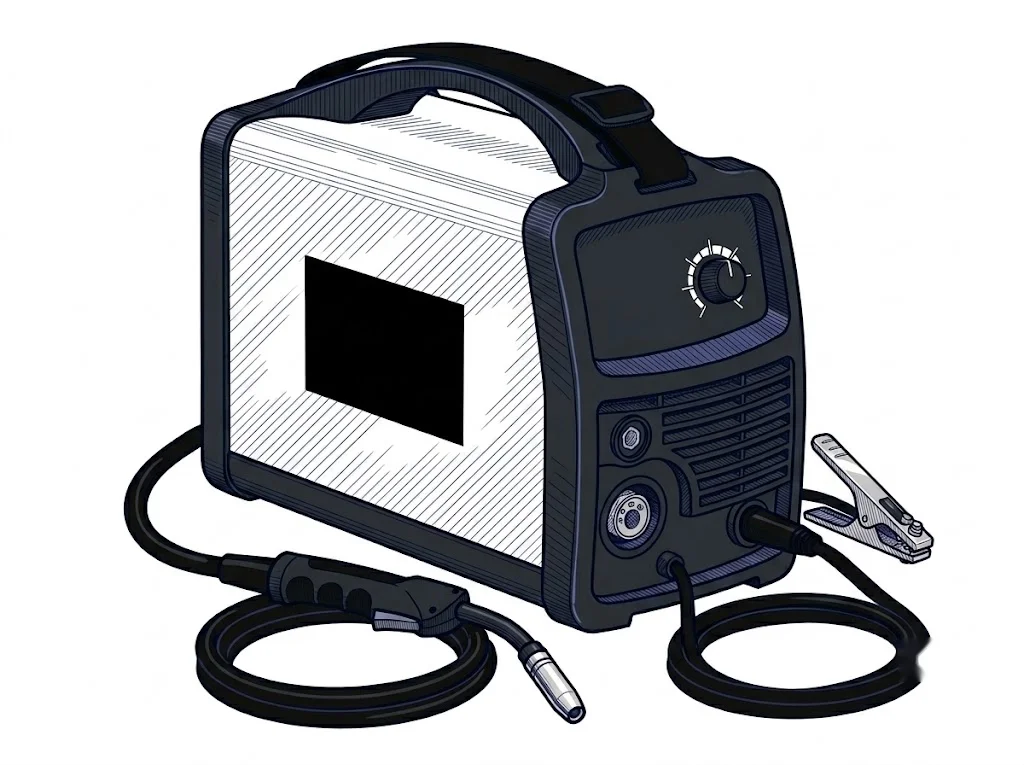 Bimax 140i Synergic
Telwin
F2 · Intermediate
Bimax 140i Synergic
Telwin
F2 · Intermediate
|
|---|---|---|
| Identity | ||
| Use tier | F4 — Semi-professional | F2 — Intermediate |
| Price | ||
| Price (€) | ~1800–2500 € | ~280–350 € |
| Universal specs | ||
| Dimensions (W×D×H) (cm) | 26 × 58 × 47.1 cm | 17.2 × 37.9 × 25.2 cm |
| Weight (kg) | 21.5 kg | 6.3 kg |
| Power (W) | 5700 W | 2650 W |
| Voltage (V) | 230 V | 230 V |
| Category specs | ||
| Welding type | MIG/MAG | MIG/MAG |
| Max welding current (A) | 200 A | 140 A |
| Max wire diameter (mm) | 1.2 mm | 0.9 mm |
| Duty cycle (rated current) (%) | 60 % | 15 % |
| Synergic control | True | True |
| Gasless capable | True | True |
| Power source technology | Inverter | Inverter |
| Aluminium ready | True | True |
| Pulse capable | True | False |
| Input voltage | 230 V (single-phase) | 230 V (single-phase) |
| Supported spool | Ø200 mm (~5 kg) | Ø100 mm (~1 kg) |
| Ecosystem | ||
| Cloud dependency | No | No |
| Software notes | The welding machine's operational interface relies entirely on an advanced control panel integrated directly into the power source, freeing the operator from needing external software or cloud-based applications for setup. The onboard system provides comprehensive synergic control, offering over sixty pre-set curves specifically optimized for various wire diameters and material types, including iron, stainless steel, aluminum, and brazing wires for galvanized sheets. This internal programming automatically manages the complex parameters of current and wire feed speed in both pulsed and double-pulsed modes. Furthermore, the intuitive panel allows fine-tuning of specific functions tailored for aluminum welding, such as the initial current level, automatic Hot Start to facilitate arc ignition, and a Crater Filler for optimal weld bead closure. | The machine is governed by a microprocessor control that manages the synergic logic of the welding process. The user simply selects the thickness of the material to be worked, and the system automatically adjusts the wire speed and the optimal arc voltage. This internal software drastically reduces setup times and prevents configuration errors typical of traditional power sources. There are no interfaces for computer connection, external firmware updates, or wireless connectivity, as the entire digital ecosystem is permanently integrated into the internal electronic board. The system is designed to be autonomous, offering an immediate user experience focused on the stability of the electric arc during real-time operation. |
The differences that matter
- Price: SOUND MIG 2060/MD STAR DOUBLE PULSE 2150 € vs Bimax 140i Synergic 315 € — Bimax 140i Synergic wins (+583%)
- Max wire diameter: SOUND MIG 2060/MD STAR DOUBLE PULSE 1.2 mm vs Bimax 140i Synergic 0.9 mm — SOUND MIG 2060/MD STAR DOUBLE PULSE wins (+33%)
Which one to choose
Choose SOUND MIG 2060/MD STAR DOUBLE PULSE if…
you value max wire diameter.
MakerSpecs is an independent atlas. We don't sell products: this comparison links to both sheets, where you'll find complete data and official links.