Bambu Lab H2D vs Prusa Research MINI+ Enclosure Bundle
Technical comparison · Fused filament fabrication (FFF/FDM)
H2D and MINI+ Enclosure Bundle are not direct competitors: very different prices (~3.7×). MINI+ Enclosure Bundle costs less (~€509) and is the entry-level choice; H2D offers more capability at a higher price (~€1899). Judge them by budget, not head-to-head.
| Parameter |
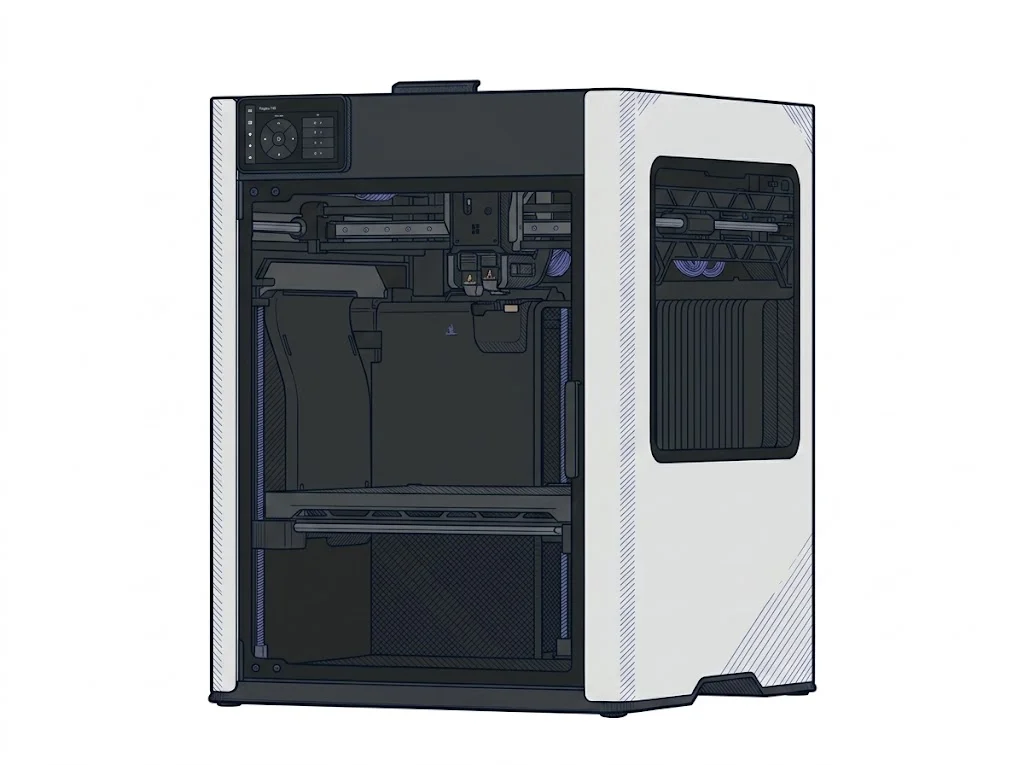 H2D
Bambu Lab
F3 · Advanced
H2D
Bambu Lab
F3 · Advanced
|
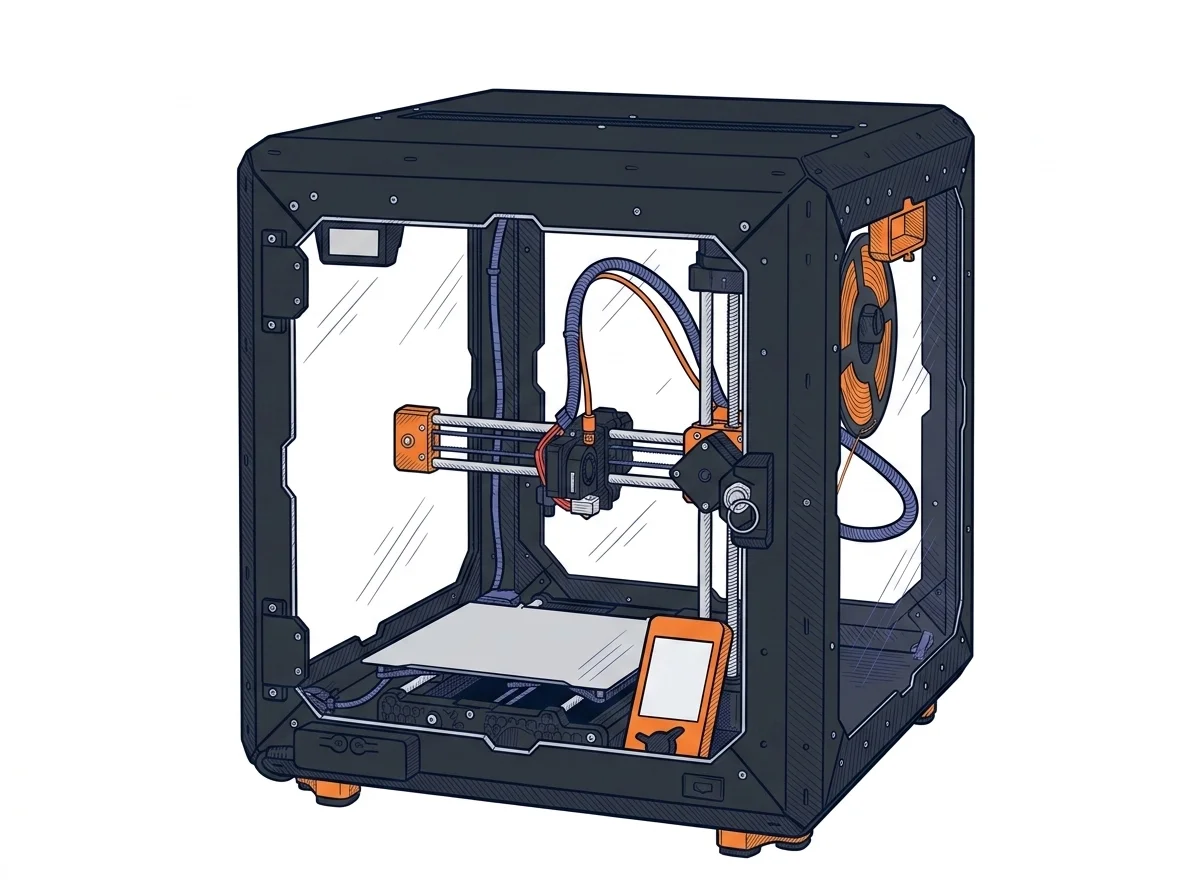 MINI+ Enclosure Bundle
Prusa Research
F2 · Intermediate
MINI+ Enclosure Bundle
Prusa Research
F2 · Intermediate
|
|---|---|---|
| Identity | ||
| Launch year | 2025 | 2020 |
| Use tier | F3 — Advanced | F2 — Intermediate |
| Price | ||
| Price (€) | 1899 € | 509 € |
| Universal specs | ||
| Dimensions (W×D×H) (cm) | 49.2 × 51.4 × 62.6 cm | 38 × 33 × 38 cm |
| Weight (kg) | 31 kg | 4.5 kg |
| Work area (mm) | 350 × 320 mm | 180 × 180 mm |
| Z-axis height (mm) | 325 mm | 180 mm |
| Power (W) | 2200 W | 150 W |
| Voltage (V) | — | 230 V |
| Maximum speed | 1000 mm/s | 200 mm/s |
| Declared precision | 50 μm | 0.05 mm |
| Category specs | ||
| Footprint X×Y (short side) (mm) | 492 mm | 180 mm |
| Build height Z (mm) | 325 mm | 180 mm |
| Kinematics | CoreXY | Cartesian |
| Max nozzle temperature (°C) | 350 °C | 280 °C |
| Max bed temperature (°C) | 120 °C | 100 °C |
| Max print speed (mm/s) | 600 mm/s | 180 mm/s |
| Enclosed chamber | True | False |
| Filament sensor | True | False |
| Auto bed leveling | Mesh | Mesh |
| Standard nozzle diameter (mm) | 0.4 mm | 0.4 mm |
| Multi-extruder | True | False |
| Native Klipper | False | False |
| Input shaper | True | True |
| Multicolor printing | True | False |
| Multicolor requires accessory | True | True |
| Max colors | 4 | — |
| Ecosystem | ||
| Cloud dependency | No | No |
| Software notes | The H2D uses Bambu Studio as its official slicer, available for macOS and Windows. Third-party slicers that export standard G-code — including PrusaSlicer, SuperSlicer and Cura — are also compatible, though certain advanced proprietary features (such as automatic dual-nozzle offset calibration and Material CodeSync) are only accessible within the Bambu ecosystem. Remote monitoring and control are handled via Bambu Handy; Bambu Suite manages laser engraving and cutting workflows. | PrusaSlicer, with pre-verified profiles for Input Shaper and Pressure Advance, is the reference software, but the machine accepts standard G-code from any compatible slicer, such as Cura or Simplify3D. Remote management runs through Prusa Connect, via Ethernet or the optional ESP Wi-Fi module. The firmware is open-source and runs on the 32-bit Buddy board, not GRBL, and is OTA-updatable: the Prusa ecosystem provides optimized profiles and regular updates, but doesn't restrict the use of alternative software. |
The differences that matter
- Price: H2D 1899 € vs MINI+ Enclosure Bundle 509 € — MINI+ Enclosure Bundle wins (+273%)
- Work area: H2D 350×320 mm vs MINI+ Enclosure Bundle 180×180 mm — H2D wins (+246%)
- Max print speed: H2D 600 mm/s vs MINI+ Enclosure Bundle 180 mm/s — H2D wins (+233%)
- Build height Z: H2D 325 mm vs MINI+ Enclosure Bundle 180 mm — H2D wins (+81%)
- Enclosed chamber: H2D yes, MINI+ Enclosure Bundle no
Which one to choose
MakerSpecs is an independent atlas. We don't sell products: this comparison links to both sheets, where you'll find complete data and official links.