Anycubic Kobra X vs Elegoo Centauri Carbon 2
Technical comparison · Fused filament fabrication (FFF/FDM)
Kobra X and Centauri Carbon 2 are two fused filament fabrication (fff/fdm) in a similar class. Choose Kobra X if max print speed matters more; choose Centauri Carbon 2 if enclosed chamber matters more. On the category's overall technical index, Centauri Carbon 2 scores 54/100 against 43/100 for Kobra X.
| Parameter |
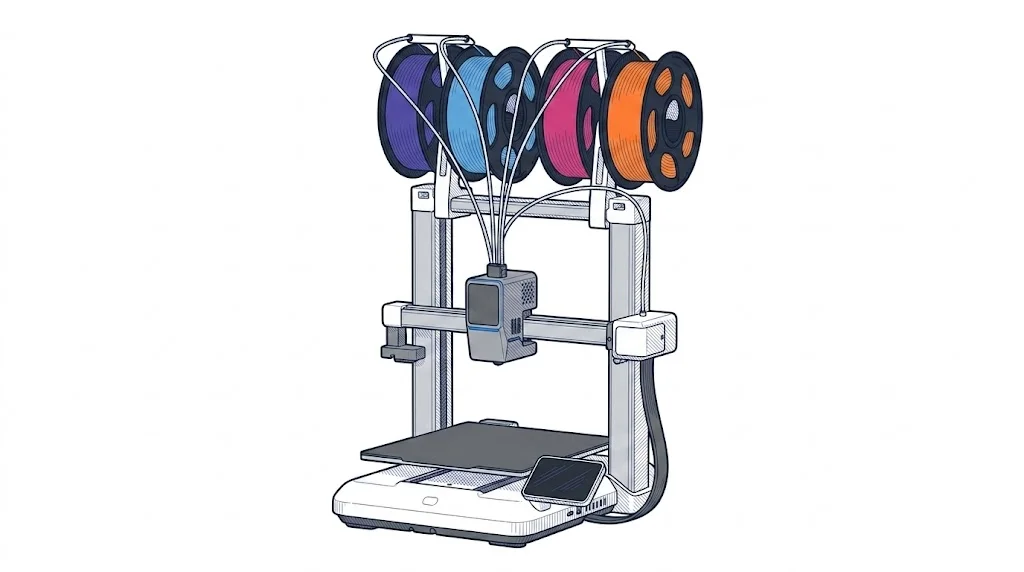 Kobra X
Anycubic
F1 · Entry
Kobra X
Anycubic
F1 · Entry
|
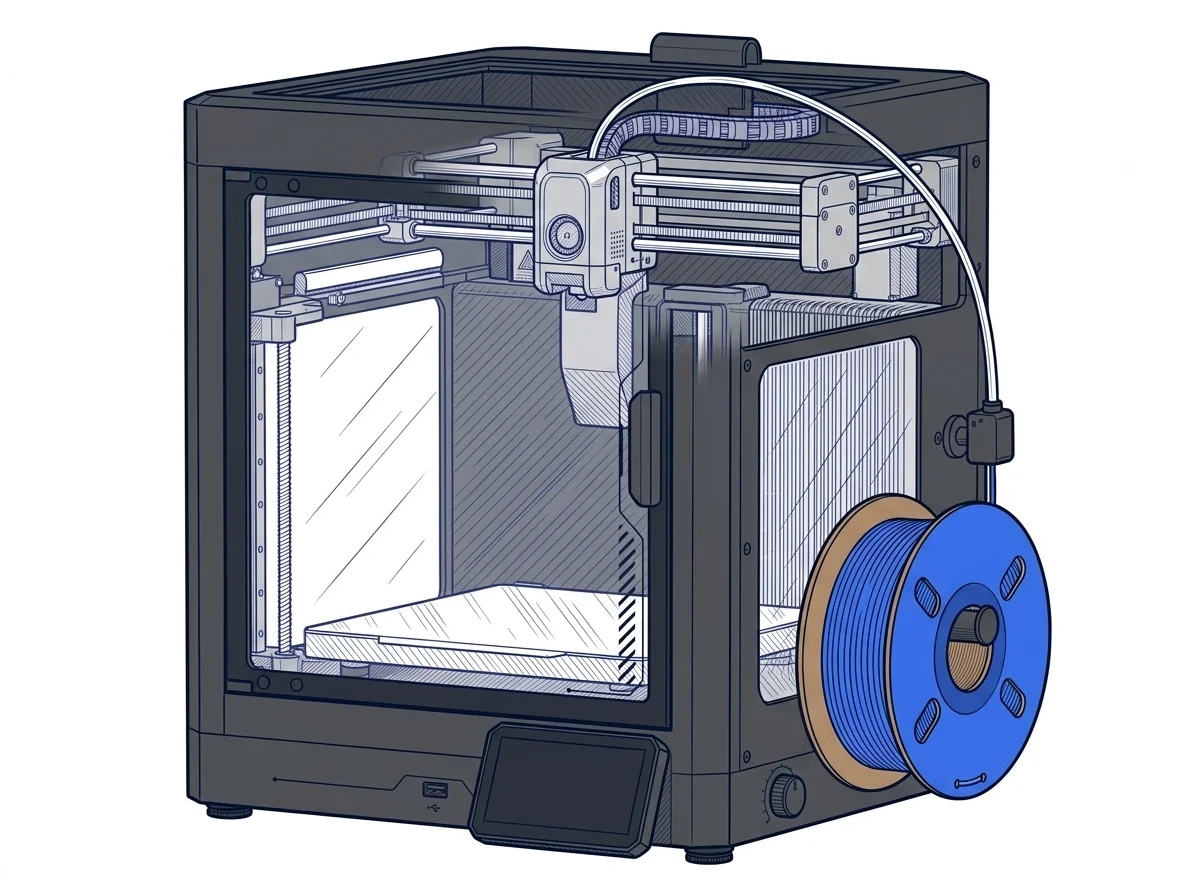 Centauri Carbon 2
Elegoo
F2 · Intermediate
Centauri Carbon 2
Elegoo
F2 · Intermediate
|
|---|---|---|
| Identity | ||
| Launch year | 2026 | 2026 |
| Use tier | F1 — Entry | F2 — Intermediate |
| Price | ||
| Price (€) | 389 € | ~349–399 € |
| Price updated on | 06/2026 | — |
| Universal specs | ||
| Dimensions (W×D×H) (cm) | — | 50 × 48 × 74.3 cm |
| Weight (kg) | — | 19.35 kg |
| Work area (mm) | 260 × 260 mm | 256 × 256 mm |
| Z-axis height (mm) | 260 mm | 256 mm |
| Power (W) | — | 1100 W |
| Maximum speed | 600 mm/s | 500 mm/s |
| Declared precision | — | 0.1 mm |
| Category specs | ||
| Footprint X×Y (short side) (mm) | — | 256 mm |
| Build height Z (mm) | 260 mm | 256 mm |
| Kinematics | Cartesian | CoreXY |
| Max nozzle temperature (°C) | 300 °C | 350 °C |
| Max bed temperature (°C) | 100 °C | 110 °C |
| Max print speed (mm/s) | 600 mm/s | 500 mm/s |
| Enclosed chamber | False | True |
| Filament sensor | True | True |
| Auto bed leveling | Mesh | Mesh |
| Standard nozzle diameter (mm) | 0.4 mm | 0.4 mm |
| Multi-extruder | False | False |
| Native Klipper | True | True |
| Input shaper | True | True |
| Multicolor printing | true | True |
| Multicolor requires accessory | true | True |
| Max colors | 4 | 4 |
| Ecosystem | ||
| Cloud dependency | No | No |
| Software notes | Uses Anycubic Slicer Next with AI monitoring capabilities via mobile app and remote control. | The proprietary Elegoo OS, built on Klipper architecture, manages full-auto calibration routines and AI-assisted monitoring. The machine is primarily supported by Elegoo Slicer (an Orca Slicer derivative), ensuring optimal control over material profiles and dynamic color changes. Users can also natively use Orca Slicer or export G-code from third-party alternatives like Cura. The intuitive touchscreen and Wi-Fi connectivity enable seamless remote management and direct job queuing over the local network. |
The differences that matter
- Enclosed chamber: Centauri Carbon 2 yes, Kobra X no
- Max print speed: Kobra X 600 mm/s vs Centauri Carbon 2 500 mm/s — Kobra X wins (+20%)
- Max nozzle temperature: Kobra X 300 °C vs Centauri Carbon 2 350 °C — Centauri Carbon 2 wins (+17%)
- Max bed temperature: Kobra X 100 °C vs Centauri Carbon 2 110 °C — Centauri Carbon 2 wins (+10%)
Which one to choose
Choose Centauri Carbon 2 if…
you value enclosed chamber, max nozzle temperature and max bed temperature.
MakerSpecs is an independent atlas. We don't sell products: this comparison links to both sheets, where you'll find complete data and official links.