Elegoo Neptune 4 Max vs Snapmaker 2.0 A350T 3-in-1
Technical comparison · Fused filament fabrication (FFF/FDM)
Neptune 4 Max leads on the available specs (starting with price); 2.0 A350T 3-in-1 makes sense only for non-technical reasons (availability, support, ecosystem), or if the missing data matters in your case. On the category's overall technical index, Neptune 4 Max scores 42/100 against 16/100 for 2.0 A350T 3-in-1.
| Parameter |
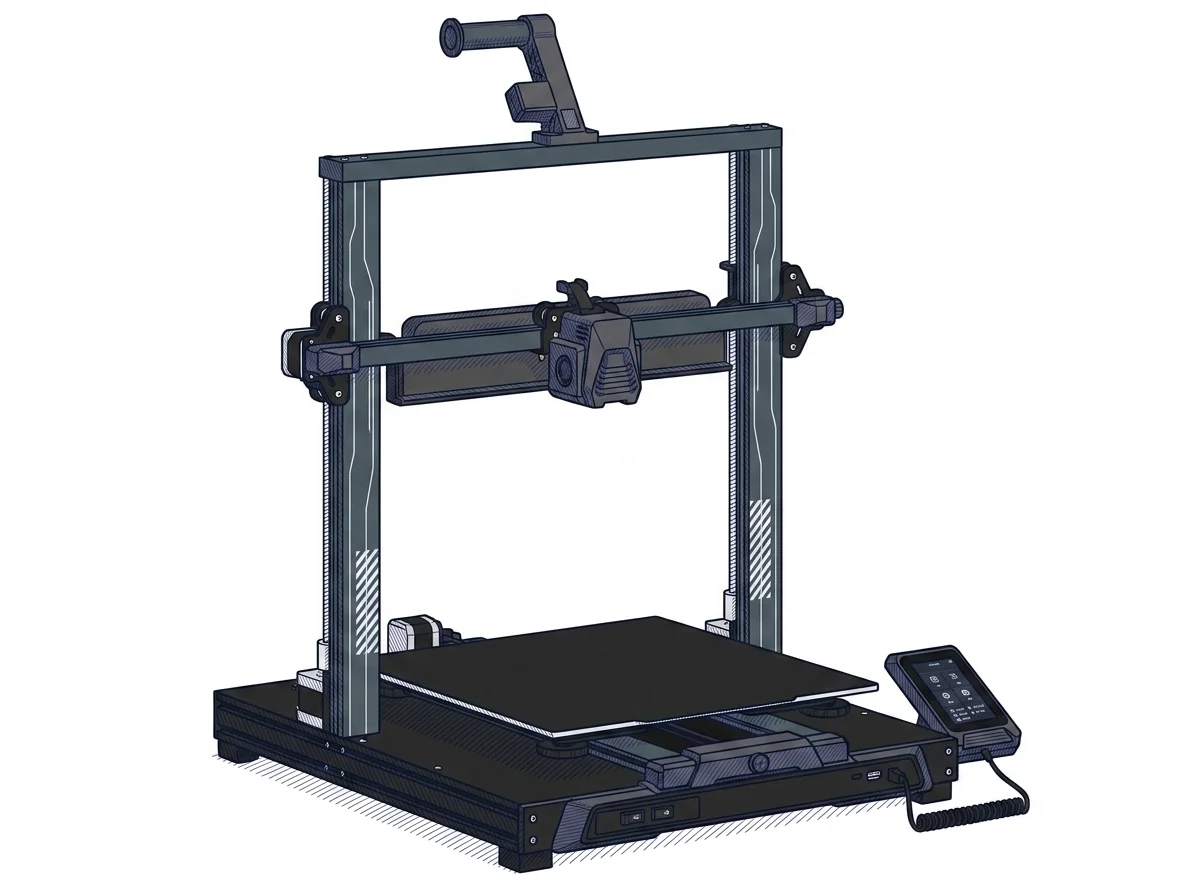 Neptune 4 Max
Elegoo
F2 · Intermediate
Neptune 4 Max
Elegoo
F2 · Intermediate
|
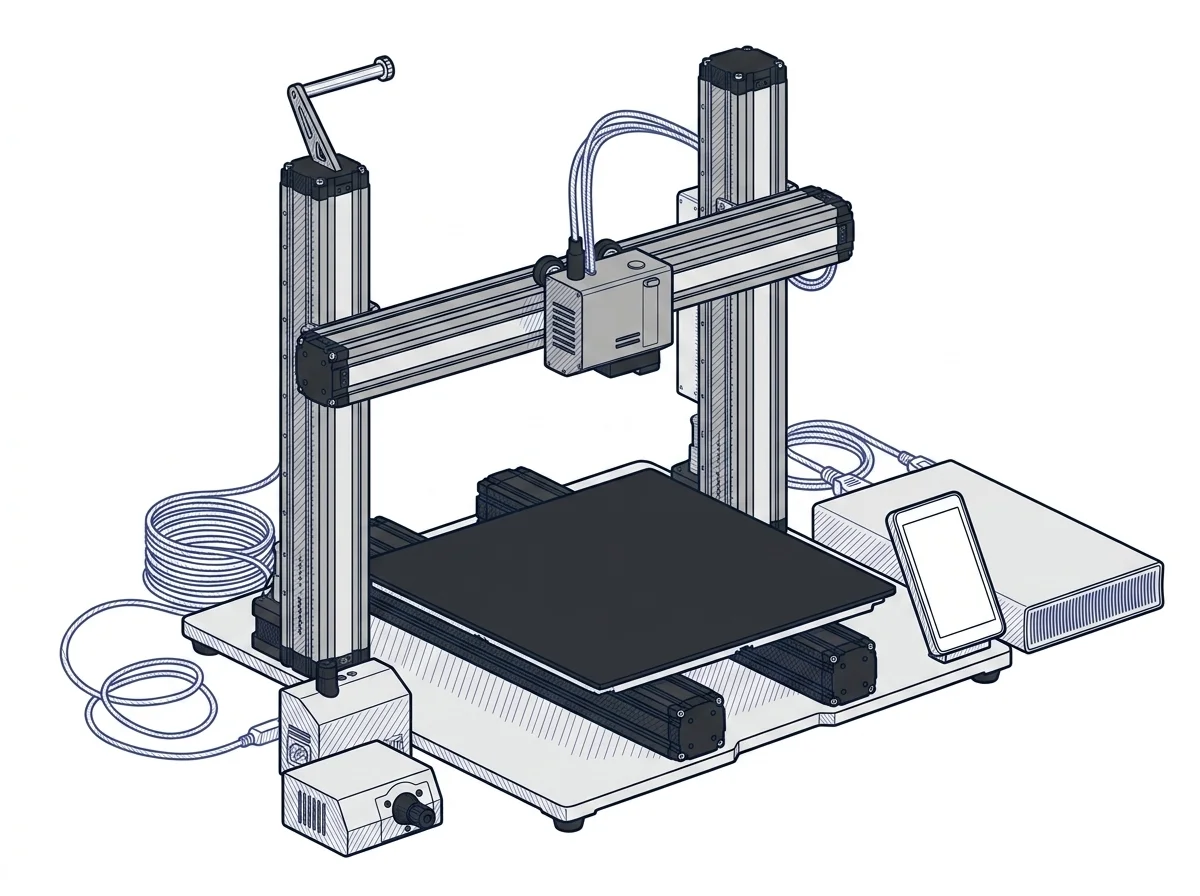 2.0 A350T 3-in-1
Snapmaker
F2 · Intermediate
2.0 A350T 3-in-1
Snapmaker
F2 · Intermediate
|
|---|---|---|
| Identity | ||
| Launch year | 2023 | 2022 |
| Use tier | F2 — Intermediate | F2 — Intermediate |
| Price | ||
| Price (€) | 549 € | ~1400–1600 € |
| Universal specs | ||
| Dimensions (W×D×H) (cm) | 65.8 × 63.2 × 74 cm | 49.5 × 50.6 × 58 cm |
| Weight (kg) | 18.1 kg | — |
| Work area (mm) | 420 × 420 mm | 320 × 350 mm |
| Z-axis height (mm) | 480 mm | 330 mm |
| Power (W) | — | 320 W |
| Voltage (V) | — | 230 V |
| Maximum speed | 500 mm/s | 100 mm/s |
| Declared precision | 0.1 mm | 0.005 mm |
| Category specs | ||
| Footprint X×Y (short side) (mm) | 420 mm | 320 mm |
| Build height Z (mm) | 480 mm | 330 mm |
| Kinematics | Cartesian | Cartesian |
| Max nozzle temperature (°C) | 300 °C | 275 °C |
| Max bed temperature (°C) | 85 °C | 80 °C |
| Max print speed (mm/s) | 500 mm/s | 100 mm/s |
| Enclosed chamber | False | False |
| Filament sensor | True | True |
| Auto bed leveling | Mesh | Mesh |
| Standard nozzle diameter (mm) | 0.4 mm | 0.4 mm |
| Multi-extruder | False | False |
| Native Klipper | True | False |
| Input shaper | True | False |
| Multicolor printing | False | False |
| Multicolor requires accessory | False | — |
| Max colors | 1 | 1 |
| Ecosystem | ||
| Cloud dependency | No | No |
| Software notes | The system relies on an open ecosystem thanks to the motherboard with pre-installed Klipper. Users can manage the machine both through the 4.3-inch capacitive touchscreen interface and via local network using the integrated web interface (Fluidd). Elegoo provides its own customized version of the Cura slicer, but the printer remains fully compatible with most third-party slicers such as PrusaSlicer, OrcaSlicer, and Simplify3D. Native support for Wi-Fi and LAN connectivity facilitates sending and monitoring G-code files without the need for physical media. | The machine is primarily managed via Snapmaker Luban, a free proprietary software integrating file preparation for 3D printing, laser engraving, and CNC milling into a single environment. While intuitive for beginners, experienced users may find limitations in advanced settings. However, the system accepts G-code files generated by third-party slicers like Cura or PrusaSlicer for 3D printing, and software like LightBurn or Fusion 360 for laser and CNC work, ensuring excellent operational versatility. |
The differences that matter
- Price: Neptune 4 Max 549 € vs 2.0 A350T 3-in-1 1500 € — Neptune 4 Max wins (+173%)
- Max print speed: Neptune 4 Max 500 mm/s vs 2.0 A350T 3-in-1 100 mm/s — Neptune 4 Max wins (+400%)
- Work area: Neptune 4 Max 420×420 mm vs 2.0 A350T 3-in-1 320×350 mm — Neptune 4 Max wins (+57%)
- Build height Z: Neptune 4 Max 480 mm vs 2.0 A350T 3-in-1 330 mm — Neptune 4 Max wins (+45%)
- Native Klipper: Neptune 4 Max yes, 2.0 A350T 3-in-1 no
Which one to choose
Choose Neptune 4 Max if…
you value price, max print speed and work area.
MakerSpecs is an independent atlas. We don't sell products: this comparison links to both sheets, where you'll find complete data and official links.