Creality HALOT-X1 vs Elegoo Mars 4
Technical comparison · Resin 3D printing
Two resin printers with a monochrome LCD screen, built for the same job. The deciding question is whether a larger plate and network file transfer are worth about €380 more, or whether a smaller plate and a USB stick are enough.
| Parameter | ||
|---|---|---|
| Identity | ||
| Launch year | 2025 | 2023 |
| Use tier | F2 — Intermediate | F2 — Intermediate |
| Price | ||
| Price (€) | ~499–699 € | ~180–260 € |
| Universal specs | ||
| Dimensions (W×D×H) (cm) | — | 22.7 × 22.7 × 43.85 cm |
| Weight (kg) | — | 5.2 kg |
| Work area (mm) | 211.68 × 118.37 mm | 153.36 × 77.76 mm |
| Z-axis height (mm) | 200 mm | 175 mm |
| Power (W) | 300 W | — |
| Maximum speed | 2.833 mm/min | — |
| Declared precision | 14 μm | — |
| Category specs | ||
| Build area XY (short side) (mm) | 118.37 mm | 77.76 mm |
| XY resolution (µm) | 14 µm | 18 µm |
| Light source | Mono LCD | Mono LCD |
| Print speed (mm/h) | 170 mm/h | 70 mm/h |
| Tilt / peel system | — | Standard FEP |
| Ecosystem | ||
| Cloud dependency | No | No |
| Software notes | The operational management of the printer relies on a flexible software ecosystem compatible with the main file preparation programs available on the market. Users can utilize both the proprietary application developed by the manufacturer and widespread third-party solutions such as Chitubox or Lychee Slicer, benefiting from preconfigured profiles for optimizing exposure times. Network features allow file transfer and progress monitoring via Wi-Fi or local Ethernet connection. Although network-based remote capabilities are available, the device maintains complete operational independence from the cloud, allowing total workflow management in local mode to protect the confidentiality of technical data. | The operation of the machine is primarily managed via third-party slicing software widely utilized within the resin 3D printing industry. The system natively supports file formats generated by programs such as ChiTuBox and Voxeldance Tango, offering the user the flexibility to choose their preferred interface for model preparation, support generation, and exposure parameter optimization. There is no native Wi-Fi connectivity or dedicated cloud management in this standard version; therefore, the transfer of print-ready files occurs traditionally via a USB port located on the machine body, ensuring a stable, independent, and completely offline workflow. |

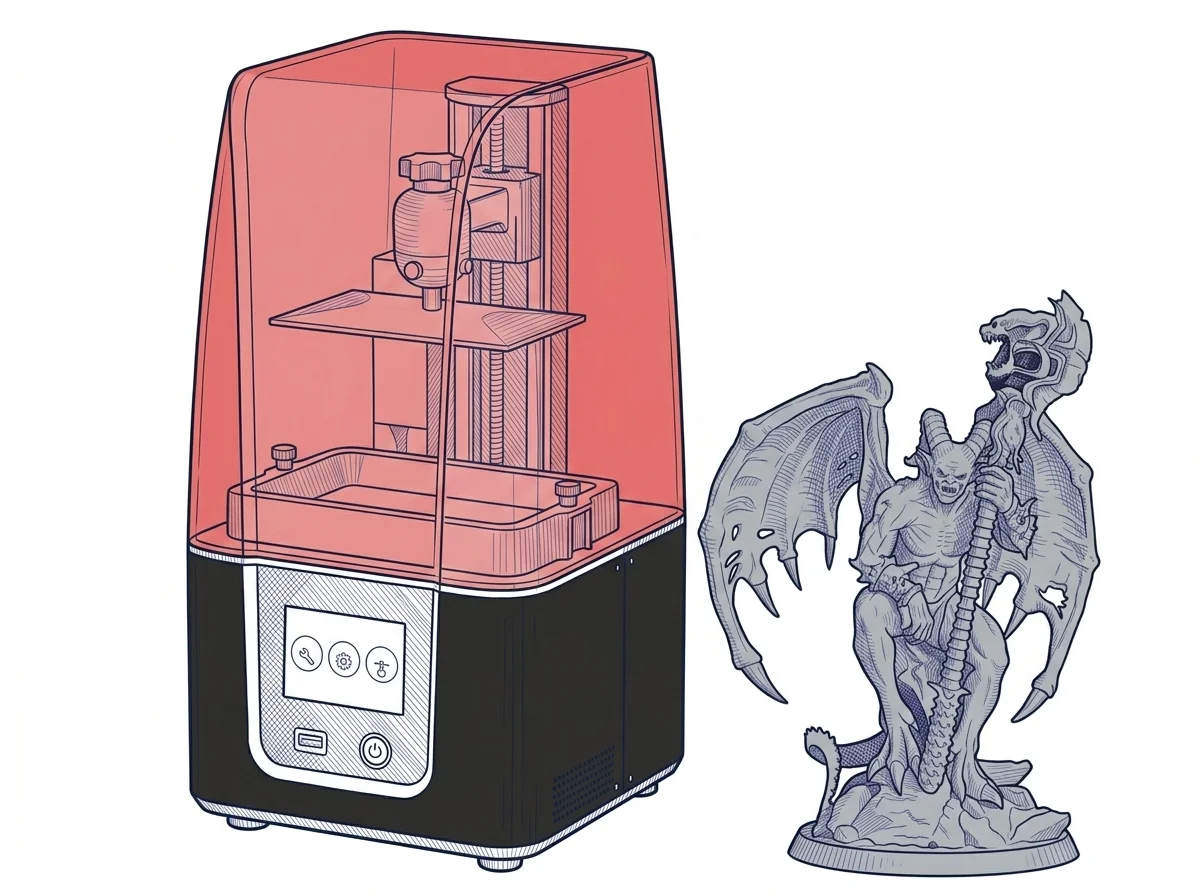
The differences that matter
- Price: €599 vs €220 → the €379 gap is what the larger plate and the network connection cost.
- Plate short side: 118 mm vs 78 mm → on the Mars 4 a batch of side-by-side parts runs out of room sooner and has to be split.
- Connectivity: Wi-Fi and Ethernet vs USB only → the HALOT-X1 is fed and monitored from the PC; the Mars 4 is loaded at the machine.
Which one to choose
Choose HALOT-X1 if…
Choose the HALOT-X1 if you print in batches: more parts side by side in a single run, with files sent from the PC over Wi-Fi or Ethernet while you follow progress from the desk. You accept paying noticeably more than for the Mars 4.
Choose Mars 4 if…
Choose the Mars 4 for miniatures and small parts, one or a few at a time. Files load only from a USB port on the machine and there is no Wi-Fi, so every job means walking over with the stick, and a batch that does not fit the plate is split across several prints.
Where to buy
Paid link: the price for you does not change. Methodology
MakerSpecs is an independent atlas. We don't sell products: the purchase links are the same as on the two product sheets and don't influence the verdict. The sheets have the complete data.