Creality HALOT-ONE PLUS vs Formlabs Form 4B
Technical comparison · Resin 3D printing
HALOT-ONE PLUS and Form 4B are not direct competitors: very different prices (~13.7×). HALOT-ONE PLUS costs less (~€400) and is the entry-level choice; Form 4B offers more capability at a higher price (~€5499). Judge them by budget, not head-to-head.
| Parameter |
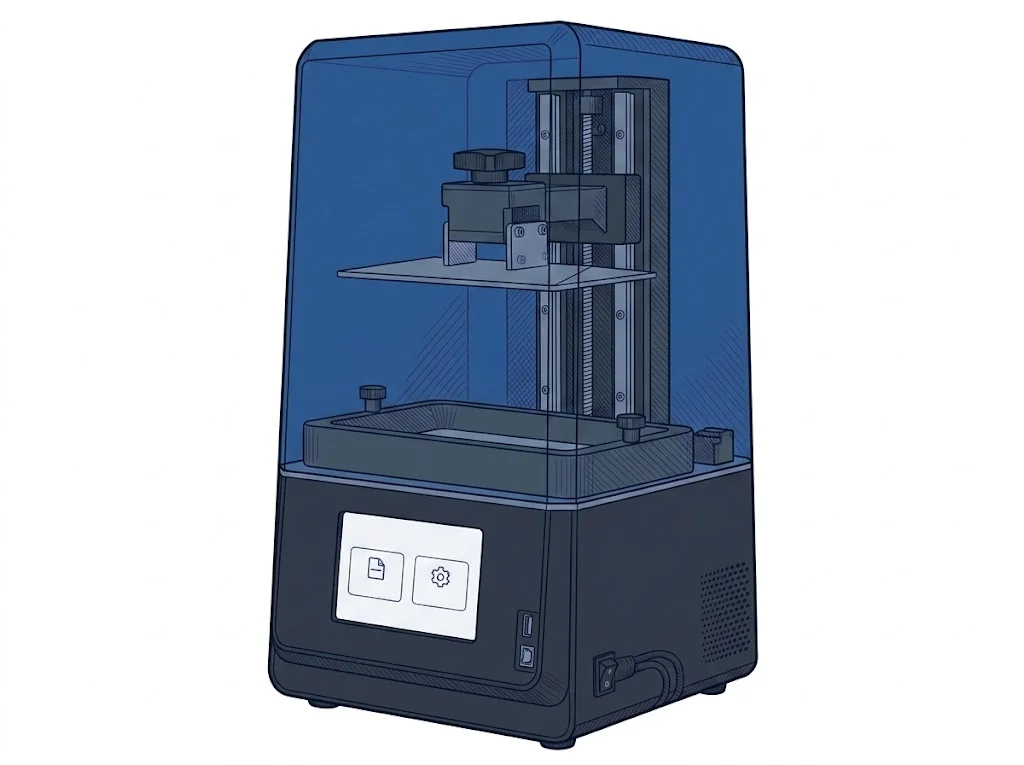 HALOT-ONE PLUS
Creality
F2 · Intermediate
HALOT-ONE PLUS
Creality
F2 · Intermediate
|
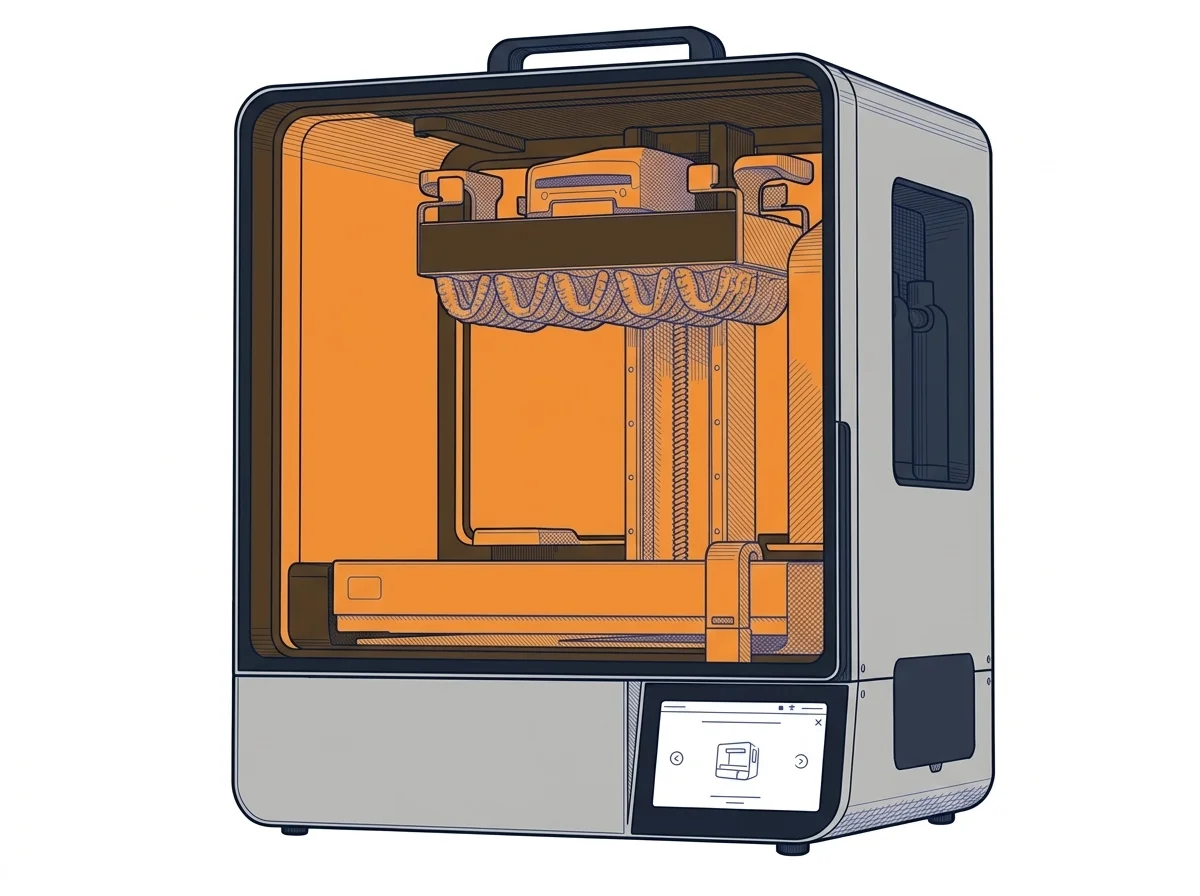 Form 4B
Formlabs
F2 · Intermediate
Form 4B
Formlabs
F2 · Intermediate
|
|---|---|---|
| Identity | ||
| Launch year | 2022 | 2024 |
| Use tier | F2 — Intermediate | F2 — Intermediate |
| Price | ||
| Price (€) | ~350–450 € | 5499 € |
| Universal specs | ||
| Dimensions (W×D×H) (cm) | 23.6 × 24.3 × 41.8 cm | 39.8 × 36.7 × 55.4 cm |
| Weight (kg) | 6.9 kg | 18.3 kg |
| Work area (mm) | 172 × 102 mm | 200 × 125 mm |
| Z-axis height (mm) | 160 mm | 210 mm |
| Power (W) | 100 W | 480 W |
| Voltage (V) | 230 V | 240 V |
| Maximum speed | — | 100 |
| Declared precision | 0.04 mm | 50 μm |
| Category specs | ||
| Build area XY (short side) (mm) | 102 mm | 125 mm |
| XY resolution (µm) | 40 µm | 50 µm |
| Light source | Mono LCD | Mono LCD |
| Print speed (mm/h) | — | 100 mm/h |
| Tilt / peel system | Standard FEP | — |
| Ecosystem | ||
| Cloud dependency | No | No |
| Software notes | The management of 3D models and print file preparation is supported by the main resin slicing software on the market, ensuring significant operational flexibility. Users can rely on widely used and appreciated solutions such as Chitubox and Lychee Slicer, which offer advanced tools for support generation and part orientation. Alternatively, the manufacturer provides the proprietary HALOT BOX software, specifically designed to integrate natively with the electronics and systems of this machine line. The motherboard is equipped with a built-in Wi-Fi module, enabling remote project submission and over-the-air firmware updates. Remote monitoring can be done via application, although the classic and stable file transfer via USB port remains fully supported. | Print job management is handled by the proprietary PreForm software, which enables automatic model layout, optimized orientation, and guided generation of retention supports. The program integrates preconfigured and validated print profiles for all proprietary materials, reducing the need for manual calibrations by the user. Through the Dashboard cloud platform, users can remotely monitor production progress, manage print queues for multiple devices, and analyze material consumption. The software architecture requires a network connection for advanced monitoring features, but it also allows files to be transferred via local USB, Ethernet, or Wi-Fi connections, ensuring operational flexibility inside the laboratory. |
The differences that matter
- Price: HALOT-ONE PLUS 400 € vs Form 4B 5499 € — HALOT-ONE PLUS wins (+1275%)
- Work area: HALOT-ONE PLUS 172×102 mm vs Form 4B 200×125 mm — Form 4B wins (+42%)
Which one to choose
MakerSpecs is an independent atlas. We don't sell products: this comparison links to both sheets, where you'll find complete data and official links.