Bambu Lab H2C vs Qidi Tech X-Max 3 3D Printer
Technical comparison · Fused filament fabrication (FFF/FDM)
H2C and X-Max 3 3D Printer are two fused filament fabrication (fff/fdm) in a similar class. Choose H2C if max colors and max print speed matters more; choose X-Max 3 3D Printer if price matters more. On the category's overall technical index, H2C scores 68/100 against 56/100 for X-Max 3 3D Printer.
| Parameter |
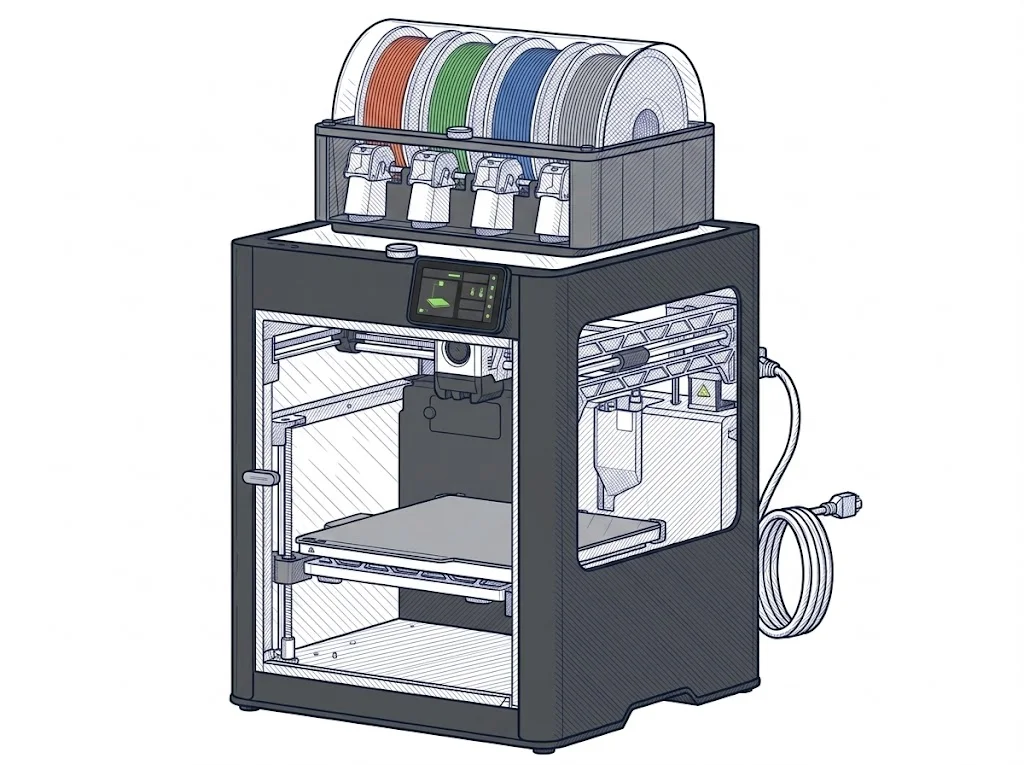 H2C
Bambu Lab
F3 · Advanced
H2C
Bambu Lab
F3 · Advanced
|
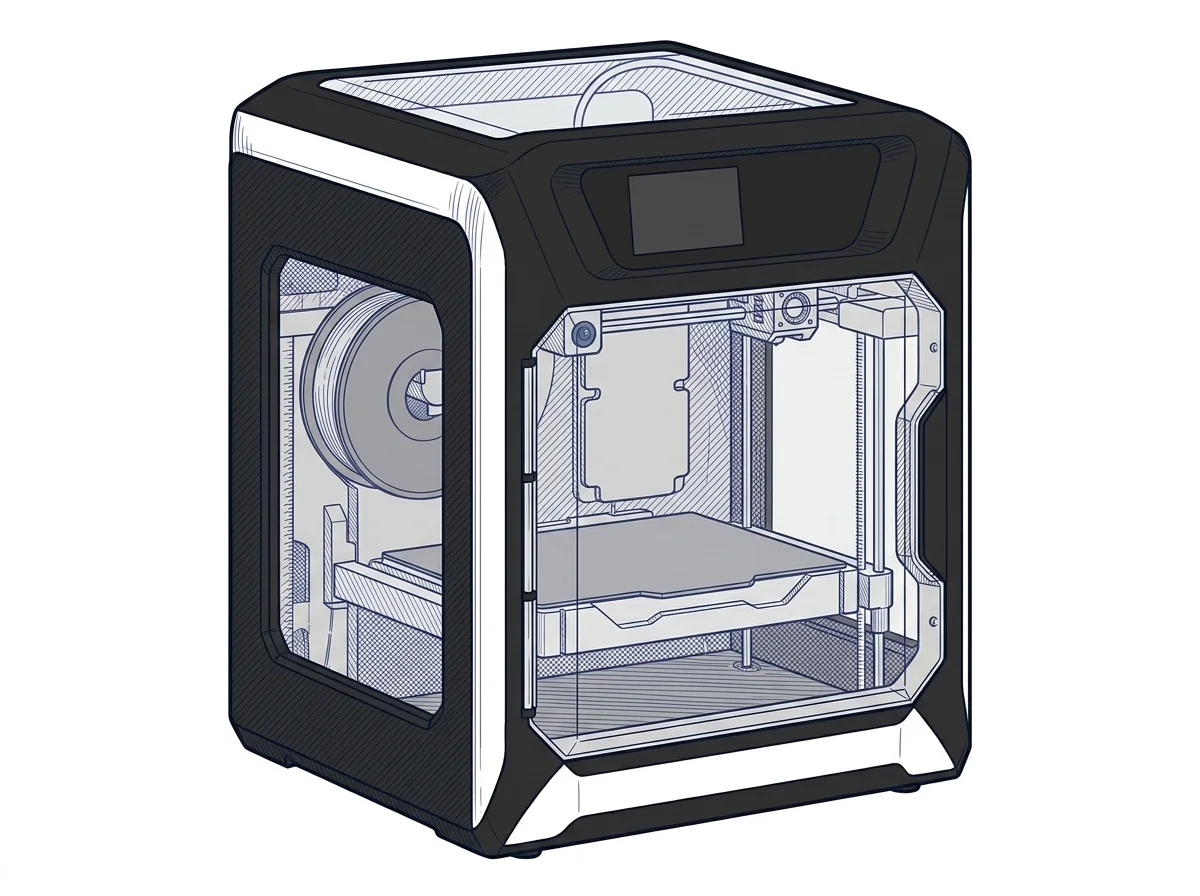 X-Max 3 3D Printer
Qidi Tech
F2 · Intermediate
X-Max 3 3D Printer
Qidi Tech
F2 · Intermediate
|
|---|---|---|
| Identity | ||
| Launch year | 2025 | 2023 |
| Use tier | F3 — Advanced | F2 — Intermediate |
| Price | ||
| Price (€) | 2249 € | ~799–999 € |
| Universal specs | ||
| Dimensions (W×D×H) (cm) | 49.2 × 51.4 × 62.6 cm | 55.3 × 55.3 × 60.1 cm |
| Weight (kg) | 32.5 kg | 30.2 kg |
| Work area (mm) | 330 × 320 mm | 325 × 325 mm |
| Z-axis height (mm) | 325 mm | 315 mm |
| Power (W) | 1800 W | — |
| Maximum speed | 1000 mm/s | 600 mm/s |
| Declared precision | 50 μm | — |
| Category specs | ||
| Footprint X×Y (short side) (mm) | 320 mm | 325 mm |
| Build height Z (mm) | 325 mm | 315 mm |
| Kinematics | CoreXY | CoreXY |
| Max nozzle temperature (°C) | 350 °C | 350 °C |
| Max bed temperature (°C) | 120 °C | 120 °C |
| Max print speed (mm/s) | 1000 mm/s | 600 mm/s |
| Enclosed chamber | True | True |
| Filament sensor | True | True |
| Auto bed leveling | Mesh | Mesh |
| Standard nozzle diameter (mm) | 0.4 mm | 0.4 mm |
| Multi-extruder | True | False |
| Native Klipper | False | True |
| Input shaper | True | True |
| Multicolor printing | True | False |
| Multicolor requires accessory | True | — |
| Max colors | 24 | 1 |
| Ecosystem | ||
| Cloud dependency | No | No |
| Software notes | The printer is operated through Bambu Studio, Bambu Lab's open-source slicer based on PrusaSlicer, available for Windows, macOS, and Linux. Remote control is available via the Bambu Handy app or Bambu Suite. The machine includes a 5" color touchscreen for local operation and connects over dual-band Wi-Fi. The firmware is proprietary; Klipper is not natively supported. | The system relies on an architecture based on native Klipper firmware, a configuration that guarantees advanced kinematics management and precise control of accelerations through input shaping algorithms. The local and remote user interface is managed fluidly, allowing full monitoring of print parameters without the need to depend on mandatory external cloud services. For file preparation, the machine supports the main slicing software available on the market, including Qidi Print, OrcaSlicer, and PrusaSlicer, offering optimized profiles to enhance production times and the surface quality of components. Connectivity options include wired network and Wi-Fi, facilitating the integration of the device into local networks of laboratories or digital workshops. |
The differences that matter
- Price: H2C 2249 € vs X-Max 3 3D Printer 899 € — X-Max 3 3D Printer wins (+150%)
- Max colors: H2C 24 vs X-Max 3 3D Printer 1 — H2C wins (+2300%)
- Max print speed: H2C 1000 mm/s vs X-Max 3 3D Printer 600 mm/s — H2C wins (+67%)
- Multi-extruder: H2C yes, X-Max 3 3D Printer no
- Native Klipper: X-Max 3 3D Printer yes, H2C no
Which one to choose
Choose X-Max 3 3D Printer if…
you value price and native klipper.
MakerSpecs is an independent atlas. We don't sell products: this comparison links to both sheets, where you'll find complete data and official links.