Bambu Lab A2L vs Snapmaker 2.0 F250 3D Printer
Technical comparison · Fused filament fabrication (FFF/FDM)
A2L and 2.0 F250 3D Printer are two fused filament fabrication (fff/fdm) in a similar class. Choose A2L if price matters more; choose 2.0 F250 3D Printer if multicolor requires accessory matters more. On the category's overall technical index, A2L scores 36/100 against 21/100 for 2.0 F250 3D Printer.
| Parameter |
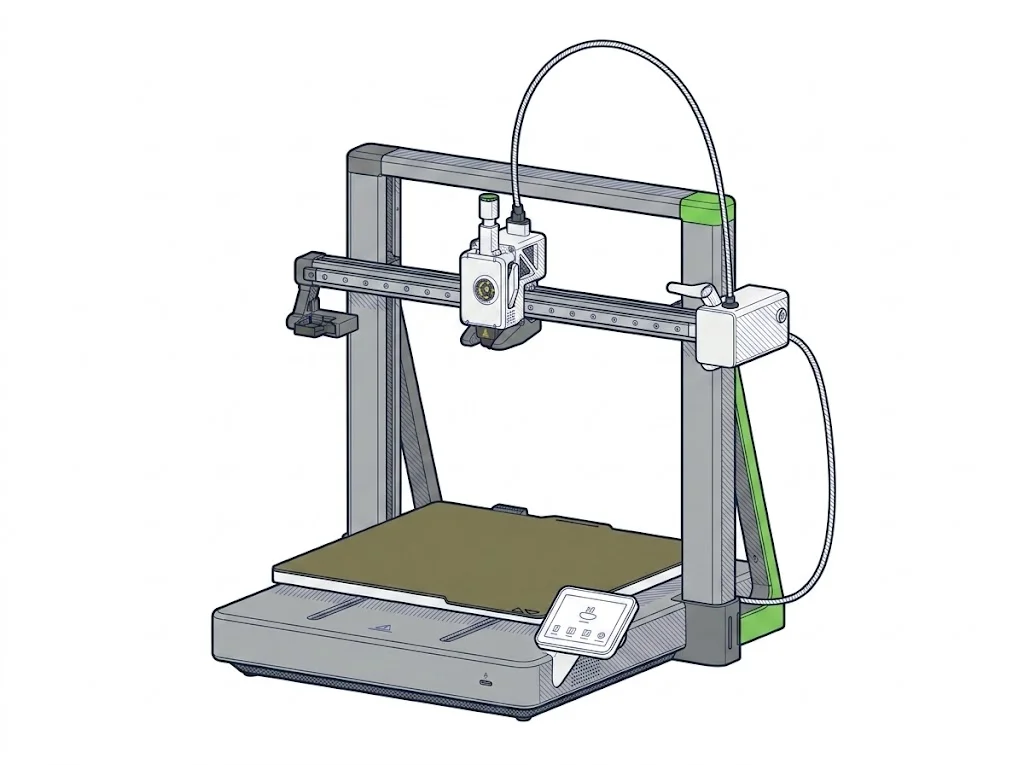 A2L
Bambu Lab
F2 · Intermediate
A2L
Bambu Lab
F2 · Intermediate
|
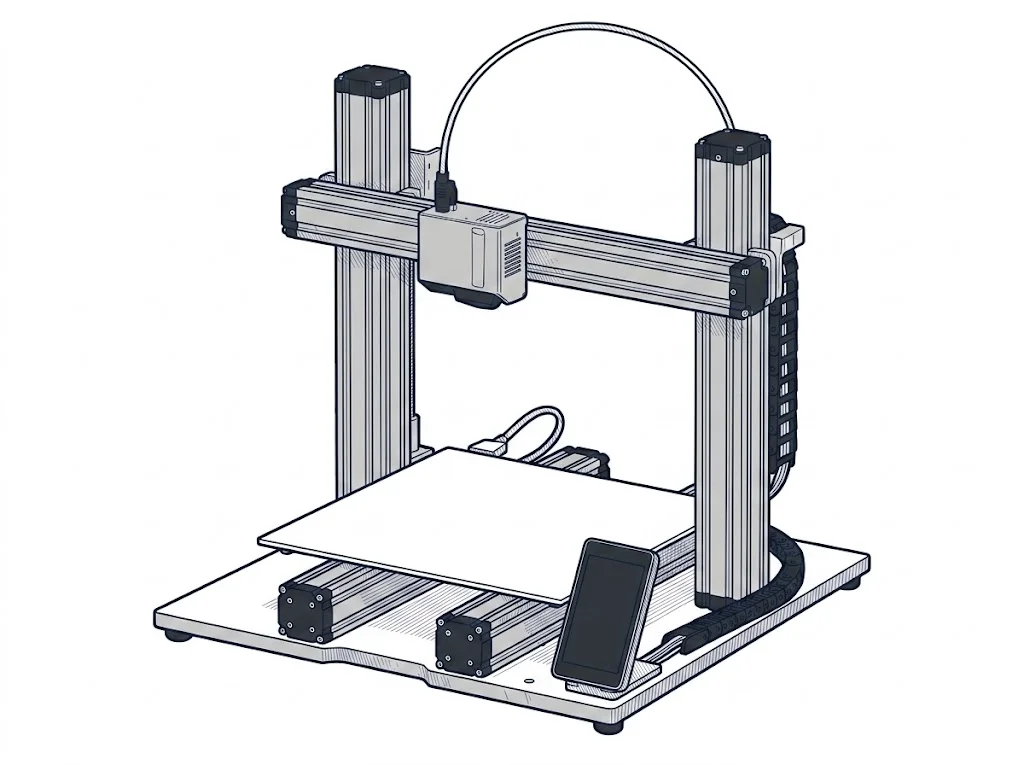 2.0 F250 3D Printer
Snapmaker
F2 · Intermediate
2.0 F250 3D Printer
Snapmaker
F2 · Intermediate
|
|---|---|---|
| Identity | ||
| Launch year | 2026 | 2021 |
| Use tier | F2 — Intermediate | F2 — Intermediate |
| Price | ||
| Price (€) | 379 € | ~900–1200 € |
| Universal specs | ||
| Dimensions (W×D×H) (cm) | 54.4 × 52.9 × 50.5 cm | — |
| Weight (kg) | 12.8 kg | — |
| Work area (mm) | 330 × 320 mm | 230 × 250 mm |
| Z-axis height (mm) | 325 mm | 235 mm |
| Power (W) | — | 320 W |
| Maximum speed | 500 mm/s | — |
| Declared precision | — | 0.05 mm |
| Category specs | ||
| Footprint X×Y (short side) (mm) | 320 mm | 230 mm |
| Build height Z (mm) | 325 mm | 235 mm |
| Kinematics | Cartesian | Cartesian |
| Max nozzle temperature (°C) | 300 °C | 275 °C |
| Max bed temperature (°C) | 80 °C | 100 °C |
| Max print speed (mm/s) | 500 mm/s | — |
| Enclosed chamber | False | False |
| Filament sensor | True | True |
| Auto bed leveling | Mesh | Mesh |
| Standard nozzle diameter (mm) | 0.4 mm | 0.4 mm |
| Multi-extruder | False | False |
| Native Klipper | False | False |
| Input shaper | True | False |
| Multicolor printing | True | False |
| Multicolor requires accessory | True | False |
| Max colors | 19 | 1 |
| Ecosystem | ||
| Cloud dependency | No | No |
| Software notes | The A2L is compatible with Bambu Studio, Bambu Lab's proprietary slicer for Windows and macOS, which provides native access to all machine features including AMS multi-color management. Third-party slicers that export standard G-code — such as PrusaSlicer and OrcaSlicer — are supported, though some advanced features may not be available outside Bambu Studio. Connectivity is via Wi-Fi; basic printing functions do not require a cloud account. | The device utilizes the proprietary Snapmaker Luban software, an integrated environment that intuitively manages file preparation and print process monitoring. Luban offers preset profiles for the most common materials, simplifying the workflow for less experienced operators, while also granting access to advanced parameters for fine-tuning extrusion settings. Alternatively, the machine is fully compatible with popular third-party slicers on the market, such as Ultimaker Cura and PrusaSlicer, provided a custom profile is configured to fully leverage the system's capabilities. |
The differences that matter
- Price: A2L 379 € vs 2.0 F250 3D Printer 1050 € — A2L wins (+177%)
- Work area: A2L 330×320 mm vs 2.0 F250 3D Printer 230×250 mm — A2L wins (+84%)
- Max colors: A2L 19 vs 2.0 F250 3D Printer 1 — A2L wins (+1800%)
- Build height Z: A2L 325 mm vs 2.0 F250 3D Printer 235 mm — A2L wins (+38%)
- Input shaper: A2L yes, 2.0 F250 3D Printer no
Which one to choose
MakerSpecs is an independent atlas. We don't sell products: this comparison links to both sheets, where you'll find complete data and official links.